-
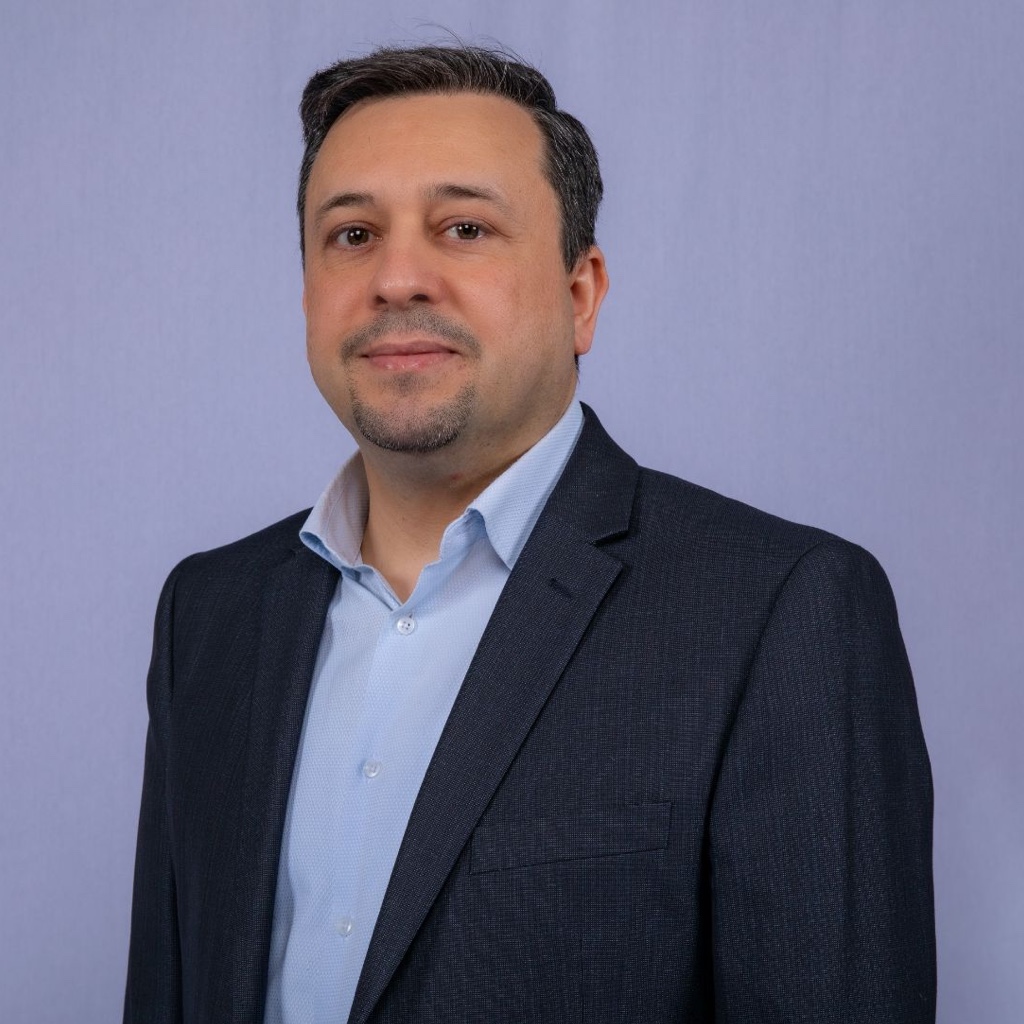
Ahmad Al Jaghsi
- Professor
- Ext: 6334
Dr. Ahmad Al Jaghsi earned his Diploma in Removable Prosthodontics and a Master’s degree in Prosthodontics from Damascus University, Syria, where he served as a faculty member in the Department of Removable Prosthodontics from 2003 to 2009. In 2009, he moved to Germany, where he visited sixteen universities to enhance his clinical expertise, theoretical knowledge, and scientific understanding across all aspects of Prosthodontics. During this time, he completed a Diploma, Master of Science, and Ph.D. in Prosthodontics. From 2011 to 2018, Dr. Al Jaghsi was a faculty member at the Polyclinic of Prosthetic Dentistry, Greifswald University, where he actively contributed to clinical research in Prosthodontics and Implantology. His research has been supported by international companies such as 3M ESPE Germany GmbH, Ivoclar Vivadent GmbH, and Renfert GmbH. In addition to his academic contributions, he served as a Dental Implant Consultant at six different centers across Germany. Currently, Dr. Al Jaghsi is a Professor at the College of Dentistry, Ajman University, UAE, and a Visiting Professor at Greifswald University’s Department of Prosthodontics, Gerodontology, and Dental Materials in Germany.
Education
- PhD in Prosthodontics, Greifswald University, Germany.
- Master of Science in Prosthodontics, Greifswald University, Germany.
- Diploma in Prosthodontics, Greifswald University, Germany.
- Master's Degree in Prosthodontics, Damascus University, Syria.
- PG Certificate in The Online Classroom: Strategies for Higher Education Teaching and Learning, Harvard Institutes for Higher Education, Harvard University.
- PG Certificate in Teaching and Assessing Clinical Skills, University of Michigan.
- FRSPH, Fellowship of the Royal Society for Public Health, UK.
- PG Certificate in Health Professions Education, University of Michigan.
- Intensive Workshop: The Creative Use of Interactive Teaching Methods in Group Teaching and Tutorials, Greifswald University.
- Intensive Workshop: How we can help students deal with exam situations and test anxiety, Greifswald University.
- Intensive Course and Workshop for Eligibility to a University Chair (Medicine Didactics), Greifswald University.
- Postgraduate Diploma in Removable Prosthodontics, Damascus University, Syria.
- One-Year Collaborative Course in Implantology Between Damascus University and the Lebanese University, Syria/Lebanon.
- Postgraduate Diploma in Oral and Maxillofacial Surgery, Damascus University, Syria.
PhD in Prosthodontics, Greifswald University, Germany.
Master of Science in Prosthodontics, Greifswald University, Germany.
Diploma in Prosthodontics, Greifswald University, Germany.
Master's Degree in Prosthodontics, Damascus University, Syria.
PG Certificate in The Online Classroom: Strategies for Higher Education Teaching and Learning, Harvard Institutes for Higher Education, Harvard University.
PG Certificate in Teaching and Assessing Clinical Skills, University of Michigan.
FRSPH, Fellowship of the Royal Society for Public Health, UK.
PG Certificate in Health Professions Education, University of Michigan.
Intensive Workshop: The Creative Use of Interactive Teaching Methods in Group Teaching and Tutorials, Greifswald University.
Intensive Workshop: How we can help students deal with exam situations and test anxiety, Greifswald University.
Intensive Course and Workshop for Eligibility to a University Chair (Medicine Didactics), Greifswald University.
Postgraduate Diploma in Removable Prosthodontics, Damascus University, Syria.
One-Year Collaborative Course in Implantology Between Damascus University and the Lebanese University, Syria/Lebanon.
Postgraduate Diploma in Oral and Maxillofacial Surgery, Damascus University, Syria.
Experience
- Professor, Clinical Sciences Department, Ajman University, UAE.
- Visiting Associate Professor, Greifswald University, Department of Prosthodontics, Gerodontology, and Dental Materials, Germany, 2019 – Present.
- Associate Professor, Department of Prosthetic Dentistry, ,Greifswald University, Germany.
- Assistant Professor, Department of Prosthetic Dentistry, Greifswald University, Germany.
- Assistant Lecturer, Removable Prosthodontic Department, Damascus University, Syria.
- Specialist Prosthodontist, Ministry of Health, UAE.
- Specialist Prosthodontist, Dubai Health Authority, UAE.
- Specialist Prosthodontist, Greifswald University and Private clinic, Germany.
- Specialist in Oral and Maxillofacial Surgery, Syria.
- Resident, Department of Prosthetic Dentistry, Greifswald University, Germany.
- Resident, Removable Prosthodontic Department, Damascus University, Syria .
- Resident, Orthodontic Department at Abdulkader Mahloul Hospital and Al-Maza Hospital, Syria .
- Resident, Oral and Maxillofacial Surgery Department, Damascus University, Syria.
Professor, Clinical Sciences Department, Ajman University, UAE.
Visiting Associate Professor, Greifswald University, Department of Prosthodontics, Gerodontology, and Dental Materials, Germany, 2019 – Present.
Associate Professor, Department of Prosthetic Dentistry, ,Greifswald University, Germany.
Assistant Professor, Department of Prosthetic Dentistry, Greifswald University, Germany.
Assistant Lecturer, Removable Prosthodontic Department, Damascus University, Syria.
Specialist Prosthodontist, Ministry of Health, UAE.
Specialist Prosthodontist, Dubai Health Authority, UAE.
Specialist Prosthodontist, Greifswald University and Private clinic, Germany.
Specialist in Oral and Maxillofacial Surgery, Syria.
Resident, Department of Prosthetic Dentistry, Greifswald University, Germany.
Resident, Removable Prosthodontic Department, Damascus University, Syria .
Resident, Orthodontic Department at Abdulkader Mahloul Hospital and Al-Maza Hospital, Syria .
Resident, Oral and Maxillofacial Surgery Department, Damascus University, Syria.
Teaching Area
- Pre-clinical Removable Prosthodontics
- Pre-clinical Fixed Prosthodontics
- Clinical Prosthodontics (Removable-Fixed)
- Dental Materials (Undergraduate)
- Biomaterial (MSc. Prosthodontics)
- Digital Dentistry.
- Aesthetic Dentistry (MSc. Prosthodontics)
- State-of-the-Art Techniques in Function and Occlusion (MSc. Prosthodontics).
- Seminars in Fixed Partial Denture II (M.Sc.)
- Dental Implantology (M.Sc.)
Pre-clinical Removable Prosthodontics
Pre-clinical Fixed Prosthodontics
Clinical Prosthodontics (Removable-Fixed)
Dental Materials (Undergraduate)
Biomaterial (MSc. Prosthodontics)
Digital Dentistry.
Aesthetic Dentistry (MSc. Prosthodontics)
State-of-the-Art Techniques in Function and Occlusion (MSc. Prosthodontics).
Seminars in Fixed Partial Denture II (M.Sc.)
Dental Implantology (M.Sc.)
Research
- Prosthodontics
- Implantology
- Oral Health-Related Quality of Life
- Digital Dentistry
- Function and Esthetic Dentistry
- In Vitro Evaluation of Four Impression Techniques for Accuracy of Superstructures Supported by Parallel and Divergent Implants.
- Retrospective Study of Partial Removable Denture Retained with Conical Crown Over Implant and Natural Teeth, Germany, 2010–2013.
- Mechanical and Aesthetic Complications in Removable Dentures with SR Phonares II Teeth: Two-Year Follow-Up, Germany. Study Supported by Ivoclar Vivadent GmbH.
- Strategic Mini Dental Implants (MDIs) for the Stabilization of Partial Removable Dental Prostheses (PRDPs): Prospective Randomized Multicenter 3-Year Study. Study Supported by 3M Deutschland GmbH, 3M ESPE.
- Randomized Comparison of Mechanical versus Manual Cleansing of Partial Removable Dental Prostheses (PRDPs) in a Split-Mouth Design. Study Supported by the Mecklenburg-Vorpommerschen Society for Dental, Oral, and Maxillofacial Surgery at the Universities of Greifswald and Rostock e.V.
- Evaluating the Accuracy and Reproducibility of Four Complete Denture Biofilm Indices. Study Supported by the Mecklenburg-Vorpommerschen Society for Dental, Oral, and Maxillofacial Surgery at the Universities of Greifswald and Rostock e.V.
- External Supervisor for PhD Thesis: The Reproducibility of Panoramic Radiography for Assessing the Height of Bone Level Around Dental Implants: A New Approach, Germany.
- External Supervisor for PhD Thesis: Effect of Time on the Efficacy of the Rotating Needles Device in Cleaning Complete Dentures: A Clinical Trial, Germany.
Prosthodontics
Implantology
Oral Health-Related Quality of Life
Digital Dentistry
Function and Esthetic Dentistry
In Vitro Evaluation of Four Impression Techniques for Accuracy of Superstructures Supported by Parallel and Divergent Implants.
Retrospective Study of Partial Removable Denture Retained with Conical Crown Over Implant and Natural Teeth, Germany, 2010–2013.
Mechanical and Aesthetic Complications in Removable Dentures with SR Phonares II Teeth: Two-Year Follow-Up, Germany. Study Supported by Ivoclar Vivadent GmbH.
Strategic Mini Dental Implants (MDIs) for the Stabilization of Partial Removable Dental Prostheses (PRDPs): Prospective Randomized Multicenter 3-Year Study. Study Supported by 3M Deutschland GmbH, 3M ESPE.
Randomized Comparison of Mechanical versus Manual Cleansing of Partial Removable Dental Prostheses (PRDPs) in a Split-Mouth Design. Study Supported by the Mecklenburg-Vorpommerschen Society for Dental, Oral, and Maxillofacial Surgery at the Universities of Greifswald and Rostock e.V.
Evaluating the Accuracy and Reproducibility of Four Complete Denture Biofilm Indices. Study Supported by the Mecklenburg-Vorpommerschen Society for Dental, Oral, and Maxillofacial Surgery at the Universities of Greifswald and Rostock e.V.
External Supervisor for PhD Thesis: The Reproducibility of Panoramic Radiography for Assessing the Height of Bone Level Around Dental Implants: A New Approach, Germany.
External Supervisor for PhD Thesis: Effect of Time on the Efficacy of the Rotating Needles Device in Cleaning Complete Dentures: A Clinical Trial, Germany.
Publications
-
JournalShantanu Dixit, Goma Kathayat, Dinesh Rokaya, Ahmad Al Jaghsi, Suphachai Suphangul, Biofabrication for complex tissue regeneration: a scoping review of translational gaps in craniomaxillofacial reconstruction, Frontiers in Oral Health, May 2026
-
JournalDinesh Rokaya, Ahmad Al Jaghsi, Mazen Masri, Nada Mohammed Hussein, Ghazal Tamer Said, Tala Akhras, Evaluating the accuracy of intraoral scanners across varied depths and widths preparation for CAD/CAM post and core, Frontiers in Dental Medicine, Apr 2026
-
JournalAhmad Al Jaghsi, Dinesh Rokaya, Zaineb Amjed Al-Nuaimy, Maryam Rafea Abdulwahhab, Maryam Abdulla Shaman, Evaluating the influence of dental post diameter on treatment outcome: a systematic review, BMC Oral Health, Mar 2026
-
Book ChapterDinesh Rokaya, Shreya Subedi, Diane Isabel Selvido, Trinh Hai Anh, Anand Marya, Rohan D Jagtap, Ahmad Al Jaghsi, Intelligent tools for biomaterials design, Artificial Intelligence in Biomaterials Design and Development, Woodhead Publishing
-
Book ChapterAhmad Al Jaghsi, Dinesh Rokaya, Pravin Kumar Shah, Artak Heboyan, Zohaib Khurshid, Sara Zaky Mohammed, Viritpon Srimaneepong, Artificial intelligence in prosthodontic biomaterials, Artificial Intelligence in Biomaterials Design and Development, Woodhead Publishing
-
JournalAhmad Al Jaghsi, Using Double-Crown Systems for Tooth–Implant Connection in Fixed and Removable Prostheses, Journal of Oral Implantology, Oct 2025
-
JournalAhmad Al Jaghsi, Dinesh Rokaya, Role of nurses in enhancing removable dental prostheses hygiene, European journal of dentistry, Oct 2025
-
JournalAhmad Al Jaghsi, Dinesh Rokaya, Evaluation of the accuracy of working casts fabricated by four implant impression techniques in parallel and nonparallel implant, European journal of dentistry, Jun 2025
-
JournalAhmad Al Jaghsi, Kamal Shigli, Lovely M Annamma, Sushma S Nayak, Dilip Dhamankar, Dinesh Rokaya, Torsten Mundt, Designing and Validating New Instruments to Measure Patient Satisfaction Regarding Removable Dentures (Hindi Version), The Open Dentistry Journal, Jun 2025
-
JournalTorsten Mundt, Ahmad Al Jaghsi, Friedhelm Heinemann, Christian Schwahn, Mini-implant placement under existing removable partial dentures decreased the mobility of remaining teeth in a randomized controlled 3-year clinical trial, Clinical Oral Investigations, Apr 2025
-
JournalDaniele Manfredini, Birgitta Häggman-Henrikson, Ahmad Al Jaghsi, Lene Baad-Hansen, Emma Beecroft, Tessa Bijelic, Alessandro Bracci, Lisa Brinkmann, Rosaria Bucci, Anna Colonna, Malin Ernberg, Nikolaos N Giannakopoulos, Susanna Gillborg, Charles S Greene, Gary Heir, Michail Koutris, Axel Kutschke, Frank Lobbezoo, Anna Lövgren, Ambra Michelotti, Donald R Nixdorf, Laura Nykänen, Juan Fernando Oyarzo, Maria Pigg, Matteo Pollis, Claudia C Restrepo, Roberto Rongo, Marco Rossit, Ovidiu I Saracutu, Oliver Schierz, Nikola Stanisic, Matteo Val, Merel C Verhoeff, Corine M Visscher, Ulle Voog-Oras, Linnéa Wrangstål, Steven D Bender, Justin Durham, International Network for Orofacial Pain and Related Disorders Methodology, Temporomandibular disorders: INfORM/IADR key points for good clinical practice based on standard of care, Cranio®, Feb 2025
-
JournalAhmad Al Jaghsi, Double-crown-retained removable dentures: Types and clinical application, The Journal of Prosthetic Dentistry, Jan 2025
-
JournalTSA Thekiya, T Walia, RM Shetty, ED Berdouses, R Hashim, A Al Jaghsi, Variation of OXIS contact areas in primary molars among 3–6-year-old children with intraoral digital scanning, European Archives of Paediatric Dentistry, Jun 2024
-
Julia Gruender, Ahmad Al Jaghsi, Christian Schwahn, Torsten Mundt. Randomized trial in split-mouth design to evaluate the effectiveness of manual and machine-aided cleaning of removable partial dentures. International journal of prosthodontics, 2021.
-
JournalD Rokaya, AA Jaghsi, R Jagtap, V Srimaneepong, Artificial intelligence dentistry and dental biomaterials., Front Dent Med ., Dec 2024
-
JournalIdrissi, H.A.; Annamma, L.M.; Sharaf, D.; Jaghsi, A.A.; Abutayyem,, Comparative Evaluation of Flexural Strength of Four Different Types of Provisional Restoration Materials: An In Vitro Pilot Study, Children (Basel), 15, pp.380 - , Feb 2023
-
JournalAhmad Al Jaghsi, Torsten Mundt , Upgrading removable denture design by using strategic implants: A case report, Annals of Anatomy - Anatomischer Anzeiger, Jan 2023
-
JournalMehmet Gorduysus, Melahat Gorduysus, Lovely Muthiah Annamma, Sabrin Azim Ali, Huda Abutayyem, Ahmad Al Jaghsi, Comparative Evaluation of the Effect of Two Chelating Agents on Dentin-root Microhardness: An In-vitro Pilot Study, Journal of International Dental and Medical Research, Dec 2022
-
JournalTorsten Mundt, Friedhelm Heinemann, Janine Müller, Christian Schwahn & Ahmad Al Jaghsi , Survival and stability of strategic mini-implants with immediate or delayed loading under removable partial dentures: a 3-year randomized controlled clinical trial. Clin Oral Invest (2022)., Clinical Oral Investigations, Dec 2022
-
Al Jaghsi; Strategic Implants under Existing Partial Removable Dentures, Why, How Many, and Which Type? October 26th 2021 Chapter in book: Current Concepts in Dental Implantology - From Science to Clinical Research
-
Al Jaghsi, A., Saeed, M., Abu Fanas, S. et al. Validity and reliability of new instruments for measuring patient satisfaction with removable dentures, Arabic Version. BMC Oral Health 21, 446 (2021).
-
JournalMartin Strauch, Ahmad Al Jaghsi, Christian Schwahn, Torsten Mundt, The intra-and inter-rater reproducibility of bone level measurements at strategic mini-implants using dental panoramic radiography, Clinics, Nov 2024
-
Al Jaghsi, A; Friedhelm Heinemann; Reiner Biffar; Torsten Mundt. Immediate versus delayed loading of strategic mini-implants under existing removable partial dentures: patient satisfaction in a multi-center randomized clinical trial. Clinical Oral Investigations. Jun 12, 2020 .
-
Mundt, Torsten; Schwahn, Christian; Heinemann, Friedhelm; Schimmel, Martin; Lucas, Christian; Al Jaghsi, Ahmad. Stabilizing Removable Partial Dentures by Immediate or Delayed Loading of Mini-implants: Chewing Efficiency in a Randomized Controlled Clinical Trial. Int J Oral Maxillofac Implants ; 35(1): 178-186, 2020.
-
Al jaghsi A, Mundt T, Pink C, Biffar R. The applicability of the computerized planimetric method in estimating plaque accumulation and the efficacy of a removable dental prostheses cleaning method. International Journal of Prosthodontics. 2018 Feb 15. doi: 10.11607/ijp.5462 (2018).
-
Al jaghsi A, Mundt T, Kohlmann T, Samietz S, Daboul A, Klinke T, Biffar R, Development and testing of satisfaction questionnaires and indexes for patients with removable dental prostheses. Quintessence Int 2017; 48: 487-496.
-
Al jaghsi A, Mundt T, Biffar R. The reproducibility of a new computerised planimetric method for the measurement and assessment of removable dental prostheses plaque. International Journal of Prosthodontics. 2017 Jul/Aug;30(4):377-383.
-
Mundt T, Al Jaghsi A, Schwahn B, Hilgert J, Lucas C, Biffar R, et al. Immediate versus delayed loading of strategic mini dental implants for the stabilization of partial removable dental prostheses: a patient cluster randomized, parallel-group 3-year trial. BMC Oral Health 2016 ;17.
-
Klinke, T., A. Daboul, J. Maron, T. Gredes, R. Puls, A. Jaghsi and R. Biffar. "Artifacts in magnetic resonance imaging and computed tomography caused by dental materials." PLoS One 7(2): e31766, (2012).
-
Daboul, A., C. Schwahn, G. Schaffner, S. Soehnel, S. Samietz, A. Al jaghsi, M. Habes, K. Hegenscheid, R. Puls, T. Klinke and R. Biffar. "Reproducibility of Frankfort horizontal plane on 3D multi-planar reconstructed MR images." PLoS One 7(10): e48281, (2012).
-
JournalMonika Kumal, Regan Pokharel, Dinesh Rokaya, Ahmad Al Jaghsi, Shantanu Dixit, Ashok Ayer, Delayed presentation of an apical-third horizontal root fracture: conservative endodontic management and aesthetic rehabilitation—a case report, Frontiers in Dental Medicine, Jul 2026
Shantanu Dixit, Goma Kathayat, Dinesh Rokaya, Ahmad Al Jaghsi, Suphachai Suphangul, Biofabrication for complex tissue regeneration: a scoping review of translational gaps in craniomaxillofacial reconstruction, Frontiers in Oral Health, May 2026
About the journal
Dinesh Rokaya, Ahmad Al Jaghsi, Mazen Masri, Nada Mohammed Hussein, Ghazal Tamer Said, Tala Akhras, Evaluating the accuracy of intraoral scanners across varied depths and widths preparation for CAD/CAM post and core, Frontiers in Dental Medicine, Apr 2026
About the journal
Ahmad Al Jaghsi, Dinesh Rokaya, Zaineb Amjed Al-Nuaimy, Maryam Rafea Abdulwahhab, Maryam Abdulla Shaman, Evaluating the influence of dental post diameter on treatment outcome: a systematic review, BMC Oral Health, Mar 2026
About the journal
Dinesh Rokaya, Shreya Subedi, Diane Isabel Selvido, Trinh Hai Anh, Anand Marya, Rohan D Jagtap, Ahmad Al Jaghsi, Intelligent tools for biomaterials design, Artificial Intelligence in Biomaterials Design and Development, Woodhead Publishing
About the journal
Ahmad Al Jaghsi, Dinesh Rokaya, Pravin Kumar Shah, Artak Heboyan, Zohaib Khurshid, Sara Zaky Mohammed, Viritpon Srimaneepong, Artificial intelligence in prosthodontic biomaterials, Artificial Intelligence in Biomaterials Design and Development, Woodhead Publishing
About the journal
Ahmad Al Jaghsi, Using Double-Crown Systems for Tooth–Implant Connection in Fixed and Removable Prostheses, Journal of Oral Implantology, Oct 2025
About the journal
Ahmad Al Jaghsi, Dinesh Rokaya, Role of nurses in enhancing removable dental prostheses hygiene, European journal of dentistry, Oct 2025
About the journal
Ahmad Al Jaghsi, Dinesh Rokaya, Evaluation of the accuracy of working casts fabricated by four implant impression techniques in parallel and nonparallel implant, European journal of dentistry, Jun 2025
About the journal
Ahmad Al Jaghsi, Kamal Shigli, Lovely M Annamma, Sushma S Nayak, Dilip Dhamankar, Dinesh Rokaya, Torsten Mundt, Designing and Validating New Instruments to Measure Patient Satisfaction Regarding Removable Dentures (Hindi Version), The Open Dentistry Journal, Jun 2025
About the journal
Torsten Mundt, Ahmad Al Jaghsi, Friedhelm Heinemann, Christian Schwahn, Mini-implant placement under existing removable partial dentures decreased the mobility of remaining teeth in a randomized controlled 3-year clinical trial, Clinical Oral Investigations, Apr 2025
About the journal
Daniele Manfredini, Birgitta Häggman-Henrikson, Ahmad Al Jaghsi, Lene Baad-Hansen, Emma Beecroft, Tessa Bijelic, Alessandro Bracci, Lisa Brinkmann, Rosaria Bucci, Anna Colonna, Malin Ernberg, Nikolaos N Giannakopoulos, Susanna Gillborg, Charles S Greene, Gary Heir, Michail Koutris, Axel Kutschke, Frank Lobbezoo, Anna Lövgren, Ambra Michelotti, Donald R Nixdorf, Laura Nykänen, Juan Fernando Oyarzo, Maria Pigg, Matteo Pollis, Claudia C Restrepo, Roberto Rongo, Marco Rossit, Ovidiu I Saracutu, Oliver Schierz, Nikola Stanisic, Matteo Val, Merel C Verhoeff, Corine M Visscher, Ulle Voog-Oras, Linnéa Wrangstål, Steven D Bender, Justin Durham, International Network for Orofacial Pain and Related Disorders Methodology, Temporomandibular disorders: INfORM/IADR key points for good clinical practice based on standard of care, Cranio®, Feb 2025
About the journal
Ahmad Al Jaghsi, Double-crown-retained removable dentures: Types and clinical application, The Journal of Prosthetic Dentistry, Jan 2025
About the journal
TSA Thekiya, T Walia, RM Shetty, ED Berdouses, R Hashim, A Al Jaghsi, Variation of OXIS contact areas in primary molars among 3–6-year-old children with intraoral digital scanning, European Archives of Paediatric Dentistry, Jun 2024
About the journal
Julia Gruender, Ahmad Al Jaghsi, Christian Schwahn, Torsten Mundt. Randomized trial in split-mouth design to evaluate the effectiveness of manual and machine-aided cleaning of removable partial dentures. International journal of prosthodontics, 2021.
D Rokaya, AA Jaghsi, R Jagtap, V Srimaneepong, Artificial intelligence dentistry and dental biomaterials., Front Dent Med ., Dec 2024
About the journal
Idrissi, H.A.; Annamma, L.M.; Sharaf, D.; Jaghsi, A.A.; Abutayyem,, Comparative Evaluation of Flexural Strength of Four Different Types of Provisional Restoration Materials: An In Vitro Pilot Study, Children (Basel), 15, pp.380 - , Feb 2023
With provisional restorations, properties such as flexural strength play a key role in maintaining the abutment teeth in position over the interim period until the final restorations are placed. This study aimed to evaluate and compare the flexural strength of four commonly used provisional resin materials. Ten identical 25 × 2 × 2 mm specimens were made from four different groups of provisional resin material, namely 1: SR Ivocron (Ivoclar Vivadent) cold-polymerized poly-methyl methacrylate (PMMA), 2: S Ivocron (Ivoclar Vivadent) heat-polymerized PMMA, 3: Protemp (3M Germany-ESPE) auto-polymerized bis-acryl composite, and 4: Revotek LC (GC Corp, Tokyo) light-polymerized urethane dimethacrylate resin. The mean values of the flexural strength of each group were calculated and the data were analyzed using one-way ANOVA and Tukey post hoc tests. The mean values (MPa) were as follows: for cold-polymerized PMMA, it was 125.90 MPa; for heat-polymerized PMMA, it was 140.00 MPa, with auto-polymerized bis-acryl composite 133.00 MPa; and for light-polymerized urethane dimethacrylate resin, it was 80.84 MPa. Thus, the highest flexural strength was recorded with heat-polymerized PMMA and the lowest flexural strength with light-polymerized urethane dimethacrylate resin, which was significantly low. The study did not detect a significant difference in the flexural strengths of cold PMMA, hot PMMA, and auto bis-acryl composite.
About the journal
Ahmad Al Jaghsi, Torsten Mundt , Upgrading removable denture design by using strategic implants: A case report, Annals of Anatomy - Anatomischer Anzeiger, Jan 2023
About the journal
Mehmet Gorduysus, Melahat Gorduysus, Lovely Muthiah Annamma, Sabrin Azim Ali, Huda Abutayyem, Ahmad Al Jaghsi, Comparative Evaluation of the Effect of Two Chelating Agents on Dentin-root Microhardness: An In-vitro Pilot Study, Journal of International Dental and Medical Research, Dec 2022
About the journal
Torsten Mundt, Friedhelm Heinemann, Janine Müller, Christian Schwahn & Ahmad Al Jaghsi , Survival and stability of strategic mini-implants with immediate or delayed loading under removable partial dentures: a 3-year randomized controlled clinical trial. Clin Oral Invest (2022)., Clinical Oral Investigations, Dec 2022
About the journal
Al Jaghsi; Strategic Implants under Existing Partial Removable Dentures, Why, How Many, and Which Type? October 26th 2021 Chapter in book: Current Concepts in Dental Implantology - From Science to Clinical Research
Inserting strategic implants under existing removable partial dentures requires a comprehensive understanding of removable prosthodontic basics and possible designs, as well as a thorough understanding of implant therapy. Prior to the widespread adoption of implants as standard prosthetic therapy, remaining roots were preserved and used to minimize bone resorption under the removable denture. Root-supported overdentures become less common after the overwhelming clinical studies that emphasize dental implants’ reliability and high success and survival rate. Fixed prostheses cannot be used to treat a severely decreased dentition unless a significant number of implants can be inserted, sufficient bone quantity and quality are available, and the patients can afford the treatment. On the other hand, using strategic implants under existing RPD upgrades the design to a more favorable support type. It improves patient satisfaction with the RPD in speaking, chewing, retention, stability, and RPD support. This improvement could be reached earlier if the patient received immediate loading. Strategic implants can also improve chewing ability, stabilize the occlusion, increase bite force and improve patient oral health-related quality of life. Moreover, better distribution of occlusal forces that may reduce bone resorption may be gained. Furthermore, strategic implants can improve comfort, confidence, and esthetics by reducing the RPD size and removing the retainers from the esthetic zone.
About the journal
Al Jaghsi, A., Saeed, M., Abu Fanas, S. et al. Validity and reliability of new instruments for measuring patient satisfaction with removable dentures, Arabic Version. BMC Oral Health 21, 446 (2021).
Martin Strauch, Ahmad Al Jaghsi, Christian Schwahn, Torsten Mundt, The intra-and inter-rater reproducibility of bone level measurements at strategic mini-implants using dental panoramic radiography, Clinics, Nov 2024
About the journal
Al Jaghsi, A; Friedhelm Heinemann; Reiner Biffar; Torsten Mundt. Immediate versus delayed loading of strategic mini-implants under existing removable partial dentures: patient satisfaction in a multi-center randomized clinical trial. Clinical Oral Investigations. Jun 12, 2020 .
Mundt, Torsten; Schwahn, Christian; Heinemann, Friedhelm; Schimmel, Martin; Lucas, Christian; Al Jaghsi, Ahmad. Stabilizing Removable Partial Dentures by Immediate or Delayed Loading of Mini-implants: Chewing Efficiency in a Randomized Controlled Clinical Trial. Int J Oral Maxillofac Implants ; 35(1): 178-186, 2020.
Al jaghsi A, Mundt T, Pink C, Biffar R. The applicability of the computerized planimetric method in estimating plaque accumulation and the efficacy of a removable dental prostheses cleaning method. International Journal of Prosthodontics. 2018 Feb 15. doi: 10.11607/ijp.5462 (2018).
Al jaghsi A, Mundt T, Kohlmann T, Samietz S, Daboul A, Klinke T, Biffar R, Development and testing of satisfaction questionnaires and indexes for patients with removable dental prostheses. Quintessence Int 2017; 48: 487-496.
Al jaghsi A, Mundt T, Biffar R. The reproducibility of a new computerised planimetric method for the measurement and assessment of removable dental prostheses plaque. International Journal of Prosthodontics. 2017 Jul/Aug;30(4):377-383.
Mundt T, Al Jaghsi A, Schwahn B, Hilgert J, Lucas C, Biffar R, et al. Immediate versus delayed loading of strategic mini dental implants for the stabilization of partial removable dental prostheses: a patient cluster randomized, parallel-group 3-year trial. BMC Oral Health 2016 ;17.
Klinke, T., A. Daboul, J. Maron, T. Gredes, R. Puls, A. Jaghsi and R. Biffar. "Artifacts in magnetic resonance imaging and computed tomography caused by dental materials." PLoS One 7(2): e31766, (2012).
Daboul, A., C. Schwahn, G. Schaffner, S. Soehnel, S. Samietz, A. Al jaghsi, M. Habes, K. Hegenscheid, R. Puls, T. Klinke and R. Biffar. "Reproducibility of Frankfort horizontal plane on 3D multi-planar reconstructed MR images." PLoS One 7(10): e48281, (2012).
Monika Kumal, Regan Pokharel, Dinesh Rokaya, Ahmad Al Jaghsi, Shantanu Dixit, Ashok Ayer, Delayed presentation of an apical-third horizontal root fracture: conservative endodontic management and aesthetic rehabilitation—a case report, Frontiers in Dental Medicine, Jul 2026
About the journal
Conference Presentation
- Meeting of MSc. Students: Aesthetic Analysis before prosthetics treatment. Dresden University, Germany.
- Dresden-Berlin-Greifswald Science Day: Development of a satisfaction questionnaire in German language for patients with removable dentures, Germany.
- Dresden-Berlin-Greifswald Science Day: Mechanical and esthetic complications in removable denture teeth, two-year follow-up., Germany.
- Prosthetic working group at Greifswald University: Complex full mouth oral rehabilitation with implants, Germany 2015.
- Conference: 66th Annual Meeting of the German Society of Prosthetic Dentistry and Biomaterials e. V. (DGPro): Entwicklung und Validierung eines Fragebogens und Indexes zur Patientenzufriedenheit mit herausnehmbaren Zahnersatz, Giessen, Germany 2017.
- Conference: German Dentistry Days 2017, "Interdisciplinary Dentistry". Effective measurement of patient satisfaction with removable dentures. Frankfurt am Main, Germany 2017.
- ICPM International Conference of Pharmacy and Medicine, UAE. New computerised planimetric method for the measurement and assessment of removable dental prostheses plaque. 2019.
- Conference: 68th Annual Meeting of the German Society of Prosthetic Dentistry and Biomaterials e. V. (DGPro): Stabilisation von Teilprothesen mit Miniimplantaten: Kaueffizienz in einer multizentrischen, randomisierten kontrollierten Studie. Torsten Mundt (Greifswald), Christian Schwahn (Greifswald), Friedhelm Heinemann (Greifswald), Christian Lucas (Greifswald), Martin Schimmel (Bern/CH), Ahmad Al Jaghsi (Ajman/UAE). Germany 2019.
- Innovation Exhibition , Sharjah (innovation for Health) by Ministry of Health: Innovative approach for plaque detecting around removable denture, 2020.
Meeting of MSc. Students: Aesthetic Analysis before prosthetics treatment. Dresden University, Germany.
Dresden-Berlin-Greifswald Science Day: Development of a satisfaction questionnaire in German language for patients with removable dentures, Germany.
Dresden-Berlin-Greifswald Science Day: Mechanical and esthetic complications in removable denture teeth, two-year follow-up., Germany.
Prosthetic working group at Greifswald University: Complex full mouth oral rehabilitation with implants, Germany 2015.
Conference: 66th Annual Meeting of the German Society of Prosthetic Dentistry and Biomaterials e. V. (DGPro): Entwicklung und Validierung eines Fragebogens und Indexes zur Patientenzufriedenheit mit herausnehmbaren Zahnersatz, Giessen, Germany 2017.
Conference: German Dentistry Days 2017, "Interdisciplinary Dentistry". Effective measurement of patient satisfaction with removable dentures. Frankfurt am Main, Germany 2017.
ICPM International Conference of Pharmacy and Medicine, UAE. New computerised planimetric method for the measurement and assessment of removable dental prostheses plaque. 2019.
Conference: 68th Annual Meeting of the German Society of Prosthetic Dentistry and Biomaterials e. V. (DGPro): Stabilisation von Teilprothesen mit Miniimplantaten: Kaueffizienz in einer multizentrischen, randomisierten kontrollierten Studie. Torsten Mundt (Greifswald), Christian Schwahn (Greifswald), Friedhelm Heinemann (Greifswald), Christian Lucas (Greifswald), Martin Schimmel (Bern/CH), Ahmad Al Jaghsi (Ajman/UAE). Germany 2019.
Innovation Exhibition , Sharjah (innovation for Health) by Ministry of Health: Innovative approach for plaque detecting around removable denture, 2020.
Memberships, Awards and Honors
- Best Patent Award, Innovation Center, Ajman University, UAE, February 18, 2021.
- Member of the German Association for Prosthetic Dental Medicine and Biomaterials, DGPro, Germany.
- Member of the Professional Education Community, Harvard Graduate School of Education, Harvard University, USA.
- Member, Royal Society of Public Health, UK.
- Member, International Association for Dental Research (IADR), USA.
- Member of the German Society for Dental and Oral Medicine (DGZMK), Germany.
- Member of Dental Association Mecklenburg-Vorpommern e.V., Germany.
- Member, Center of Medical and Bio-allied Health Sciences Research, Ajman University, United Arab Emirates.
- Member of Mecklenburg-Vorpommerschen Society for Dental, Oral and Maxillofacial Surgery at the Universities of Greifswald and Rostock e.V. Germany.
- Specialist Prosthodontist, Greifswald University, Germany.
- Licensed Dentist, Ministry of Health, Germany.
- Licensed Specialist Prosthodontist, Ministry of Health and Prevention, UAE.
- Licensed Specialist Prosthodontist, Dubai Health Authority, UAE.
- Licensed Specialist Oral and Maxillofacial Surgeon, Ministry of Health, Syria.
- Implantology Privilege, Dubai.
- Examiner for the MFD Exam, Royal College of Surgeons in Ireland.
- Examiner, Dental State Examination (Zahnärztliche Staatsexamen) Greifswald University, Germany 2016 - 2017.
- Examiner (Prosthodontics - Implantology Privilege), Department of Health Authority, Abu Dhabi, United Arab Emirates.
- Reviewer, Journal of Dentistry.
- Reviewer, Genes by MDPI.
- Reviewer, Clinical Oral Investigations.
- Reviewer, Therapeutics and Clinical Risk Management.
- Reviewer, Heliyon.
- Reviewer, European Journal of Dentistry.
- Reviewer, Annals of Anatomy.
- Reviewer, Journal of Multidisciplinary Healthcare.
- Reviewer, Drug Design, Development and Therapy.
- Reviewer, Advances in Biomedical and Health Sciences.
- Reviewer, Journal of Clinical Medicine.
- Reviewer, International Journal of General Medicine.
- Reviewer, BMC Oral Health journal.
- Reviewer, Clinical, Cosmetic and Investigational Dentistry journal, Dove Medical Press.
- Reviewer, Applied Sciences.
- Reviewer, International Journal of Environmental Research and Public Health.
- Reviewer, Life by MDPI.
- Reviewer, Children by MDPI.
- Reviewer, Healthcare (Switzerland).
- Reviewer, Antibiotics by MDPI.
- Reviewer, Advances in Medical Education and Practice.
- Reviewer, Dentistry Journal.
- Reviewer, Medical Science Monitor.
- Reviewer, SAGE Open Medical Case Reports.
- Member of the Syrian Teaching Syndicate.
- Member of the Syrian Dental Association.