Faculty Members Published a New Internal Auditing and ERM Reference Book
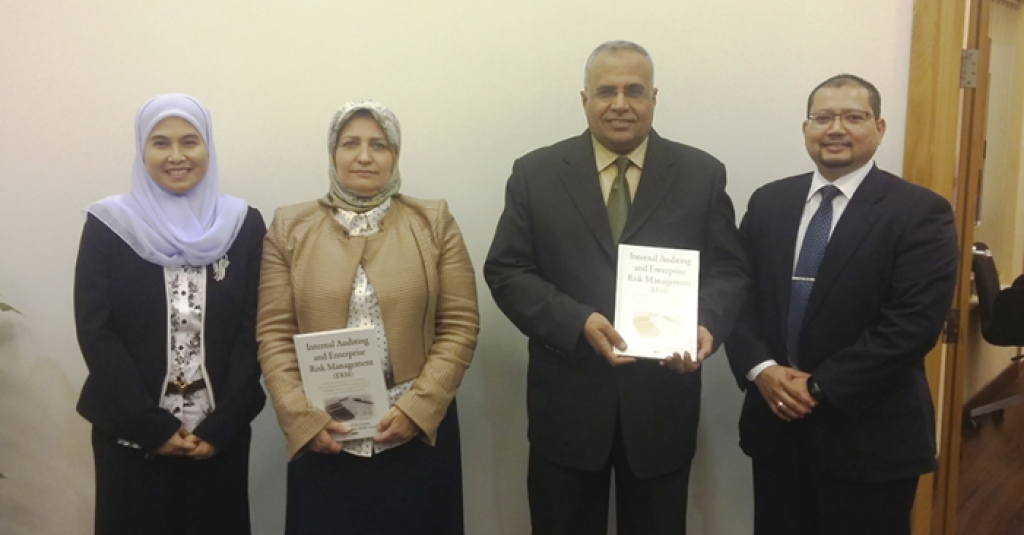
The authors, Dr. Mohd. Ariff Bin Kasim and Dr. Siti Rosmaini Binti Mohd. Hanafi, both hail from the College of Business Administration at Ajman University of Science and Technology devoted three years to incorporate several key unique features in a new book.
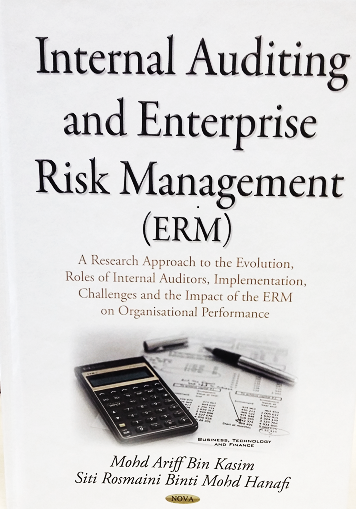
A new Internal Auditing and Enterprise Risk Management research book was published by Nova Science Publishers, an academic publisher of books based in Hauppauge, New York. The title of the book is “Internal Auditing and Enterprise Risk Management (ERM): A Research Approach to the Evolution, Roles of Internal Auditors, Implementation, Challenges and the Impact of the ERM on Organizational Performance.
Dr. Mohamed Al Shami, Dean of the College of Business Administration pointed out the importance of this research achievement which flows in achieving the goals of the college in the area of research within the framework of the goals of the university.
This book offers valuable insights based on research perspectives concerning internal auditing and its roles and implications towards the implementation of the ERM. It is specially designed to accommodate the needs of academic research in internal auditing and ERM. It is packed with primary research literature, research questions, directions and theoretical justifications that could facilitate researchers by incorporating existing relevant studies and theories. Additionally, the book could simplify and point researchers in particular directions by integrating detailed literature references, research questions and measurements procedures. Students at both postgraduate and undergraduate levels may find this book extremely useful in assisting them in their research endeavors.
The initial part of the book explores the history and evolution of internal auditing as a profession followed by comprehensive theoretical justifications for its relationships with the board. The book offers a list of possible research questions at the end of each chapter that could significantly enhance its value to researchers. The second part of the book focuses more on issues concerning the application of the ERM. Indeed, theoretical justifications that could facilitate the development of new hypotheses on various internal auditing and ERM variables using multiple-theoretical approach serves as one of the main contributions of this book. These unique features are hoped to enhance empirical studies in this new area of research. The book is currently available in paper-based and e-book forms online.