Nonlinear Dynamics Research Center (NDRC)
Introduction
The Nonlinear Dynamics Research Center (NDRC) at Ajman University was strategically established with the primary objective of significantly enhancing and expanding research in Nonlinear Dynamics, engaging both faculty and students enrolled in relevant graduate programs. The core mission of this Center is to cultivate and propel cutting-edge research, foster innovation, and stimulate entrepreneurial initiatives within this critical scientific domain.
The NDRC integrates and leverages extensive expertise across the interconnected fields of nonlinear dynamical systems, applied mathematics, computational modeling, and complex systems theory, thereby contributing
to a deeper theoretical understanding and practical application of these complex systems.
The Center's overarching aim is to achieve its ambitious objectives by fostering synergistic collaborations with distinguished professional research groups. This collaborative approach is designed to facilitate pioneering discoveries, generate high-impact academic contributions, and ultimately enhance the global scholarly discourse and practical applications inherent in nonlinear dynamics.
Strategic Plan and Framework
- Vision
The Nonlinear Dynamics Research Center aspires to establish itself as a globally recognized center of excellence in nonlinear dynamics research and innovation. Through rigorous scholarship and transformative discoveries, the NDRC will serve as an international benchmark for scientific advancement in the field, driving intellectual leadership and setting new standards for research excellence in the global scientific community. The Center is committed to advancing theoretical paradigms and expanding the fundamental understanding of nonlinear phenomena across diverse scientific domains.
- Mission
The NDRC is dedicated to:
- Advancing the frontiers of knowledge in nonlinear dynamical systems through sustained, high-caliber research that yields fundamental insights and develops innovative theoretical frameworks, thereby establishing a distinguished center of intellectual excellence;
- Enhancing the global scientific discourse through rigorous dissemination of research findings in premier international journals, conferences, and scholarly platforms, contributing substantively to the advancement of nonlinear dynamics as a discipline.
- Strengthening Ajman University's research infrastructure and academic reputation by fostering a culture of scientific inquiry, interdisciplinary collaboration, and research excellence that elevates the institution's standing within the international academic community.
- Cultivating strategic partnerships with leading research institutions, industry stakeholders, and governmental entities to facilitate knowledge exchange, technology transfer, and the translation of theoretical advances into practical applications that address pressing societal challenges.
- Objectives
- Advance Fundamental Research and Theoretical Innovation
Conduct pioneering theoretical and computational research in core areas of nonlinear dynamics, including chaotic systems, bifurcation theory, complex networks, pattern formation, synchronization phenomena, and control theory. This research agenda will expand foundational understanding of nonlinear systems, develop novel mathematical frameworks, and generate transformative insights that contribute to the intellectual advancement of the field.
IMPACT: Position the NDRC as a primary contributor to fundamental knowledge in nonlinear dynamics, with research outputs that influence theoretical developments globally and establish new research directions within the discipline.
- Foster Interdisciplinary Collaboration and Knowledge Integration
Establish and lead interdisciplinary research initiatives in collaboration with academic departments across Ajman University and with distinguished external institutions worldwide. These collaborations will apply nonlinear dynamics methodologies to address complex problems in engineering, biomedical sciences, economics, environmental systems, neuroscience, and social dynamics, thereby creating innovative cross-disciplinary research paradigms.
IMPACT: Enhance Ajman University's research visibility and collaborative networks while generating high-impact publications that demonstrate the broad applicability of nonlinear dynamics across scientific disciplines, thereby strengthening the university's reputation as a hub for interdisciplinary research.
- Drive Innovation Through Translational Research and Technology Transfer
Engage in strategic partnerships with industry and governmental organizations to translate fundamental research into innovative technologies, methodologies, and policy frameworks. This objective encompasses developing computational tools, predictive models, and control strategies with practical applications in areas such as renewable energy systems, healthcare diagnostics, financial modeling, climate science, and infrastructure resilience.
IMPACT: Generate tangible societal and economic value through research commercialization, patent development, and evidence-based policy recommendations, while establishing revenue streams and enhancing the practical relevance of university research.
- Build Research Capacity and Develop Academic Leadership
Provide an intellectually stimulating and technologically advanced research environment for faculty, postdoctoral fellows, doctoral candidates, and visiting scholars. Through structured mentorship, access to state-of-the-art computational facilities, and engagement with cutting-edge research problems, the NDRC will develop the next generation of research leaders in nonlinear dynamics and related fields.
IMPACT: Elevate Ajman University's graduate programs and research training infrastructure, attract top-tier researchers and students internationally, and contribute to the university's mission of academic excellence and human capital development in the UAE and broader region.
- Disseminate Knowledge and Shape Scientific Discourse
Establish a robust scholarly presence through publication in high-impact, peer-reviewed international journals, presentation at premier scientific conferences, and organization of specialized workshops, symposia, and seminar series. The NDRC will actively contribute to editorial boards, advisory committees, and international research networks to amplify its influence within the global scientific community.
IMPACT: Enhance the international visibility and academic prestige of Ajman University through sustained scholarly contributions, while positioning NDRC faculty as thought leaders whose work shapes research agendas and theoretical developments in nonlinear dynamics worldwide.
Frontiers of Discovery: Core Research Domains
The Nonlinear Dynamics Research Center (NDRC) pursues a comprehensive research agenda aimed at advancing both the theoretical foundations and practical applications of nonlinear dynamical systems. Our research program is strategically designed to address fundamental scientific questions, elucidate complex dynamical phenomena, and generate innovative methodologies with transformative potential across multiple scientific and engineering domains. Through rigorous mathematical analysis, computational innovation, and interdisciplinary collaboration, the NDRC makes substantial contributions to the global body of knowledge in dynamical systems theory, addressing pressing challenges in science, technology, and society.
The Center's research portfolio encompasses the following interconnected thematic areas, each representing a critical frontier in contemporary nonlinear dynamics research:
- FOUNDATIONAL THEORY AND ANALYTICAL METHODS IN DYNAMICAL SYSTEMS
This research thrust addresses fundamental mathematical and theoretical questions that underpin our understanding of nonlinear phenomena across all scales and domains. The work conducted in this area establishes the rigorous theoretical foundations necessary for advances in applied research and technological innovation.
-
CHAOTIC DYNAMICS AND BIFURCATION THEORY
We conduct systematic investigations into the emergence, characterization, prediction, and control of chaotic behaviors in deterministic systems. This includes rigorous mathematical analysis of bifurcation phenomena, identification of routes to chaos (period-doubling cascades, intermittency, crisis transitions), characterization of Lyapunov exponents and entropy measures, and the development of control strategies for chaos suppression or exploitation.
SCIENTIFIC IMPACT: This research directly contributes to the fundamental understanding of unpredictability in deterministic systems, with profound implications for fields ranging from climate science and ecology to cryptography and secure communications. Publications in this area position the NDRC as a contributor to core theoretical advances in nonlinear science.
- QUALITATIVE THEORY OF DYNAMICAL SYSTEMS
We develop and apply sophisticated analytical and geometric methods for comprehensive phase space analysis, including identification and classification of attractors (fixed points, limit cycles, quasiperiodic attractors, strange attractors), determination of basin boundaries and fractal structures, analysis of invariant manifolds, and assessment of structural stability. This work employs advanced techniques from differential topology, geometric mechanics, and modern dynamical systems theory.
SCIENTIFIC IMPACT: These investigations provide essential tools for understanding the global behaviour of complex systems without requiring complete quantitative solutions, enabling breakthrough insights in areas where traditional analytical methods prove insufficient. This research establishes methodological frameworks adopted by researchers worldwide.
- NON-AUTONOMOUS AND STOCHASTIC DYNAMICAL SYSTEMS
We explore systems subject to time-varying external influences, parametric forcing, and intrinsic stochastic perturbations. Research focuses on stability analysis under non-autonomous conditions, predictability horizons in noisy systems, noise-induced transitions, stochastic resonance phenomena, and the development of long-term statistical descriptions for systems with random components.
SCIENTIFIC IMPACT: This research addresses the critical gap between idealized autonomous systems and real-world phenomena, where time dependence and randomness are ubiquitous. Findings have direct relevance to climate modelling, financial systems, biological rhythms, and engineering systems operating under uncertain conditions, substantially expanding the applicability of dynamical systems theory.
- FRACTIONAL-ORDER DYNAMICS AND MEMORY EFFECTS
We investigate systems described by fractional differential equations, which naturally incorporate memory effects and hereditary properties. Research encompasses the mathematical foundations of fractional calculus, anomalous diffusion processes, power-law relaxation phenomena, and applications to systems exhibiting non-local temporal dependencies, including viscoelastic materials, biological tissues, electrochemical systems, and complex fluids.
SCIENTIFIC IMPACT: Fractional-order modelling represents a paradigm shift in describing systems with memory, bridging classical integer-order dynamics and the complexity of real-world materials and processes. This research opens new avenues for accurate modelling of biological systems, advanced materials, and physical processes that resist conventional mathematical description, positioning the NDRC at the forefront of this rapidly emerging field.
NDRC's Strategic Impact on Global Nonlinear Dynamics Research
Impact and Significance for Stakeholder Communities
- For the Scientific Community: The Nonlinear Dynamics Research Center (NDRC) functions as a vital catalyst for theoretical innovation and methodological advancement within nonlinear dynamics. Through the generation of foundational research addressing fundamental theoretical questions, the Center establishes new pathways for scientific inquiry. By virtue of rigorous scholarship and collaborative research initiatives, the NDRC contributes substantively to the advancement of dynamical systems theory and its multifaceted applications across disciplines.
- For Ajman University: The establishment of the NDRC represents a strategic institutional investment in research excellence, positioning Ajman University to substantially enhance its academic standing, secure international recognition, and attract competitive research funding. This initiative strategically positions the institution as a preeminent regional authority in advanced scientific research. The Center augments Ajman University's capacity to deliver advanced graduate-level education, recruit internationally distinguished faculty and high-performing doctoral candidates, and establish prestigious collaborative partnerships that align with the university's overarching strategic objectives in research innovation and scientific leadership.
Strategic Significance and Global Research Impact
The research undertaken within the NDRC's foundational investigative domains establishes the Center as a principal contributor to the theoretical architecture of nonlinear dynamics. Through systematic examination of fundamental scientific questions and development of novel analytical frameworks, the Center advances the scientific enterprise through the following dimensions:
- Advancement of Scientific Knowledge: The NDRC generates high-impact scholarly publications in premier peer-reviewed journals—including Physical Review Letters, Chaos, Nonlinear Dynamics, and publications within the SIAM portfolio—thereby actively shaping theoretical discourse and directing research trajectories within the global scientific community.
- Development of Methodological Innovation: The Center constructs novel mathematical formulations, computational algorithms, and analytical methodologies that achieve adoption within the international research community, thereby amplifying the Center's scientific impact beyond direct publication outputs and establishing foundational tools for subsequent investigations.
- Facilitation of Applied Scientific Breakthroughs: By providing rigorous theoretical underpinnings, the NDRC enables advances in applied scientific domains, ensuring that practical implementations are grounded in mathematically sound principles and empirically validated frameworks.
- Enhancement of Research Funding Competitiveness: The Center establishes demonstrable credentials for securing competitive research grants from national and international funding agencies, thereby ensuring the long-term financial sustainability and programmatic continuity of research activities.
- Cultivation of Institutional Research Excellence: Through association with cutting-edge theoretical investigation, the NDRC elevates Ajman University's academic standing, facilitates recruitment of internationally recognized scholarly talent, attracts high-caliber graduate student cohorts, and fosters prestigious international collaborative networks that strengthen the institution's reputation regionally and globally.
Institutional Positioning and Global Scientific Influence
Through sustained excellence in its foundational research endeavors, the NDRC establishes itself as an indispensable nexus within the international network of nonlinear dynamics research. The Center's contributions extend simultaneously to both the advancement of fundamental scientific knowledge and to the practical resolution of complex challenges confronting contemporary society, thereby fulfilling dual mandates of basic theoretical research and applied scientific utility.
.png)
NDRC Members
Head of NDRC

Distinguished Professor
0547617772
AIRC Members
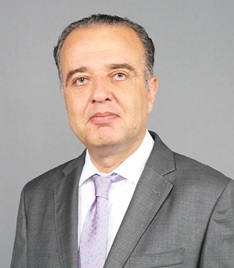
Atef F. I. Abdelkader
Head of Mathematics and Science Department
a.abdelkader@ajman.ac.ae
06 705 6324

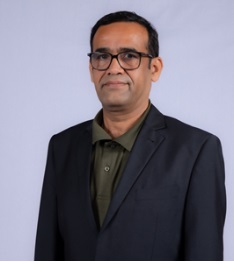
Samer Husni Abdel Razzaq Zyoud
Senior Lecturer
06 705 6439
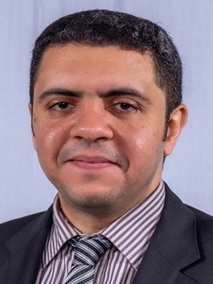
Associate Professor
Research Groups
The following research groups within the NDRC will conduct fundamental and applied research in the respective subject areas:
1- Mathematical Modelling and Simulation Group (MMSG):
Mathematical Modelling is the art of using mathematics to describe natural processes. Simulation solves the mathematical models thus developed using computers to make quantitative predictions. In the Mathematical Modelling and Simulation Group (MMSG), we focus on fundamental research in the latest mathematical models, and mathematical and computational techniques to quantitatively analyse and understand in depth problems in science and engineering. Collaboration is developed with the well-established universities and institutes worldwide as well as with industrial corporations worldwide.
2- Nonlinear Circuits and Systems (NonCiSys) Research Group:
The NonCiSys research group is dedicated to exploring cutting-edge developments, breakthroughs, and innovative applications within the realm of nonlinear circuits and systems. The group places special emphasis on various research areas, including memristor-based circuits, nonlinear oscillators, circuits for artificial intelligence and machine learning, chaos-based applications, and advanced nonlinear signal processing techniques.
3- Novel numerical methods for handling linear and nonlinear initial value problems:
The research group specializes in developing innovative numerical methods tailored for the resolution of both linear and nonlinear initial value problems. Their work focuses on advancing computational techniques to enhance accuracy and efficiency in solving mathematical models, spanning various domains. With a commitment to novel approaches, the group aims to contribute to the evolution of numerical solutions for a wide range of scientific and engineering applications.
4- Computational Modeling and Scientific Simulation (CMSS)
The Computational Modeling and Scientific Simulation (CMSS) group focuses on developing advanced mathematical models and computational techniques to simulate complex systems across various scientific disciplines. Our research encompasses the design and implementation of numerical algorithms, computational methods, and simulation frameworks to address real-world challenges in physics, engineering, biology, and beyond. By integrating theoretical insights with practical applications, we aim to advance the field of computational and numerical methods through innovative algorithms, high-performance computing, and rigorous numerical analysis, ultimately achieving impactful research outcomes.
5- Nonlinear Dynamics and Control Research Group:
(NDCRG)
This is an interdisciplinary research group. The main goal of the group is to carry out research in
theoretical and practical aspects in the area of nonlinear dynamics and control. The specific areas of interest are:
- nonlinear dynamical systems
- behavioral systems and convolutional codes
- calculus of variations
- fractional calculus
- special functions
- optimal control and its applications to epidemiological models
- time scales calculus
Adjunct Research Associates (ARA)
|
Name |
Affiliation and Position |
AU Title |
|
Prof. Tasawar Hayat |
Department of Mathematics, Quaid-I-Azam University, Islamabad 44000, Pakistan. |
Adjunct Research Professor |
|
Dr. Mohammed Al-Smadi |
College of Commerce and Business, Lusail University, Lusail, Doha, Qatar |
Adjunct Research Professor |
|
Dr. Praveen Agrawal |
Department of Mathematics, Anand International College of Engineering, Jaipur, Rajasthan-303012, India |
Adjunct Research Professor |
|
Dr. Iqbal Batiha |
Department of Mathematics, Al Zaytoonah University of Jordan, Amman, 11733, Jordan |
Adjunct Research Associate |
|
Prof. Ishak Hashim |
Department of Mathematical Sciences, Faculty of Science & Technology, UKM, 43600 UKM Bangi, Selangor, Malaysia |
Adjunct Research Professor |
Collaboration with other Research Groups and Centers
- Collaboration with COMSATS University (COMSATS), Pakistan.
- Collaboration with the University of Jordan, Jordan.
- Collaboration with Constantine 2 University, Algeria.
- Collaboration with Mutah University , Jordan.
- Collaboration with University Sains Malaysia Research Group, Malaysia.
- Collaboration with Al Istiqlal University, Palestine.
- Collaboration with Kyoto University, Kyoto, Japan.
- Collaboration with Ton Duc Thang University, Vietnam.
External & Internal Grants
External Grants
|
External Grants |
N |
Institution / company |
Project start |
End of project |
|
Prof. Shaher Momani |
1 |
Microsoft |
1/03/2021 |
31/05/2023 |
|
Prof. Samir Hadid |
1 |
Microsoft |
1/03/2021 |
31/05/2023 |
|
Total |
2 |
|||
Internal Grants
|
Internal Grants |
N |
Academic year |
|
Prof. Shaher Momani |
3 |
2021/ 2022 |
|
Prof. Samir Hadid |
1 |
2021/ 2022 |
|
Dr. Elmuez Dawi, Member |
1 |
2021/ 2022 |
|
Dr. Abd Al Karim Ismail, Member |
1 |
2021/ 2022 |
|
Total |
6 |
|
International Collaborators
The suggested external partners are as follows. Others may also be considered.
|
Name |
Contact address |
|
Dr. Viet-Thanh Pham |
Industrial University of Ho Chi Minh City, Vietnam |
|
Dr. Koichi Unami |
Kyoto University, Kyoto, 606-8502, Japan |
|
Dr. Adel Ouannas |
University of Larbi Ben M’hidi, Oum El Bouaghi, Algeria |
|
Dr. Sunil Kumar |
The National Institute of Technology, Jharkhand, Jamshedpur, India |
|
Dr. Rawya Al-deiakeh |
Irbid Private University, Jordan |
|
Dr. Jagdev Singh |
JECRC University, Rajasthan, Jaipur, 303905, India |
|
Dr. Shrideh Al-Omari |
Al-Balqa Applied University, Amman, 11134, Jordan |
|
Dr. Nadir Djeddi |
Echahid Cheikh Larbi Tebessi University, Tebessa, Algeria |
|
Dr. Banan Maayah |
The University of Jordan, Jordan |
|
Dr. Rabha Ibrahim |
IEEE: 94086547, Portland, United States |
|
Dr. Shatha Hasan |
Al-Balqa Applied University, Amman, 11134, Jordan |
NDRC Activities
-
International Conference on Fractional Differentiation and Its Applications, (ICFDA 2023)
Description
The ICFDA’23 International Conference on Fractional Differentiation and its Applications is a specialized conference on fractional-order calculus and its applications. It is a generalization of the integer-order ones. The fractional-order differentiation of arbitrary orders takes into account the memory effect of most systems. The order of the derivatives may also be variable, distributed or complex. Recently, fractional-order calculus became a more accurate tool to describe systems in various fields in mathematics, biology, chemistry, medicine, mechanics, electricity, control theory, economics, and signal and image processing.
For more information, please visit the official ICFDA 2023 website: https://www.ajman.ac.ae/en/icfda2022/about-icfda
-
Seminar: Combatting Predatory Academic Journals and Conferences their Impact on Arab Researchers
26 February 2024