-
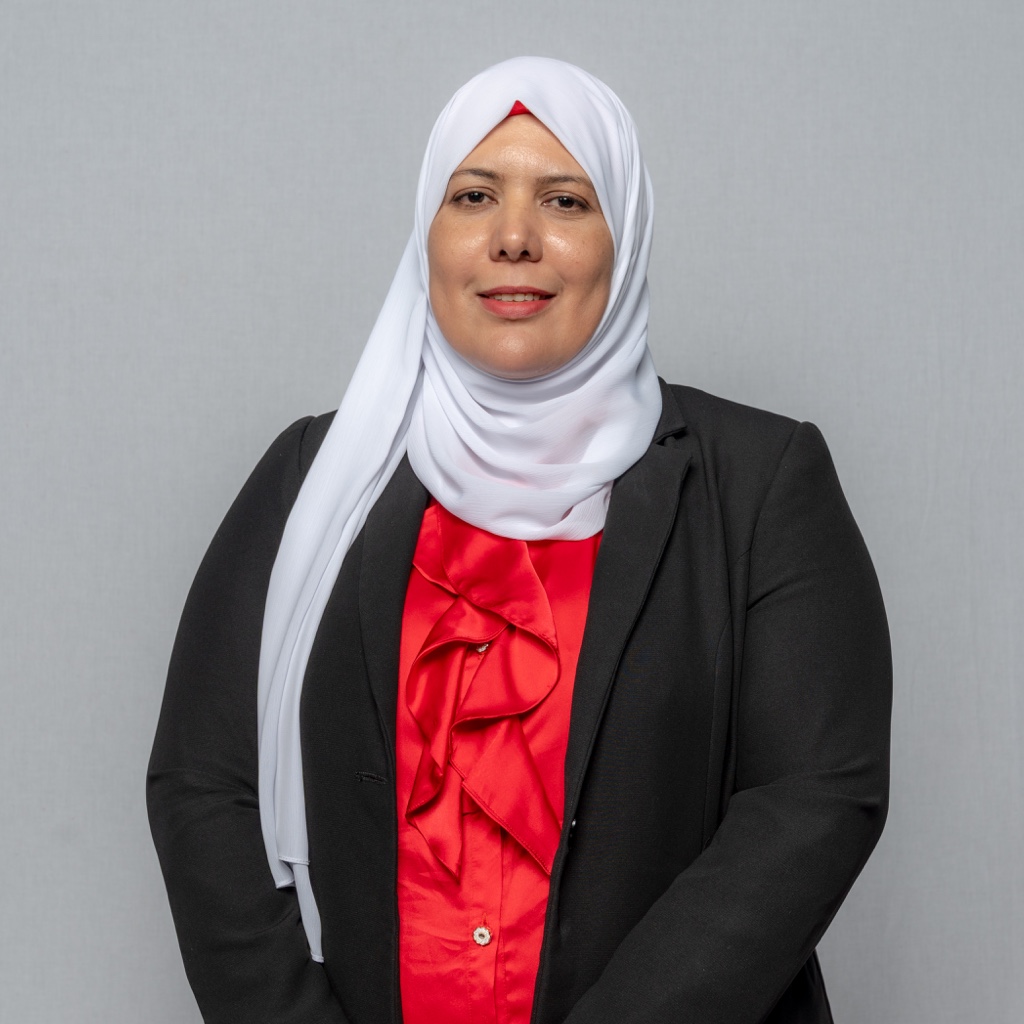
Shorouk Mohamed Abou Dahr
- Assistant Professor
- Ext: 5475
-
Dr. Shorouk Aboudahr is an Assistant Professor of Education at Ajman University, UAE, specialising in educational leadership, quality improvement, inclusive learning environments, and early childhood education. She holds a PhD in Educational Leadership and Management and two master’s degrees in Educational Management and Early Childhood Education. Her international experience spans teaching, postgraduate supervision, programme coordination, and research across Egypt, Malaysia, China, and the UAE. Her expertise encompasses connecting educational leadership with inclusive teaching, teacher development, children’s well-being, and technology-supported learning. She has led research on AI and workforce readiness for people with disabilities and contributed to curriculum and postgraduate programme development. She also delivers research training in bibliometric analysis and SPSS. Her professional development includes ISO 9001:2015 implementation, Six Sigma Green Belt, risk management, and leadership training, strengthening her commitment to evidence-informed educational improvement.
Education
- PhD in Educational Leadership and Management, Universiti Utara Malaysia, Malaysia.
- MSc in educational management, Universiti Utara Malaysia, Malaysia.
- MSc in Early Childhood Education , Unitar International University, Malaysia.
- Post Graduate Certificate of curriculum and instruction in education, Tanta University, Egypt.
- Post Graduate Certificate of Education sciences, Tanta University, Egypt.
- BSc Arabi Language and Islamic Sciences, Fayoum University, Egypt.
PhD in Educational Leadership and Management, Universiti Utara Malaysia, Malaysia.
MSc in educational management, Universiti Utara Malaysia, Malaysia.
MSc in Early Childhood Education , Unitar International University, Malaysia.
Post Graduate Certificate of curriculum and instruction in education, Tanta University, Egypt.
Post Graduate Certificate of Education sciences, Tanta University, Egypt.
BSc Arabi Language and Islamic Sciences, Fayoum University, Egypt.
Experience
- Assistant Professor, College of Humanities and Sciences at Ajman University
- Master’s Program Coordinator, Faculty of Education, Unitar international University
- Senior Lecturer, Faculty of Education, Unitar international University
- Educational Supervisor, Ministry of Education, Egypt
Assistant Professor, College of Humanities and Sciences at Ajman University
Master’s Program Coordinator, Faculty of Education, Unitar international University
Senior Lecturer, Faculty of Education, Unitar international University
Educational Supervisor, Ministry of Education, Egypt
Teaching Area
- Undergraduate Courses: Critical thinking & Quanti,Management and Leadership , Sociology in Education , Introduction to Assessment in Education , Learning Design , Differentiated Instruction ,
- Postgraduate Courses: Advanced Quantitative Analysis, Educational Research Methodology, Inclusive Learning Environment School Effectiveness and Improvement , Modification of Learning Materials for Young Children, Educational Leadership and Management , Psychology of Learning and Instruction , Curriculum, Instruction and Assessment , Philosophical Ideas in Education , Education and Law , School Financial Management and Control, Family and Community Relation Childhood Education
Undergraduate Courses: Critical thinking & Quanti,Management and Leadership , Sociology in Education , Introduction to Assessment in Education , Learning Design , Differentiated Instruction ,
Postgraduate Courses: Advanced Quantitative Analysis, Educational Research Methodology, Inclusive Learning Environment School Effectiveness and Improvement , Modification of Learning Materials for Young Children, Educational Leadership and Management , Psychology of Learning and Instruction , Curriculum, Instruction and Assessment , Philosophical Ideas in Education , Education and Law , School Financial Management and Control, Family and Community Relation Childhood Education
Publications
-
JournalShorouk, A., Jing, L., Alharthi, M., & Taddese, E. T. (2026)., Shorouk, A., Jing, L., Alharthi, M., & Taddese, E. T. (2026). Flow Experience in the Chinese Blended Classroom: How Students and Teachers Shape English Success. World Journal of English Language, 16(6), 466-477. https://doi.org/10.5430/wjel.v16n6p466, World Journal of English Language, 16, pp.466 - 477, Sep 2026, doi: https://doi.org/10.5430/wjel.v16n6p466
-
JournalTaddese ET, Yassin HA, Dinsa MT and Shorouk A (2026) Learner autonomy in Ethiopian secondary EFL classrooms: observed teacher practices and student perceptions. Front. Educ. 11:1940198. doi: 10.3389/feduc.2026.1940198, Front. Educ, Jan 2026, doi: doi: 10.3389/feduc.2026.1940198
-
JournalShorouk, A., Taddese, E. T., Nalliah, M., & Benlahcene, A. (2026). Leadership for Safe Digital Early Learning Environments: Cyber Behaviour Management and Mental Well-being in Early Childhood Education. International Journal of Learning, Teaching and Educational Research, 25(7), 668-688. https://doi.org/10.26803/ijlter.25.7.30, International Journal of Learning, Teaching and Educational Research, Jan 2026, doi: https://doi.org/10.26803/ijlter.25.7.30
-
JournalIshtiaq, Z., Taddese, E.T., Gebresilase, B.M. et al. Emotional intelligence of school leaders and teacher morale in Pakistani secondary schools. Discov Educ 5, 1026 (2026). https://doi.org/10.1007/s44217-026-01900-4, ., Jan 0001, doi: https://doi.org/10.1007/s44217-026-01900-4
-
JournalJiankun, L., Taddese, E.T., Gebresilase, B.M. et al. Associations of digital well being and electronic addiction with academic achievement among middle school students in Shandong China. Discov Sustain 7, 1390 (2026). https://doi.org/10.1007/s43621-026-03829-y, ., Jan 0001, doi: .
-
JournalVasu, S.D., Taddese, E.T., Gebresilase, B.M. et al. Enhancing digital learning: the role of LMS features and usability in student engagement and academic performance. Discov Educ 5, 602 (2026). https://doi.org/10.1007/s44217-026-01647-y, ., Jan 0001, doi: .
-
JournalTaddese, E.T., Gebresilase, B.M., Shorouk, A. et al. The implementation of inclusive education for students with special educational needs in Ethiopian primary schools. Discov Educ 5, 594 (2026). https://doi.org/10.1007/s44217-026-01622-7, ., Jan 0001, doi: .
-
JournalCheng Z, Taddese ET, Gebresilase BM, Dinsa MT, Berhanu KZ, Abate MT and Shorouk A (2026) The mediating role of emotional exhaustion in the relationship between normative commitment and pay satisfaction among university counselors. Front. Psychol. 17:1810414. doi: 10.3389/fpsyg.2026.1810414, ., Jan 0001, doi: .
-
JournalWeina, L., Taddese, E. T., Gebresilase, B. M., Nair, S. M., Berhanu, K. Z., Ahmed, K., & Shorouk, A. (2026). Role of Self-Efficacy and Belongingness in Mitigating Teacher Burnout: Evidence from Shandong Province Private Universities. Int J Learn Teach Educational Res, 25(5). https://doi.org/10.26803/ijlter.25.5.44, ., Jan 0001, doi: .
-
JournalLiu, T., Taddese, E. T., Gebresilase, B. M., Elka, Z. Z., & Shorouk, A. (2026). Trends in kindergarten teachers’ professional development research: A comparative bibliometric analysis of China and global contexts (2015–2025). International Journal of Learning, Teaching and Educational Research, 25(4), 951-978. https://doi.org/10.26803/ijlter.25.4.43 https://ijlter.org/index.php/ijlter/article/view/16444, ., Jan 0001, doi: .
-
JournalTeshome Taddese, E., Tasisa Dinsa, M., Merkine Gebresilase, B., & Farag Mohamed Aboudahr, S. M. (2026). Reflective professional learning practices of Ethiopian primary school teachers: the gap between practice and theory. Education 3-13, 54(3), 667–676. https://doi.org/10.1080/03004279.2024.2342503, ., Jan 0001, doi: .
-
JournalGebresilase, B. M., Taddese, E. T., Zhang, C., Elka, Z. Z., Aslam, S., & Shorouk, A. (2026). Recruitment and selection practices of pre-service teachers: a case study of selected Colleges of Teacher Education in Ethiopia. European Journal of Teacher Education, 1–21. https://doi.org/10.1080/02619768.2026.2729273, ., Jan 0001, doi: .
-
JournalAli J, Saoula O, Benlahcene A, Jabeen S and Shorouk A (2026) What is the relationship between sports psychology and educational attainment: exploring the moderating and the mediating relationship. Front. Educ. 11:1750942. doi: 10.3389/feduc.2026.1750942, ., Jan 0001, doi: .
-
JournalShorouk, A., Taddese, E. T., Nalliah, M. M., & Saidin, K. (2026). The Role of Transformational Leadership in Managing Cyber Behavior and Promoting Mental Well-Being in Early Childhood Education in the Digital Age. In A. ElSayary & A. Shomotova (Eds.), Implications for Students' Mental Health in the Digital Age: AI and Cyber Behavior (pp. 455-476). IGI Global Scientific Publishing. https://doi.org/10.4018/979-8-3373-4222-1.ch018, ., Jan 0001, doi: .
-
JournalBenlahcene, A., Shorouk, A., Taddese, E. T., & Vasugi Govindarajoo, M. (2026). Academic procrastination among higher education adolescents college students: a comprehensive bibliometric analysis and content analyses from 1960 to 2024. International Journal of Adolescence and Youth, 31(1). https://doi.org/10.1080/02673843.2026.2629232, ., Jan 0001, doi: .
-
JournalGovindarajoo, M. V., Shorouk, A., Benlahcene, A., Nasir, M. B. M., & Taddese, E. T. (2026). Exploring 21st-century ESL classroom challenges: a case study of Malaysian secondary school teachers. Humanities and Social Sciences Letters, 14(1), 313-327. https://doi.org/10.18488/73.v14i1.4719, ., Jan 0001, doi: .
-
JournalTaddese, E.T., Shorouk, A., Gebresilase, B.M. et al. Primary School Teachers’ Reflective Professional Learning Practice: Bridging the Theory–Practice Divide. Interchange 56, 191–205 (2025). https://doi.org/10.1007/s10780-025-09547-0, ., Jan 0001, doi: .
-
JournalTaddese ET, Yassin HA, Dinsa MT and Shorouk A (2026) Teachers’ questioning strategies and students’ critical thinking in Ethiopian English as a foreign language classrooms: a mixed-methods study. Front. Educ. 11:1931379. doi: 10.3389/feduc.2026.1931379, ., Jan 0001, doi: .
-
JournalTaddese, E.T., Shorouk, A., Gebresilase, B.M. et al. Primary School Teachers’ Reflective Professional Learning Practice: Bridging the Theory–Practice Divide. Interchange 56, 191–205 (2025). https://doi.org/10.1007/s10780-025-09547-0, ., Jan 0001, doi: .
-
JournalNalliah, M. M., Shorouk, A., Huan, L. W., & Taddese, E. T. (2025). Leadership and management in early childhood: Navigating contradictions and pedagogical practices to foster inclusivity. International Journal of Evaluation and Research in Education, 14(5), 3765–3773.http://doi.org/10.11591/ijere.v14i5.33061, ., Jan 0001, doi: .
-
JournalGovindarajoo, M. V., Aslam, S., Aboudahr, S., & Nesamany, S. S. (2025). From Chalk to Digital: Evolution, Challenges, and Identity in the Careers of Retired Malaysian ESL Teachers. World Journal of English Language, 15(8), 254-254. https://doi.org/10.5430/wjel.v15n8p254, ., Jan 0001, doi: .
-
JournalSivaraja, S., Nalliah, M., Aslam, S., & Shorouk, A. (2025). Dynamics of professional growth: A study of intrinsic and extrinsic motivators in CPD programmes at a community college. International Research Journal of Multidisciplinary Scope, 6(2), 81-89., ., Jan 0001, doi: .
-
Book ChapterShorouk, A., Al-Showaikh, F., & Nalliah, M. (2025). Artificial Intelligence and Students Happiness: The Mediating Role of Students Self-Regulation to Use AI at Bahrain Private University. In A. ElSayary (Ed.), Prompt Engineering and Generative AI Applications for Teaching and Learning (pp. 351-370). IGI Global Scientific Publishing. https://doi.org/10.4018/979-8-3693-7332-3.ch021, ., .
-
Book ChapterShorouk, A., Benlahcene, A., & Govindarajoo, M. V. (2025). Ethical Horizons in AI-Driven Educational Research: Transformative Learning and Innovation. In A. ElSayary (Ed.), Prompt Engineering and Generative AI Applications for Teaching and Learning (pp. 289-304). IGI Global Scientific Publishing. https://doi.org/10.4018/979-8-3693-7332-3.ch018, ., .
-
JournalGovindarajoo, M. V. V., Shorouk, A., Benlahcene, A., & Taddese, E. T. (2025). Exploring perceptions of Malaysian primary school teachers towards the implementation of common European framework reference of language-aligned English textbooks. Humanities and Social Sciences Letters, 13(2), 767-780. https://doi.org/10.18488/73.v13i2.4300, ., Jan 0001, doi: .
-
JournalTaddese, E. T., Gebresilase, B. M., Shorouk, A., Dinsa, M. T., Mad Baguri, E., & Wider, W. (2025). Early childhood care and education practices in Ethiopia: a case of selected pre-primary schools. Education 3-13, 1–15. https://doi.org/10.1080/03004279.2025.2464859, ., Jan 0001, doi: .
-
JournalTaddese, E. T., Gebresilase, B. M., Aboudahr, S. M. F. M., Dinsa, M. T., & Aslam, S. (2025). The practice of inclusive education in Central Ethiopia Regional State: a case study of primary schools. Education 3-13, 1–14. https://doi.org/10.1080/03004279.2024.2449462, ., Jan 0001, doi: .
-
ConferenceL. Lan, F. Huang and S. M. F. M. Aboudahr, "Integrating Digital Pedagogy into Sports Curriculum Design:A Theoretical and Practical Approach," 2025 International Conference on Educational Technology Management (ICETM), Guangzhou, China, 2025, pp. 473-478, doi: 10.1109/ICETM67477.2025.11413554. 10.1109/ICETM67477.2025.11413554, ., .
-
JournalShorouk, A., Vasugi Govindarajoo, M., Benlahcene, A., Teshome Taddese, E., & Santhira Segaran, V. (2025). Fine motor skills performance among Singaporean kindergarten students. Cogent Education, 12(1). https://doi.org/10.1080/2331186X.2025.2451506, ., Jan 0001, doi: .
-
JournalShorouk, A., Vasugi Govindarajoo, M., Benlahcene, A., Teshome Taddese, E., & Santhira Segaran, V. (2025). Fine motor skills performance among Singaporean kindergarten students. Cogent Education, 12(1). https://doi.org/10.1080/2331186X.2025.2451506, ., Jan 0001, doi: .
-
JournalAboudahr, S., Aslam, S., Hua, L. U., Misron, A., Raime, S., & Wah, Y. B. (2024). Mapping the global landscape of STEM education: a bibliometric analysis using Scopus database. International Journal of Evaluation and Research in Education, 13(6), 4225-4236. http://doi.org/10.11591/ijere.v13i6.28687, ., Jan 0001, doi: .
-
JournalAboudahr, S. (2024). Electronic human resource management (e-HRM) strategic in education: insights from bibliometric analysis. In International perspectives on educational administration using educational inquiry (pp. 139-154). Routledge. https://doi.org/10.4324/9781032621296, ., Jan 0001, doi: .
-
Book ChapterAboudahr, S. (2024). Administrative Procedure and Decision Support System in Educational Administration. In International Perspectives on Educational Administration using Educational Inquiry (pp. 43-52). Routledge. https://doi.org/10.4324/9781032621296, ., .
-
JournalShahidi Hamedani, S., Aboudahr, S., Nadi, F., binti Abdul Rahman, S. Y. & Naghavipour, H. (2024). Artificial Intelligence and Empowerment of People with Disabilities in Society 5.0: Trends and Insights from a Bibliometric Analysis. Journal of Information Technology Management, 16(4), 142–161. https://doi.org/10.22059/jitm.2024.99262, ., Jan 0001, doi: .
-
JournalBenlahcene, A., Mohamed Abdelrahman, R., Ahmed, M., & Aboudahr, S. M. F. M. (2024). A pathway to engagement: the mediating role of self-efficacy between interpersonal relationships and academic engagement. Cogent Psychology, 11(1). https://doi.org/10.1080/23311908.2024.2330239, ., Jan 0001, doi: .
-
JournalGovindarajoo, M. V., Aboudahr, S., & Mukundan, J. (2023). Writer-Based and Reader-Based Prose in the Author’ s Development as a Newspaper Columnist. World Journal of English Language, 13(8), 1-63. https://doi.org/10.5430/wjel.v13n8p63, ., Jan 0001, doi: .
-
JournalMohamed Aboudahr, S. M. F., Govindarajoo, M. V., Olowoselu, A., & Mohd Sani, R. (2023). Investigating moderating influence of gender on augmented reality and students satisfaction: experiences in cultures and linguistic diversity. Asian Journal of University Education (AJUE), 19(3), 447-461. DOI: 10.24191/ajue.v19i3.23328, ., Jan 0001, doi: .
-
JournalAboudahr, S. M. F. M., Mohamed, M., & Musibau, H. O. (2018). Re-visiting diffusion of innovation theory on the impact of ICT infrastructure and quality governance in higher education. International Journal of Management and Business Research. 8(2), 206-215, ., Jan 0001, doi: .
-
JournalAboudahr, S. M. F. M., & Mohamad, M. A. B. (2021). Strategic leadership as a mediating variable between organizational climate and quality improvement in higher education. MOJEM: Malaysian Online Journal of Educational Management, 9(3), 23-40., ., Jan 0001, doi: .
Shorouk, A., Jing, L., Alharthi, M., & Taddese, E. T. (2026)., Shorouk, A., Jing, L., Alharthi, M., & Taddese, E. T. (2026). Flow Experience in the Chinese Blended Classroom: How Students and Teachers Shape English Success. World Journal of English Language, 16(6), 466-477. https://doi.org/10.5430/wjel.v16n6p466, World Journal of English Language, 16, pp.466 - 477, Sep 2026, doi: https://doi.org/10.5430/wjel.v16n6p466
While blended learning has become increasingly institutionalised in Chinese higher education, low academic performance in English and limited participation in English-Medium Instruction (EMI) environments remain significant concerns. Although much has been researched on technological integration and linguistic challenges, little research has examined the interaction of student- and teacher-related factors to foster a flow experience and, subsequently, improve academic performance in English. This research is based on the Flow Theory (Csikszentmihalyi, 1990), which examines direct and mediated relationships among student and teacher factors, flow experience, and English academic performance within a Chinese blended classroom context. The sample data were gathered from 165 non-English majors, both first- and second-year undergraduates enrolled in mandatory College English classes, using purposive sampling. A structured questionnaire comprising 38 questions was developed and administered, and the data were analysed using Partial Least Squares Structural Equation Modelling (PLS-SEM). The results show that student- and teacher-related factors have significant positive direct effects on English academic performance. The results of the flow experience are notably large and positive, and flow experience partially mediates the relationships between students’ and teachers’ factors and academic outcomes. The findings provide empirical support for the challenge-skill balance hypothesis of Flow Theory, demonstrating how the joint influence of the learners’ capabilities and the instructional requirements leads to optimal psychological involvement. The study contributes to existing knowledge by incorporating variables related to learners and instruction into a single structural model, which will help understand how psychological immersion can be applied to English language success within a blended higher education setting.