| Abstract |
One of the most significant global issues, which has very severe effects on the economy, the environment, and the society in general is food waste that has become a burning issue today. Millions of tons of edible food are thrown away annually around the world, yet it is safe and even suitable to consume. Meanwhile, huge populations of people and families face hunger, malnutrition and food insecurity. Such sharp contradiction is the symptom of the systematic failure in the management of food resources, and it underlines a sense of urgent necessity of innovative, efficient, and sustainable mechanisms, which are able to bridge the gap between surplus food and those who require it the most.
It is also exacerbated by the activities of supermarkets, restaurants, hotels, and local markets which, because of the nature of production and quality policy, regularly receive large amounts of unsold yet perfectly good food. Without the redistribution systems, these foods are discarded in most cases at the end of the day. Such a disposal does not only mean a direct economic loss by any business but also plays a major role in the decline of the environment because waste food in landfills releases the harmful greenhouse gasses like methane. Besides, food waste contributes to the escalation of social inequalities through the restricted availability of nutritious food to the vulnerable groups.
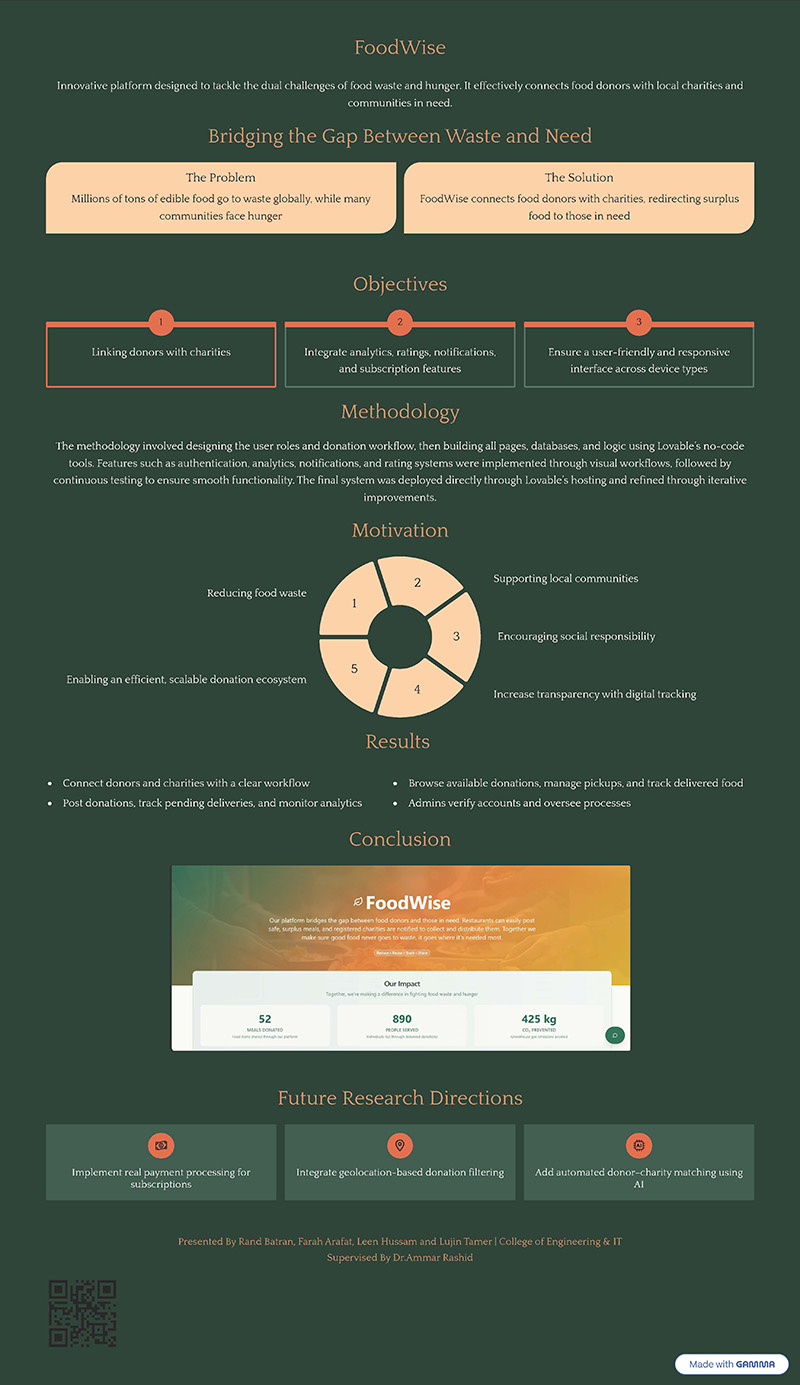
To face this challenge, our project suggests a web-based platform solution which will be integrated to bridge three major categories of people: donors, charities, and system administrators. Supermarkets, grocery stores, restaurants, bakeries and other food suppliers are mentioned as donors that periodically have excess goods. Registered charities are the stable linking factor whereby the donated food is collected, sorted, and allocated to families that are in need, shelters, orphanages and community centres. The administrators maintain the system integrity by checking the authenticity of the donors and charities, managing processes of donation, maintaining precision of the data and enabling effective communication between all participants. With such an organized system, the platform serves as the dynamic element that will turn the whole process of donations into a transparent, efficient, and organized process.
|