-
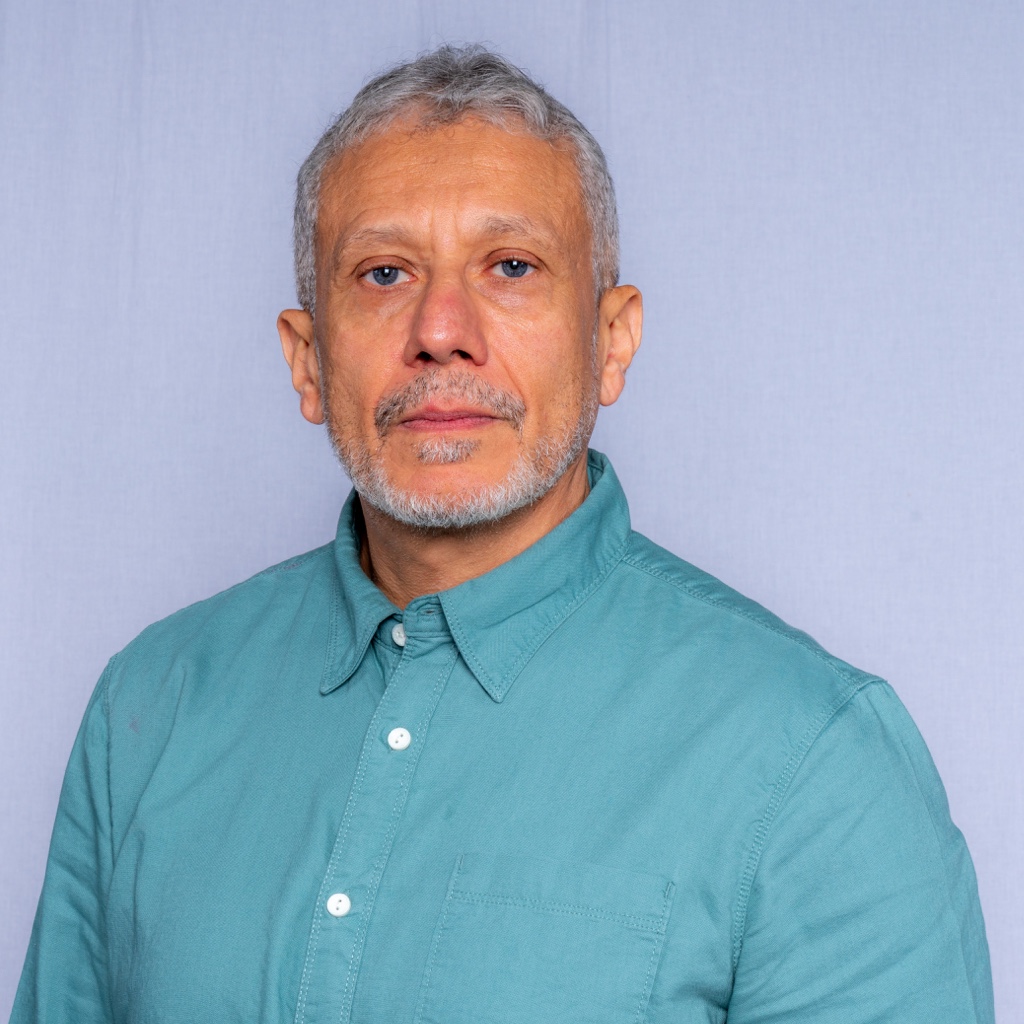
Marei Ahmed
- Professor
- Ext: --
Prof. Marei Ahmed is a distinguished professor at Rennes University, with an extensive academic and research background in psychometry, positive and exercise psychology. He earned his Ph.D. in Psychology from Rennes 2 University, France, in 2011, and his Ph.D. in (STAPS) from the same institution in 2005. His research interests include positive psychology, psychometrics, exercise psychology, STAPS, and health psychology. Prof. Marei Ahmed has published over 115 papers, conference presentations, books, and book chapters globally. He served as a Board Director for the International Positive Psychology Association (IPPA) from 2015-2019 and has been an editorial board member, reviewer, and scientific committee member for several international and European conferences and journals. Additionally, he was recognized as a researcher in talents and competences (Competences et Talents) in France in 2010. He is also qualified as an Assistant Professor in three different domains: 1) Psychology; 2) Education Sciences, and STAPS from CNRS (France in 2009). Recently, he has been elected, for the fourth time, as a member of IPPA council of Advisors (2025-2028) . https://ippanetwork.org/council-of-advisors/marei-salama-younes/
Education
- Ph.D., Psychology, Rennes 2 University, France, 2011.
- Ph.D., (STAPS), Positive Psychology, Rennes 2 University, France, 2005.
Ph.D., Psychology, Rennes 2 University, France, 2011.
Ph.D., (STAPS), Positive Psychology, Rennes 2 University, France, 2005.
Experience
- (2002- 2022)Professor, Researcher, and Teacher-Researcher (Attache Temporaire d'Enseignement et Recherche) + (Professor Contractual) + Full Professor at various universities in France, Morocco, KSA and Egypt.
- 1- CREAPS; 2- Laboratoire de Psychologie : Cognition, Comportement, Communication and 3- Laboratoire Cognitions Humaine et Artificielle (Chart-UPON, EA 4004), Université Paris Nanterre, France, 2017-2022.
- Researcher/Associate Researcher, LAUREPS-CRPCC-Rennes 2 University, France, 2007-2016.
- Distinguished member at the Board of Directors, International Positive Psychology Association (IPPA), 2015-2019.
- Editorial Board Member, Reviewer, and Scientific Committee Member for international and European conferences and journals (e.g., JPS, ECPP 2016, etc.), 2011-Present.
- Talents and Competencies Researcher (Compétences et Talents), France, 2010.
- Elected for the fourth time to serve as the sole representative of the Arab countries at the IPPA Council of Advisors for the period from(2025-2028)
- Professor of Psychology
(2002- 2022)Professor, Researcher, and Teacher-Researcher (Attache Temporaire d'Enseignement et Recherche) + (Professor Contractual) + Full Professor at various universities in France, Morocco, KSA and Egypt.
1- CREAPS; 2- Laboratoire de Psychologie : Cognition, Comportement, Communication and 3- Laboratoire Cognitions Humaine et Artificielle (Chart-UPON, EA 4004), Université Paris Nanterre, France, 2017-2022.
Researcher/Associate Researcher, LAUREPS-CRPCC-Rennes 2 University, France, 2007-2016.
Distinguished member at the Board of Directors, International Positive Psychology Association (IPPA), 2015-2019.
Editorial Board Member, Reviewer, and Scientific Committee Member for international and European conferences and journals (e.g., JPS, ECPP 2016, etc.), 2011-Present.
Talents and Competencies Researcher (Compétences et Talents), France, 2010.
Elected for the fourth time to serve as the sole representative of the Arab countries at the IPPA Council of Advisors for the period from(2025-2028)
Professor of Psychology
Teaching Area
- Positive Psychology, Psychometric, Exercise psychology
- Psychology, Psychometric, Positive psychology, Sport psychology.
- Psychometrics and tests, psychological test validation in French and Arabic, positive psychology.
- Social, Family, Industrial, Educational Psychology
Positive Psychology, Psychometric, Exercise psychology
Psychology, Psychometric, Positive psychology, Sport psychology.
Psychometrics and tests, psychological test validation in French and Arabic, positive psychology.
Social, Family, Industrial, Educational Psychology
Research
- 1. Ahmed, M. (2025). Reviewing the translated and validated scales in positive psychology in sports within Arabic-speaking countries. In M. C. Richaud, B. Mesurado, & V. N. Lemos (Eds.), Contemporary psychometrics: New developments and applications. IntechOpen. https://doi.org/10.5772/intechopen.1010095
- Abdelrahman, R. M., Massoud, W. A., & Ahmed, M. (2025). Mental Health and Subjective Vitality in Arabic-Speaking North Africa: A Cross-Cultural Examination of the Mental Health Continuum–Short Form (MHC-SF). Psychiatric Quarterly, 1-18.
- Tayim, N., Ayasrah, M. N., Ahmed, M., & Abdelrahman, R. M. (2025). A Cross‐Sectional Network Analysis of Intimate Partner Violence and Suicidal Ideation Among Arab Women. Clinical Psychology & Psychotherapy, 32(1), e70037.
- Abdelrahman, R. M., Alsalhi, N. R., Alzoubi, A. M., Benlahcene, A., Ahmed, M., & El-Mneizel, A. F. (2025). Undergraduate Students' Perception Towards Cheating in Online Learning Programs: A Case Study at Ajman University, UAE. International Journal, 15, e2025128.
- Abdelrahman, R. M., Ahmed, M., Tayim, N., & Kordbagheri, M. (2024). Identification of the core characteristics of vulnerable/hypersensitive narcissism and its association with the dark triad in a large international sample: A network analysis study. Psychiatric Quarterly, 95(3), 415-431.
- Kordbagheri, A., Abdelrahman, R. M., Alsharif, A. F., & Ahmed, M. (2024). Psychometric properties of the Persian version of the reinforcement sensitivity theory personality questionnaire (RST-PQ). Acta Psychologica, 244, 104211.
- Ahmed, M., Abdelrahman, R. M., & Benlahcene, A. (2024). Passion types and life satisfaction among older adult Moroccans: Reliability of scores and mediation by resilience. Journal of Psychology in Africa, 34(1), 19-25.
- Davoudi, M., Abdelrahman, R. M., Ahmed, M., & Salekfard, S. V. (2024). How internalizing and externalizing symptoms related to suicidal ideation and suicide attempts in patients with obsessive-compulsive disorder? A network analysis study. Current Psychology, 43(35), 28079-28095.
- Salama-Younes, M., Guingouain, G., Le Floch, V., & Somat, A. (2014). Besoin de cognition, besoin d’évaluer, besoin de clôture: proposition d’échelles en langue française et approche socio-normative des besoins dits fondamentaux. European review of applied psychology, 64(2), 63-75.
- Salama-Younes, M., & Hashim, M. (2018). Passion, vitality, and life satisfaction in physically active older adults. The Journal of Positive Psychology, 13(3), 309–319. https://doi.org/10.1080/17439760.2017.1291848
- Salama-Younes, M. (2017). Psychometric properties of the Psychological Flourishing Scale in an Egyptian setting. Journal of Psychology in Africa, 27(4), 310-315.
- Salama-Younes, M., Montazeri, A., Ismaïl, A., & Roncin, C. (2009). Factor structure and internal consistency of the 12-item General Health Questionnaire (GHQ-12) and the Subjective Vitality Scale (VS), and the relationship between them: a study from France. Health and Quality of life Outcomes, 7(1), 22.
- Salama-Younes, M., Martin-Krumm, C., Le Foll, D., & Roncin, C. (2008). Qualités psychométriques du questionnaire d'évaluation du mode explicatif des enfants. Canadian Journal of Behavioural Science/Revue canadienne des sciences du comportement, 40(3), 178.
- Psychometric, Positive psychology, Sport and Exercise psychology.
- Psychometrics and Positive psychology
- Resilience as a mediator of self-compassion and psychological well-being among Arab adults
1. Ahmed, M. (2025). Reviewing the translated and validated scales in positive psychology in sports within Arabic-speaking countries. In M. C. Richaud, B. Mesurado, & V. N. Lemos (Eds.), Contemporary psychometrics: New developments and applications. IntechOpen. https://doi.org/10.5772/intechopen.1010095
Abdelrahman, R. M., Massoud, W. A., & Ahmed, M. (2025). Mental Health and Subjective Vitality in Arabic-Speaking North Africa: A Cross-Cultural Examination of the Mental Health Continuum–Short Form (MHC-SF). Psychiatric Quarterly, 1-18.
Tayim, N., Ayasrah, M. N., Ahmed, M., & Abdelrahman, R. M. (2025). A Cross‐Sectional Network Analysis of Intimate Partner Violence and Suicidal Ideation Among Arab Women. Clinical Psychology & Psychotherapy, 32(1), e70037.
Abdelrahman, R. M., Alsalhi, N. R., Alzoubi, A. M., Benlahcene, A., Ahmed, M., & El-Mneizel, A. F. (2025). Undergraduate Students' Perception Towards Cheating in Online Learning Programs: A Case Study at Ajman University, UAE. International Journal, 15, e2025128.
Abdelrahman, R. M., Ahmed, M., Tayim, N., & Kordbagheri, M. (2024). Identification of the core characteristics of vulnerable/hypersensitive narcissism and its association with the dark triad in a large international sample: A network analysis study. Psychiatric Quarterly, 95(3), 415-431.
Kordbagheri, A., Abdelrahman, R. M., Alsharif, A. F., & Ahmed, M. (2024). Psychometric properties of the Persian version of the reinforcement sensitivity theory personality questionnaire (RST-PQ). Acta Psychologica, 244, 104211.
Ahmed, M., Abdelrahman, R. M., & Benlahcene, A. (2024). Passion types and life satisfaction among older adult Moroccans: Reliability of scores and mediation by resilience. Journal of Psychology in Africa, 34(1), 19-25.
Davoudi, M., Abdelrahman, R. M., Ahmed, M., & Salekfard, S. V. (2024). How internalizing and externalizing symptoms related to suicidal ideation and suicide attempts in patients with obsessive-compulsive disorder? A network analysis study. Current Psychology, 43(35), 28079-28095.
Salama-Younes, M., Guingouain, G., Le Floch, V., & Somat, A. (2014). Besoin de cognition, besoin d’évaluer, besoin de clôture: proposition d’échelles en langue française et approche socio-normative des besoins dits fondamentaux. European review of applied psychology, 64(2), 63-75.
Salama-Younes, M., & Hashim, M. (2018). Passion, vitality, and life satisfaction in physically active older adults. The Journal of Positive Psychology, 13(3), 309–319. https://doi.org/10.1080/17439760.2017.1291848
Salama-Younes, M. (2017). Psychometric properties of the Psychological Flourishing Scale in an Egyptian setting. Journal of Psychology in Africa, 27(4), 310-315.
Salama-Younes, M., Montazeri, A., Ismaïl, A., & Roncin, C. (2009). Factor structure and internal consistency of the 12-item General Health Questionnaire (GHQ-12) and the Subjective Vitality Scale (VS), and the relationship between them: a study from France. Health and Quality of life Outcomes, 7(1), 22.
Salama-Younes, M., Martin-Krumm, C., Le Foll, D., & Roncin, C. (2008). Qualités psychométriques du questionnaire d'évaluation du mode explicatif des enfants. Canadian Journal of Behavioural Science/Revue canadienne des sciences du comportement, 40(3), 178.
Psychometric, Positive psychology, Sport and Exercise psychology.
Psychometrics and Positive psychology
Resilience as a mediator of self-compassion and psychological well-being among Arab adults
Publications
-
JournalMohamed Ali, Dimah Saleh Abdulaziz Alyousef, Marei Ahmed, Saeed A. AL-Dossary less, (2026) Examining the Unidimensional Structure of the Integration of Stressful Life Experiences Scale (ISLES): Psychometric Validation and Mediating Roles of Satisfaction, Resilience, and Religiosity., Psychiatric quarterly, May 2026, doi: DOI:10.1007/s11126-026-10293-4
-
JournalAndrade, G., Ahmed, M., Mohamed, E., & Bedewy, D. (2026). , (2026) Unequal burdens: Sexist discrimination and psychological well-being among women in Egypt—A quantitative community-based cross-sectional assessment., Women's Health, 22, 17455057261445715., Nov 2026
-
JournalBenlahcene, A., Mohamed Abdelrahman, R., Ahmed, M., & Aboudahr, S. M. F. M. (2024). , (2024) A pathway to engagement: the mediating role of self-efficacy between interpersonal relationships and academic engagement., Cogent psychology, 11, pp.233 - 240, Nov 2024
-
JournalAhmed, M., Abdelrahman, R. M., & Benlahcene, A. , (2024) Passion types and life satisfaction among older adult Moroccans: Reliability of scores and mediation by resilience., Journal of Psychology in Africa, 34, pp.19 - 25, Feb 2024
-
JournalKordbagheri, A., Abdelrahman, R. M., Alsharif, A. F., & Ahmed, M. (2024). , (2024) Psychometric properties of the Persian version of the Reinforcement Sensitivity Theory Personality Questionnaire (RST-PQ)., Acta Psychologica, 19, pp.244 - 254, Dec 2024
-
JournalMassoud, W., Ahmed, M., Agaibi, C., & Alsalhi, N. R. (2023), (2023) College Students' Mindfulness, Resilience, Flourishing, and Academic Success: An Exploratory Study from Egypt., Przestrzen Spoleczna, 23, pp.375 - 387, Feb 2023
-
JournalMarei Salama-Younes , (2018) Passion types and subjective well-being for French older adult runners, Journal of Leisure Research Volume 49, 2018 - Issue 3-5, Nov 2018, doi: https://doi.org/10.1080/00222216.2018.1505160
-
JournalMarei Salama-Younes , (2018) Passion, vitality and life satisfaction for physically active old adults, Journal of Positive Psychology, Jan 2017, doi: dx.doi.org/10.1080/17439760.2017.1291848
-
JournalOnly one author, (2017) Psychometric properties of the Psychological Flourishing Scale in an Egyptian setting, Journal of Psychology in Africa, Aug 2017, doi: https://www.tandfonline.com/doi/abs/10.1080/14330237.2017.1347749
-
Journal(2004) Need for cognition, need for closing, need to evaluate: Proposal of scales in French and socio-normative approach of fundamental needs | Besoin de cognition, besoin d'évaluer, besoin de clôture: proposition d'échelles en langue française et approche socio-normative des besoins dits fondamentaux, Revue europeenne de psychologie appliquee, May 2014, doi: https://doi.org/10.1016/j.erap.2014.01.001
-
JournalSalama-Younes Montazeri Ismail Roncin, Factor structure and internal consistency of the 12-item General Health Questionnaire (GHQ-12) and the Subjective Vitality Scale (VS), and the relationship between them: A study from France, Health Qual Life Outcomes ., Mar 2009, doi: DOI: 10.1186/1477-7525-7-22
-
JournalSalama-Younes Martin-Krumm Le Foll Roncin, Qualités psychométriques du questionnaire d'évaluation du mode explicatif des enfants, Canadian Journal of Behavioural Science, Nov 2008
-
JournalSalama-Younes et al., (2022). Measurement Invariance and Factor Structure for VIA-IS with Students from 9 Arab countries, Middle East Journal of Positive Psychology, MEJPP, Dec 0022
-
JournalSalama-Younes, M. & M. E. Ali (2021) Flourishing, subjective vitality and Life satisfaction for Egyptian Male Judo Players, Indian Journal of Positive Psychology, 12, 1, 1-6., Indian Journal of Positive Psychology, 12, 1, 1-6., Mar 2021
-
JournalSalama-Younes, M &.Al-Zahrani, M. (2018). Could Resilience and Flourishing be Mediators in the Relationships between Mindfulness and Life Satisfaction for Saudi College Students? Psychometric and Exploratory Study, Journal of Educational & Psychological Studies, 12,4., Psychology, May 2018
-
JournalSalama-Younes, M. (2018). Positive psychology in physical education and sport sciences: interference and interaction., Middle East Journal of Positive Psychology, 4(1), 12-23., Apr 2018
-
JournalSalama-Younes, M. (2018). Structural, Convergent Validity and Reliability of Positive Psychology Scales on Egyptian Athletes, Chronicle of Advances in Positive Health and Well-Being,, Division of Health and Wellness, International Positive Psychology Association., Apr 2018
-
JournalSalama-Younes, M. & Massoud, W. (2018). Validity and Reliability of Well-being Scales: A Study on Egyptian Physically Active Senior-Age Adults, Chronicle of Advances in Positive Health and Well-Being, Division of Health and Wellness, International Positive Psychology Association., International Positive Psychology Association., Mar 2018
-
JournalSalama-Younes Salama-Younes, M. & Massoud, W. (2018). Flourishing: Re-validity Structure for Egyptian Adults, Arab Journal of Psychology, 5, 159-166., 5, 159-166., IPPA, Apr 2018
-
JournalSalama-Younes, M. (2017). Modes Explicatifs et Prédiction de la Performance Sportive Chez des enfants âgés de 8 à12 ans,, Arab, Mar 2017
-
JournalSalama-Younes, M. (2016). Should French master athletes be flourishing? Psychometric studies, Journal of Psychological Sciences, 2, 3, 99-113., Journal of Psychological Sciences, Mar 2016
-
JournalSalama-Younes, M. (2016). Evaluation of the French version of Need for Cognition Scale using IRT and Impact on Academic Achievement for College Students, International Journal of Education and Psychological Research, 5, 3, 100-108., International Journal of Education and Psychological Research, Apr 2016
-
JournalAbdelAtty, S. & Salama-Younes, M. (2016). Passion types, vitality and life satisfaction for Saudi Women: Exploratory study,, Indian Journal of Positive Psychology, Sep 2016
-
JournalSalama-Younes, M. (2015). علم النفس الإيجابي : مفهومه، تطوره، مجالاته التطبيقية ورؤية مستقبلية بالوطن العربي (Positive psychology: Applications, concepts and future perspectives in Arab countries. Middle East Journal of Positive Psychology, 1(1), 45-59. , MEJPP, Dec 2015
-
JournalSalama-Younes, M., (2013). Exploration of Keyes’s Model of Mental Health for French Physically Active Adult, US China Education Journal, 3, 1, 933- 943., US China Education Journal, 3, 1, 933- 943., Apr 2016
-
Book Chapter55. Salama-Younes, M., (2011). Validation of the Mental Health Continuum Short Form and Subjective Vitality Scale with Egyptian adolescent athletes, In Ingrid Brdar (Ed.) The Human Pursuit of Well-Being: A Cross Cultural Approach, (pp.203-212), Springer, Well-being, Springer
-
Book Chapter56. Salama-Younes, M., Montazeri, A., Ismaïl, A, & Roncin, C. (2011). Internal consistency and factor structure of the French Ryff’s Psychological Well-Being Scales for active older adults, In Ingrid Brdar (Ed.) The Human Pursuit of Well-Being: A Cross Cultural Approach, (pp. 221-234), Springer, Well-being, Springer
-
Book Chapter57. Salama-Younes, M., Hanrahan, S., Martin-Krumm, C., Roncin, C. (2009). Children’s Explanatory Styles and Sport Performance, In Freire, T., (Ed.), Understanding Positive Life. Research and Practice on Positive Psychology. (pp. 199-215). Lisboa: Climepsi Editores., Understanding Positive Life. Research and Practice on Positive Psychology. (pp. 199-215). Lisboa: Climepsi Editores., Lisboa: Climepsi Editores.
-
Book Chapter58. Salama-Younes, M., Martin-Krumm, C., Hanrahan, S., Roncin, C. (2006). Children’s explanatory style in France: psychometric proprieties of the Children’s Attributional Style Questionnaire and reliability of a shorter version. In Delle Fave, A., (Ed.) Dimensions of wellbeing. Research and intervention. (pp.191-207). Milano: Franco Angeli., Milano: Franco Angeli., Milano: Franco Angeli.
-
Book ChapterMartin-Krumm, C., Sarrazin, P., Peterson, C., Salama-Younes, M. (2006). Optimism in sports: an explanatory style approach. In Delle Fave, A., (Ed.) Dimensions of wellbeing. Research and intervention. (pp. 380-397). Milano: Franco Angeli., Dimensions of wellbeing. Research and intervention, Milano: Franco Angeli.
-
JournalSalama-Younes, M., Zadeh, H. & Cunningham, E. (2007). A preliminary validation of a French version of the Children’s Attributional Style Questionnaire, International Journal of Psychology,(IPA) 1, 2, 1-17., International Journal of Psychology,(IPA) 1, 2, 1-17., Dec 2007
Mohamed Ali, Dimah Saleh Abdulaziz Alyousef, Marei Ahmed, Saeed A. AL-Dossary less, (2026) Examining the Unidimensional Structure of the Integration of Stressful Life Experiences Scale (ISLES): Psychometric Validation and Mediating Roles of Satisfaction, Resilience, and Religiosity., Psychiatric quarterly, May 2026, doi: DOI:10.1007/s11126-026-10293-4
This study aims to test the psychometric properties of the Integration of Stressful Life Experiences Scale (ISLES) and examines its associations with psychological distress, satisfaction with life, resilience, and religiosity among individuals affected by the Libyan wars. The sample consisted of 457 participants, with 77.02% female (n = 352) and 22.98% male (n = 105), ranging in age from 18 to 75 years (M_age = 28.82, SD = 11.41). Confirmatory Factor Analysis (CFA) revealed that the one-factor model exhibited excellent fit, with indices: CFI = .997, TLI = .997, RMSEA = .029 (90% CI = [.015, .040]), SRMR = .050. Reliability analysis indicated high internal consistency (ω = .94, α = .94). ISLES scores were negatively correlated with satisfaction with life (r = - .27) and resilience (r = - .39), while correlations with religiosity were non-significant (r = - .09, p = .060). Positive correlations were observed with psychological distress, including anxiety (r = .39), depression (r = .46), and stress (r = .32). Exploratory indirect association analyses showed that ISLES scores were statistically associated with psychological distress through resilience and life satisfaction, whereas no significant indirect association was observed for religiosity. These findings support the one-factor structure of ISLES and highlight context-specific patterns of association in populations exposed to chronic and ongoing trauma
About the journal
Andrade, G., Ahmed, M., Mohamed, E., & Bedewy, D. (2026). , (2026) Unequal burdens: Sexist discrimination and psychological well-being among women in Egypt—A quantitative community-based cross-sectional assessment., Women's Health, 22, 17455057261445715., Nov 2026
Background The psychological well-being of Egyptian women is shaped by entrenched social, religious, and cultural norms, often resulting in heightened stress and internalized distress. Despite advances in women’s education and activism, empirical work linking everyday sexist discrimination to mental health outcomes in Egypt remains limited. Objectives To assess gender differences in multidimensional psychopathology in Egypt and to examine how the frequency and type of sexist experiences relate to mental health symptom severity among Egyptian women. Design Quantitative, community-based cross-sectional survey. Methods A structured survey was administered to 310 adults—including 195 women—recruited in Cairo and surrounding regions. Validated instruments measured multiple mental health domains (including depression, anxiety, anger, and somatic symptoms) and the frequency of sexist events using the Schedule of Sexist Events. Bonferroni-corrected nonparametric tests and multivariate linear regressions were conducted to evaluate gender differences and associations between sexist discrimination and symptom severity. Results Women reported significantly higher anger, anxiety, and somatic symptoms than men, whereas no other demographic variables predicted symptom burden after correction. Among women, more frequent sexist experiences—particularly sexual degradation and sexism in close relationships—were robustly associated with greater severity across all assessed mental health domains (R2 = 0.307). Conclusion Sexist discrimination emerges as a central determinant of Egyptian women’s mental health, with specific forms of sexism showing strong links to broad psychopathological burden. Policymakers and practitioners should prioritize gender-sensitive prevention strategies, clinical care, and structural reforms to address both public and private sources of sexism-related adversity.
About the journal
Benlahcene, A., Mohamed Abdelrahman, R., Ahmed, M., & Aboudahr, S. M. F. M. (2024). , (2024) A pathway to engagement: the mediating role of self-efficacy between interpersonal relationships and academic engagement., Cogent psychology, 11, pp.233 - 240, Nov 2024
About the journal
Ahmed, M., Abdelrahman, R. M., & Benlahcene, A. , (2024) Passion types and life satisfaction among older adult Moroccans: Reliability of scores and mediation by resilience., Journal of Psychology in Africa, 34, pp.19 - 25, Feb 2024
About the journal
Kordbagheri, A., Abdelrahman, R. M., Alsharif, A. F., & Ahmed, M. (2024). , (2024) Psychometric properties of the Persian version of the Reinforcement Sensitivity Theory Personality Questionnaire (RST-PQ)., Acta Psychologica, 19, pp.244 - 254, Dec 2024
About the journal
Massoud, W., Ahmed, M., Agaibi, C., & Alsalhi, N. R. (2023), (2023) College Students' Mindfulness, Resilience, Flourishing, and Academic Success: An Exploratory Study from Egypt., Przestrzen Spoleczna, 23, pp.375 - 387, Feb 2023
About the journal
Marei Salama-Younes , (2018) Passion types and subjective well-being for French older adult runners, Journal of Leisure Research Volume 49, 2018 - Issue 3-5, Nov 2018, doi: https://doi.org/10.1080/00222216.2018.1505160
Passion has been involved in psychological processes that emerge in diverse human activities such as physical activity and sports, work, leisure, and interpersonal relationships. As a leisure time activity, few studies have explored the relationships between passion types and subjective well-being for physically active older adults. Two studies were conducted with 1,277 adult runners (642 men; 612 women); age: M = 60.79, SD = 5.32. Study 1 (n = 567; n = 163) aimed to test the psychometric properties of the adapted passion scale. Study 2 (n = 556) aimed (a) to test the mediation of subjective vitality in the relationships among harmonious passion (HP), obsessive passion (OP), and life satisfaction and (b) to test the effect of selected variables on HP and OP. The adapted passion scale had good factorial structure, convergent validity, internal consistency, and temporal stability. It was proved that HP was a positive predictor of vitality, which was a direct positive predictor of life satisfaction, whereas OP was not a significant predictor for vitality and a direct negative predictor of life satisfaction. Vitality was a partial mediator between passion types and life satisfaction. Thus, the adapted passion scale proved to have good psychometric properties and the findings were identical to those of Vallerand and his colleagues.
About the journal
Marei Salama-Younes , (2018) Passion, vitality and life satisfaction for physically active old adults, Journal of Positive Psychology, Jan 2017, doi: dx.doi.org/10.1080/17439760.2017.1291848
In Arabic world, few studies are interested in psychological factors influencing the physically activeold adults. The specific goals of the present research are the following: (i) test the factor structureand invariance tests for gender and physical activities for the Arabic version of the passion scale;(ii) test a model that describes a mediator role of subjective vitality in the relationships betweenpassion and life satisfaction (iii) test the presence of differences for gender, physical activity practice,education level and age on passion. Two studies were conducted with 551 physically active gyptian old adult ( n = 354; n = 197). Passion, Subjective vitality and Life Satisfaction scales wereadministered. Passion scale composed of two subscales (harmonious and obsessive). Strong supportfor the complete invariance between groups. Subjective vitality was a mediator in the relationshipsbetween harmonious passion and life satisfaction. Education level and age had an effect on passionsubscales
About the journal
Only one author, (2017) Psychometric properties of the Psychological Flourishing Scale in an Egyptian setting, Journal of Psychology in Africa, Aug 2017, doi: https://www.tandfonline.com/doi/abs/10.1080/14330237.2017.1347749
The specific goals of the present research were twofold: i) to test the structure validity, and internal reliability of scores from the Psychological Flourishing Scale (PFS) with Egyptian college students; and ii) to test the PFS’s temporal stability and convergent validity properties. Two samples of Egyptian college students completed the PFS (n = 374; n = 173) to address the two research aims in two studies. The students also completed the Mental Health Continuum-Short Form (MHC-SF) and the Satisfaction With Life Scale (SWLS) for determining the concurrent validity of scores. In the first study, the internal consistency was evaluated. Exploratory Factor Analysis (EFA) and Confirmatory Factor Analysis (CFA) were performed. In the second, the temporal stability and convergent validity were tested. The Arabic version of PFS showed a high internal reliability, structure, and convergent validity, and moderate temporal stability.
About the journal
(2004) Need for cognition, need for closing, need to evaluate: Proposal of scales in French and socio-normative approach of fundamental needs | Besoin de cognition, besoin d'évaluer, besoin de clôture: proposition d'échelles en langue française et approche socio-normative des besoins dits fondamentaux, Revue europeenne de psychologie appliquee, May 2014, doi: https://doi.org/10.1016/j.erap.2014.01.001
Introduction et objectifs Après une étape de validation des questionnaires en langue française de différents besoins fondamentaux (besoin de cognition, de clôture et d’évaluer), nous avons testé dans deux études, l’idée que ces besoins dits fondamentaux pouvaient être assujettis à des contraintes sociales et qu’ils pouvaient être envisagés autrement que comme des caractéristiques stables de la personnalité ou des moteurs motivationnels de l’action. Méthode En utilisant le paradigme des juges (étude 1) et le paradigme de l’identification (étude 2), les résultats plaident en faveur d’une normativité des besoins, tout au moins en ce qui concerne le besoin de cognition et d’évaluer. Résultats Les résultats de la première étude montrent que les individus jugent plus favorablement des cibles présentant de fort besoin plutôt que de faible besoin et ce surtout dans des contextes sociaux à forte utilité sociale (c’est-à-dire le contexte professionnel en comparaison du contexte amical). Les résultats de la seconde étude mettent en évidence que lorsqu’il s’agit de répondre aux questionnaires type des besoins comme le ferait une personne ayant été préalablement bien ou mal évaluée, les participants obtiennent des scores plus élevés sur le besoin de cognition et d’évaluer dans le premier cas que dans le second. Les résultats concernant le besoin de clôture apparaissent plus mitigés. Conclusion Les résultats sont discutés dans une perspective socio-normative. Abstract Introduction and objectives After leading a validation of questionnaires about three fundamental needs in French language (need for cognition, closing and evaluation), we tested in two studies that fundamental needs could be subjected to social constraints and could be considered differently than exclusively like stable personality characteristics and motivational drivers of action. Method Using the paradigm of judges (study 1) and the paradigm of identification (study 2), the results argue for a normative approach, at least as regards the need for cognition and assess. Results The results of the first study show that individuals consider more favorably targets with strong need rather than low need and especially in social contexts with high social utility (that is to say, the professional context in comparison with the friendly context). The results of the second study show that when the questionnaires about needs “as would a person having been previously well or poorly assessed” participants get higher scores high on the need for cognition questionnaire in the first case than in the second. The results regarding the need for closure are more mixed. Conclusion The results are discussed in a socio-normative perspective.
About the journal
Salama-Younes Montazeri Ismail Roncin, Factor structure and internal consistency of the 12-item General Health Questionnaire (GHQ-12) and the Subjective Vitality Scale (VS), and the relationship between them: A study from France, Health Qual Life Outcomes ., Mar 2009, doi: DOI: 10.1186/1477-7525-7-22
Background: The objectives of this study were to test the factor structure and internal consistency of the 12-item General Health Questionnaire (GHQ-12) and the Subjective Vitality Scale (VS) in elderly French people, and to test the relationship between these two questionnaires. Methods: Using a standard 'forward-backward' translation procedure, the English language versions of the two instruments (i.e. the 12-item General Health Questionnaire and the Subjective Vitality Scale) were translated into French. A sample of adults aged 58-72 years then completed both questionnaires. Internal consistency was assessed by Cronbach's alpha coefficient. The factor structures of the two instruments were extracted by confirmatory factor analysis (CFA). Finally, the relationship between the two instruments was assessed by correlation analysis. Results: In all, 217 elderly adults participated in the study. The mean age of the respondents was 61.7 (SD = 6.2) years. The mean GHQ-12 score was 17.4 (SD = 8.0), and analysis showed satisfactory internal consistency (Cronbach's alpha coefficient = 0.78). The mean VS score was 22.4 (SD = 7.4) and its internal consistency was found to be good (Cronbach's alpha coefficient = 0.83). While CFA showed that the VS was uni-dimensional, analysis for the GHQ-12 demonstrated a good fit not only to the two-factor model (positive vs. negative items) but also to a three-factor model. As expected, there was a strong and significant negative correlation between the GHQ-12 and the VS (r = -0.71, P < 0.001). Conclusion: The results showed that the French versions of the 12-item General Health Questionnaire (GHQ-12) and the Subjective Vitality Scale (VS) are reliable measures of psychological distress and vitality. They also confirm a significant negative correlation between these two instruments, lending support to their convergent validity in an elderly French population. The findings indicate that both measures have good structural characteristics.
About the journal
Salama-Younes Martin-Krumm Le Foll Roncin, Qualités psychométriques du questionnaire d'évaluation du mode explicatif des enfants, Canadian Journal of Behavioural Science, Nov 2008
En France, l’absence d’une mesure fiable et valide du style attributionnel ou mode explicatif des enfantsa limite´ les investigations dans ce domaine. Le mode explicatif est de´fini par la tendance, ge´ne´rale etstable, d’un individu a` attribuer certaines causes plutoˆt que d’autres, quelles que soient les situations a`l’issue similaire (Peterson & Seligman, 1984). L’objectif du pre´sent article est de valider une versionfranc¸aise du Children’s Attributional Style Questionnaire (CASQ) appele´e : Questionnaire d’e´valuationdu mode explicatif des enfants ou QEMEE. Pour ce faire, les auteurs ont suivi les e´tapes de validationtransculturelle de´finies par Vallerand (1989). Ainsi, un important e´chantillon d’enfants aˆge´s de 9 a` 12 anset de nombreuses analyses statistiques ont permis d’e´valuer les qualite´s psychome´triques de ce ques-tionnaire. Les re´sultats de ces e´tudes re´ve`lent clairement la pre´sence de quatre modes explicatifs chezl’enfant (c.-a`-d. un mode explicatif neutre-bas, optimiste, neutre-haut et pessimiste). Enfin, une versioncourte du QEMEE (c.-a`-d. QEMEE-R) a e´te´ de´veloppe´e. Les re´sultats montrent que cette versionpre´sente des qualite´s psychome´triques satisfaisantes, notamment en ce qui concerne les e´ve´nementsne´gatifs
About the journal
Salama-Younes et al., (2022). Measurement Invariance and Factor Structure for VIA-IS with Students from 9 Arab countries, Middle East Journal of Positive Psychology, MEJPP, Dec 0022
About the journal
Salama-Younes, M. & M. E. Ali (2021) Flourishing, subjective vitality and Life satisfaction for Egyptian Male Judo Players, Indian Journal of Positive Psychology, 12, 1, 1-6., Indian Journal of Positive Psychology, 12, 1, 1-6., Mar 2021
About the journal
Salama-Younes, M &.Al-Zahrani, M. (2018). Could Resilience and Flourishing be Mediators in the Relationships between Mindfulness and Life Satisfaction for Saudi College Students? Psychometric and Exploratory Study, Journal of Educational & Psychological Studies, 12,4., Psychology, May 2018
About the journal
Salama-Younes, M. (2018). Positive psychology in physical education and sport sciences: interference and interaction., Middle East Journal of Positive Psychology, 4(1), 12-23., Apr 2018
About the journal
Salama-Younes, M. (2018). Structural, Convergent Validity and Reliability of Positive Psychology Scales on Egyptian Athletes, Chronicle of Advances in Positive Health and Well-Being,, Division of Health and Wellness, International Positive Psychology Association., Apr 2018
About the journal
Salama-Younes, M. & Massoud, W. (2018). Validity and Reliability of Well-being Scales: A Study on Egyptian Physically Active Senior-Age Adults, Chronicle of Advances in Positive Health and Well-Being, Division of Health and Wellness, International Positive Psychology Association., International Positive Psychology Association., Mar 2018
About the journal
Salama-Younes Salama-Younes, M. & Massoud, W. (2018). Flourishing: Re-validity Structure for Egyptian Adults, Arab Journal of Psychology, 5, 159-166., 5, 159-166., IPPA, Apr 2018
About the journal
Salama-Younes, M. (2017). Modes Explicatifs et Prédiction de la Performance Sportive Chez des enfants âgés de 8 à12 ans,, Arab, Mar 2017
About the journal
Salama-Younes, M. (2016). Should French master athletes be flourishing? Psychometric studies, Journal of Psychological Sciences, 2, 3, 99-113., Journal of Psychological Sciences, Mar 2016
About the journal
Salama-Younes, M. (2016). Evaluation of the French version of Need for Cognition Scale using IRT and Impact on Academic Achievement for College Students, International Journal of Education and Psychological Research, 5, 3, 100-108., International Journal of Education and Psychological Research, Apr 2016
About the journal
AbdelAtty, S. & Salama-Younes, M. (2016). Passion types, vitality and life satisfaction for Saudi Women: Exploratory study,, Indian Journal of Positive Psychology, Sep 2016
About the journal
Salama-Younes, M. (2015). علم النفس الإيجابي : مفهومه، تطوره، مجالاته التطبيقية ورؤية مستقبلية بالوطن العربي (Positive psychology: Applications, concepts and future perspectives in Arab countries. Middle East Journal of Positive Psychology, 1(1), 45-59. , MEJPP, Dec 2015
About the journal
Salama-Younes, M., (2013). Exploration of Keyes’s Model of Mental Health for French Physically Active Adult, US China Education Journal, 3, 1, 933- 943., US China Education Journal, 3, 1, 933- 943., Apr 2016
About the journal
55. Salama-Younes, M., (2011). Validation of the Mental Health Continuum Short Form and Subjective Vitality Scale with Egyptian adolescent athletes, In Ingrid Brdar (Ed.) The Human Pursuit of Well-Being: A Cross Cultural Approach, (pp.203-212), Springer, Well-being, Springer
About the journal
56. Salama-Younes, M., Montazeri, A., Ismaïl, A, & Roncin, C. (2011). Internal consistency and factor structure of the French Ryff’s Psychological Well-Being Scales for active older adults, In Ingrid Brdar (Ed.) The Human Pursuit of Well-Being: A Cross Cultural Approach, (pp. 221-234), Springer, Well-being, Springer
About the journal
57. Salama-Younes, M., Hanrahan, S., Martin-Krumm, C., Roncin, C. (2009). Children’s Explanatory Styles and Sport Performance, In Freire, T., (Ed.), Understanding Positive Life. Research and Practice on Positive Psychology. (pp. 199-215). Lisboa: Climepsi Editores., Understanding Positive Life. Research and Practice on Positive Psychology. (pp. 199-215). Lisboa: Climepsi Editores., Lisboa: Climepsi Editores.
About the journal
58. Salama-Younes, M., Martin-Krumm, C., Hanrahan, S., Roncin, C. (2006). Children’s explanatory style in France: psychometric proprieties of the Children’s Attributional Style Questionnaire and reliability of a shorter version. In Delle Fave, A., (Ed.) Dimensions of wellbeing. Research and intervention. (pp.191-207). Milano: Franco Angeli., Milano: Franco Angeli., Milano: Franco Angeli.
About the journal
Martin-Krumm, C., Sarrazin, P., Peterson, C., Salama-Younes, M. (2006). Optimism in sports: an explanatory style approach. In Delle Fave, A., (Ed.) Dimensions of wellbeing. Research and intervention. (pp. 380-397). Milano: Franco Angeli., Dimensions of wellbeing. Research and intervention, Milano: Franco Angeli.
About the journal
Salama-Younes, M., Zadeh, H. & Cunningham, E. (2007). A preliminary validation of a French version of the Children’s Attributional Style Questionnaire, International Journal of Psychology,(IPA) 1, 2, 1-17., International Journal of Psychology,(IPA) 1, 2, 1-17., Dec 2007
About the journal
Conference Presentation
- ِAhmed, M. (2025). Adaptation and Standardization of Research Instruments in Sport Positive Psychology for Arabic-Speaking Populations: Two Decades of Research Legacy, Qu Anitra, Morocco, 23-5-2025
- Salama-Younes, M., et al. (2018). Factor structure and reliability of the Values in Action Inventory of Strengths (VIA-IS) reduced set in Asian Arab countries. 9th European Conference on Positive Psychology, June 27-30, Budapest, Hungary.
- Salama-Younes, M., et al. (2018). Character of strengths in African Arab countries: Factor structure of the Values in Action Inventory of Strengths (VIA-IS) reduced set. 9th European Conference on Positive Psychology, June 27-30, Budapest, Hungary.
- Jassem, R. S., & Salama-Younes, M. (2018). Humor and its relationships with vitality and flourishing among Iraqi college students. 9th European Conference on Positive Psychology, June 27-30, Budapest, Hungary.
- Jassem, R. S., & Salama-Younes, M. (2018). Humor and its relationships with vitality and flourishing among Iraqi college students. 9th European Conference on Positive Psychology, June 27-30, Budapest, Hungary.
- Salama-Younes, M. (2017). Psychometric properties of the Gratitude Questionnaire (GQ-6) and its relationship to flourishing among Egyptian athletes. European Conference on Psychological Assessment, July 5-8, Lisbon, Portugal.
- Salama-Younes, M., & Massoud, W. (2017). Could resilience be a moderator in the relationships between mindfulness and well-being for Egyptian athletes: Psychometric and exploratory study? European Conference on Psychological Assessment, July 5-8, Lisbon, Portugal.
- Salama-Younes, M. (2017). Refinement and factorial invariance of the Psychological Well-being Scale with Egyptian male samples. ACAPS, October 28-30, Dijon, France.
- Salama-Younes, M. (2016). Rasch analysis and relationship among subjective vitality and life satisfaction scales, Mental Health Continuum Short Form, and General Health Questionnaire-12 for physically active seniors. The Fifth World Congress on Positive Psychology, July 13-17, Montreal, Canada.
- Salama-Younes, M. (2016). Preliminary validation of the Psychological Flourishing Scale and its impact on GPA for Egyptian physical education students. 8th European Conference on Positive Psychology, June 28 to July 1, Angers, France.
- Salama-Younes, M. (2016). Refinement of the RPWBS and its impact on Health Perception for Masters Athletes, 8th European Conference on Positive Psychology 2016 Angers, France.
- Salama-Younes, M., & AbdelAtty, S. (2016). Vitality as a mediator between harmonious and obsessive passion and life satisfaction: A study with Saudi women. 8th European Conference on Positive Psychology, June 28 to July 1, Angers, France.
- Salama-Younes, M., & AbdelAtty, S. (2016). Passion, couple relationship conflict, and flourishing for Saudi females: Path analysis. 8th European Conference on Positive Psychology, June 28 to July 1, Angers, France.
- Salama-Younes, M., & Massoud, W. (2016). Rasch analysis and confirmatory factor analysis for the flourishing model with French adults. 8th European Conference on Positive Psychology, June 28 to July 1, Angers, France.
- Salama-Younes, M., & AbdelAtty, S. (2016). Psychometric analysis and refinement of the Arabic version of the Moral Competency Inventory: Validation of a 10-item measure for Saudi women. 8th European Conference on Positive Psychology, June 28 to July 1, Angers, France.
- El Zahrany, & Salama-Younes, M. (2016). Psychometric properties of the Psychological Flourishing Scale with university male students: Exploratory study from KSA. 8th European Conference on Positive Psychology, June 28 to July 1, Angers, France.
- Al Oufy, F., & Salama-Younes, M. (2016). Psychometric analysis and refinement of the Values in Action Inventory of Strengths (VIA-IS) with educational leaders in KSA: Exploratory study. 8th European Conference on Positive Psychology, June 28 to July 1, Angers, France.
- Salama-Younes, M., & Hashim, M. (2015). Path analysis for passion, vitality, and life satisfaction for physically active older adults. The Fourth World Congress on Positive Psychology, March 25-28, Orlando, Florida.
- Salama-Younes, M. (2015). Well-being and quality of life for Egyptian older adults practicing recreational activities regularly. The 1st International Congress of I3SAW, "Sport in the Arab World in the 21st Century: Global Perspectives and Local Challenges," March 2-5, Oran, Algeria.
- Salama-Younes, M. (2014). Santé perçue et vitalité perçue sont-elles des médiatrices entre la santé mentale positive et la satisfaction de vie ? ICPA, Paris, July 8-13, France.
- Salama-Younes, M., Ismail, A. & Marivan, T. (2013). Vie florissante chez les seniors pratiquants des activités physiques régulières, Congrès Francophone de Psychologie Positive, Novembre 21-22, Reims, France.
- Salama-Younes, M. (2013). Positive psychology, physical, musical and arts educations, The 3rd World Congress on Positive Psychology, June 26-29, Los Anglos, USA.
- Salama-Younes, M., (2013). Factor Structure and correlation of MHC-SF and SWLS: Study from two cultures, The 3rd World Congress on Positive Psychology, June 26-29, Los Anglos, USA.
- Salama-Younes, M., & Amin Ramadan, M. (2013). Passion and flourishing for Egyptian older adults: Psychometric and correlational study. The 3rd World Congress on Positive Psychology, June 26-29, Los Angeles, USA.
- Salama-Younes, M. (2013). On the relation between quality of life and subjective vitality for French seniors: The moderating role of life satisfaction. The 3rd World Congress on Positive Psychology, June 26-29, Los Angeles, USA.
- Salama-Younes, M., & Ali, M. E. (2013). Sport activities, well-being, life satisfaction, and subjective vitality for Saudi youth. The 3rd World Congress on Positive Psychology, June 26-29, Los Angeles, USA.
- Salama-Younes, M., (2013). Effect of the ABCDE Model on the pessimistic explanatory style for French Children, the 7th World Congress of Behavioral and Cognitive Therapies, July 22 - 25, Lima, Peru.
- Salama-Younes, M., (2013). Effect of the ABCDE Model on the languishing physically active people, the 7th World Congress of Behavioral and Cognitive Therapies, July 22 - 25, Lima, Peru.
- Salama-Younes, M., & Massoud, W. (2013). A Rasch analysis for some positive psychological scales. European Conference on Psychological Assessment, July 17-20, Donostia-San Sebastián, Spain.
- Massoud, W., & Salama-Younes, M. (2013). Item response theory (IRT) for need for cognition and need to evaluate scales with French students. European Conference on Psychological Assessment, July 17-20, Donostia-San Sebastián, Spain.
- Salama-Younes, M. (2011). Toward a positive psychology for sports and physically active people. WCPP, July 23-26, Philadelphia, Pennsylvania, USA.
- Salama-Younes, M., (2011). Happiness, Subjective Vitality and Satisfaction With Life for Arabic Athletes, WCPP, July 23-26, Philadelphie, Pennsylvania, USA.
- Salama-Younes, M., (2011). Emotional, Social, Psychological and Physical Wellbeing for French Old Runners, WCPP, July 23-26, Philadelphie, Pennsylvania, USA.
- Salama-Younes, M., & Abdel-hafiz, M. M. (2011). Factor sturcture and correlation of MHC-SF and SWLS: Study from Kingdom of Saudi Arabia, WCPP, July 23-26, Philadelphie, Pennsylvania, USA.
- Ali, M. E., & Salama-Younes, M. (2011). Positive mental health, subjective vitality, and satisfaction with life for Saudi physical education students. WCPP, July 23-26, Philadelphia, Pennsylvania, USA.
- Salama-Younes, M., Gouingouin, G. & Somat, A. (2010). Validation française d’une version courte d’échelles de mesure évaluant les besoins fondamentaux (de la cognition, clôture et d’évaluer). 8ème Congrès International de Psychologie Sociale de Langue Française de l'ADRIPS, 25-28 Août , Nice, France.
- Salama-Younes, M., Ismail, A. & Marivain, T. (2010). Bien-être psychologique, social et émotionnel chez les seniors français pratiquant des activités physiques, 8ème Congrès International de Psychologie Sociale en Langue Française de l'ADRIPS, 25-28 Aôut, Nice, France.
- Salama-Younes, M. (2010). Exploratory and confirmatory factor analysis of the Subjective Happiness Scale (SHS) and Subjective Vitality Scale (SVS) among physical education students in Egypt, France, and Saudi Arabia. 5th European Conference on Positive Psychology, June 23-26, Copenhagen, Denmark.
- Salama-Younes, M., Ismail, A., & Roncin, C. (2010). Flourishing, languishing, and moderate mental health for physically active adults: A study from France. 24th European Health Psychology Conference, September 1-4, Cluj-Napoca, Romania.
- Marivain, T., & Salama-Younes, M. (2009). Modéliser le changement dans les apprentissages scolaires au moyen des modèles en croissances latentes : Une présentation non technique. Les Journées Scientifiques de l’Université de Nantes, June 8-9, Nantes, France.
- Salama-Younes, M. (2009). Subjective well-being for Arabic athletes: A comparative study. 1st World Congress on Positive Psychology, June 18-21, Philadelphia, Pennsylvania, USA.
- Salama-Younes, M., Ali, M. E., & Ismail, A. (2009). Learned optimism for children: An exploratory study in France. Paper presented at the Third International Conference on Disability and Rehabilitation, March 22-26, Riyadh, Kingdom of Saudi Arabia.
- Salama-Younes, M., Ismail, A., Deflandre, A., & Roncin, M. (2009). Factorial structure of the well-being scales for French physically active adults. 12th International Congress of Sport Psychology, July 17-21, Marrakech, Morocco.
- Salama-Younes, M., Ali, M., Verger, I., & Roncin, C. (2009). Development and factorial structure of subjective well-being scales for athletes from Arabic countries. 12th International Congress of Sport Psychology, July 17-21, Marrakech, Morocco.
- Salama-Younes, M., Ismail, A., Verger, I., & Roncin, C. (2008). Ryff’s Psychological Well-Being Scale, French adaptation: Further evidence of construct validity. 4th European Conference on Positive Psychology, July 1-4, Opatija, Croatia.
- Salama-Younes, M. (2008). Construct validity of a French version of the Mental Health Continuum (MHC-SR) for elderly people. 4th European Conference on Positive Psychology, July 1-4, Opatija, Croatia.
- Salama-Younes, M. (2008). Development of a short French measure of psycho-social well-being for older adults. 4th European Conference on Positive Psychology, July 1-4, Opatija, Croatia.
- Salama-Younes, M., Ali, M., & Gebrel, M. (2008). Preliminary validation of the Mental Health Continuum Short Form for Egyptian adolescent athletes. 4th European Conference on Positive Psychology, July 1-4, Opatija, Croatia.
- Salama-Younes, M. (2007). Is optimistic vs pessimistic too simplistic with sports children? The 12th European Congress of Sport Psychology, September 4-9, Halkidiki, Greece.
- Salama-Younes, M., Martin-Krumm, M., Hanrahan, S., & Roncin, C. (2007). Specific or general explanatory style predicts performance: An exploratory study in sport and school contexts, 12th European Congress of Sport Psychology, September 4-9, Halkidiki, Greece.
- Boukraa, A., Salama-Younes, M., & Roncin, C. (2007). The impact of the values-expectancy model on the prediction of physical education performance for new immigrant students, 12th European Congress of Sport Psychology, September 4-9, Halkidiki, Greece.
- Salama-Younes, M., Ismail, A. & Roncin, C. (2007). Etude des effets des modes explicatifs sur la performance sportive chez des préadolescents, IV° Congrès International de Psychologie de la Santé, 22-24 Juin, Toulouse, France.
- Boukraa, A., Salama-Younes, M., & Roncin, C. (2007). The impact of the values-expectancy model on the prediction of physical education performance for new immigrant students, 12th European Congress of Sport Psychology, September 4-9, Halkidiki, Greece.
- Salama-Younes, M., Ismail, A. & Roncin, C. (2007). Etude des effets des modes explicatifs sur la performance sportive chez des préadolescents, IV° Congrès International de Psychologie de la Santé, 22-24 Juin, Toulouse, France.
- El Ali, M., & Salama-Younes, M. (2006). Effet du sexe sur le choix de stratégies de coping face à la douleur aiguë des marathoniens de haut niveau, Journées Internationales des Sciences du Sport, November 28-30, Paris, France.
- Salama-Younes, M. (2006). Prediction of Performance: Sport versus General Explanatory Styles, South Africa Conference of Positive Psychology, April 4-6, Potchefstroom, South Africa.
- Salama-Younes, M. (2006). Specific or general explanatory style: Toward a better prediction of performance, Third European Conference of Positive Psychology, July 3-6, Braga, Portugal.
- Salama-Younes, M. (2006). Specific explanatory style as a mediator variable to predict performance results, Third European Conference of Positive Psychology, July 3-6, Braga, Portugal.
- Salama-Younes, M., Ismail, A.. & Roncin, C. (2005). Styles explicatifs chez des préadolescents, VII ème Congrès International de Psychologie du Sport, 1er-4 Juillet, Reims, France.
- Salama-Younes, M., Roncin, C., Le Foll, D., Martin-Krumm, C., Ismail, A. (2005). Similarités et différences de deux versions évaluant les styles explicatifs chez des enfants et préadolescents : le CASQ et le CASQ-R. III ème Congrès International de Psychologie et Santé, 22-24 juin, Marseille, France.
- Salama-Younes, M., Ali, M. Salama, M.. & Roncin, C. (2005). Compétence perçue, mode explicatif, attentes de réussite prédisent-ils les performances sportives et scolaires chez des enfants, III ème Congrès International de Psychologie Sociale Appliquée, 20-22 Octobre, Rennes, France.
- Salama-Younes, M., Martin-Krumm, C., & Roncin, C. (2004). Psychometric properties of an experimental version of the "CASQ": The scale for measuring the explanatory mode in children aged 8 to 12. Second European Conference on Positive Psychology, July 4-7, Verbania-Pallanza, Italy.
- Salama-Younes, M., Martin-Krumm, C., & Roncin, C. (2004). Factorial validation and development of an experimental version of the scale for measuring the explanatory mode in children aged 8 to 12. Second European Positive Psychology Conference, July 4-7, Verbania-Pallanza, Italy.
- Salama-Younes, M., Martin-Krumm, M. & Roncin, C. (2004). Mode explicatif optimiste, neutre et pessimiste chez les enfants : Validation transculturelle et épure d’une version française du « Children’s Attributional Style Questionnaire », V ème Congrès International de Psychologie Sociale de Langue Française, 1er-4 Septembre, Lausanne, Suisse.
- Salama-Younes, M., Martin-Krumm, M. & Roncin, C. (2003). Propriétés psychométriques de la version expérimentale de l’Echelle de Mesure du Mode Explicatif « CASQ-R » pour enfants âgés de 9 à 12 ans, Xème Congrès de l’ACAPS, 30-31 octobre, Toulouse, France.
- Adaptation and Standardization of Research Instruments in Sport Positive Psychology for Arabic-Speaking Populations: Two Decades of Research Legacy
ِAhmed, M. (2025). Adaptation and Standardization of Research Instruments in Sport Positive Psychology for Arabic-Speaking Populations: Two Decades of Research Legacy, Qu Anitra, Morocco, 23-5-2025
Salama-Younes, M., et al. (2018). Factor structure and reliability of the Values in Action Inventory of Strengths (VIA-IS) reduced set in Asian Arab countries. 9th European Conference on Positive Psychology, June 27-30, Budapest, Hungary.
Salama-Younes, M., et al. (2018). Character of strengths in African Arab countries: Factor structure of the Values in Action Inventory of Strengths (VIA-IS) reduced set. 9th European Conference on Positive Psychology, June 27-30, Budapest, Hungary.
Jassem, R. S., & Salama-Younes, M. (2018). Humor and its relationships with vitality and flourishing among Iraqi college students. 9th European Conference on Positive Psychology, June 27-30, Budapest, Hungary.
Jassem, R. S., & Salama-Younes, M. (2018). Humor and its relationships with vitality and flourishing among Iraqi college students. 9th European Conference on Positive Psychology, June 27-30, Budapest, Hungary.
Salama-Younes, M. (2017). Psychometric properties of the Gratitude Questionnaire (GQ-6) and its relationship to flourishing among Egyptian athletes. European Conference on Psychological Assessment, July 5-8, Lisbon, Portugal.
Salama-Younes, M., & Massoud, W. (2017). Could resilience be a moderator in the relationships between mindfulness and well-being for Egyptian athletes: Psychometric and exploratory study? European Conference on Psychological Assessment, July 5-8, Lisbon, Portugal.
Salama-Younes, M. (2017). Refinement and factorial invariance of the Psychological Well-being Scale with Egyptian male samples. ACAPS, October 28-30, Dijon, France.
Salama-Younes, M. (2016). Rasch analysis and relationship among subjective vitality and life satisfaction scales, Mental Health Continuum Short Form, and General Health Questionnaire-12 for physically active seniors. The Fifth World Congress on Positive Psychology, July 13-17, Montreal, Canada.
Salama-Younes, M. (2016). Preliminary validation of the Psychological Flourishing Scale and its impact on GPA for Egyptian physical education students. 8th European Conference on Positive Psychology, June 28 to July 1, Angers, France.
Salama-Younes, M. (2016). Refinement of the RPWBS and its impact on Health Perception for Masters Athletes, 8th European Conference on Positive Psychology 2016 Angers, France.
Salama-Younes, M., & AbdelAtty, S. (2016). Vitality as a mediator between harmonious and obsessive passion and life satisfaction: A study with Saudi women. 8th European Conference on Positive Psychology, June 28 to July 1, Angers, France.
Salama-Younes, M., & AbdelAtty, S. (2016). Passion, couple relationship conflict, and flourishing for Saudi females: Path analysis. 8th European Conference on Positive Psychology, June 28 to July 1, Angers, France.
Salama-Younes, M., & Massoud, W. (2016). Rasch analysis and confirmatory factor analysis for the flourishing model with French adults. 8th European Conference on Positive Psychology, June 28 to July 1, Angers, France.
Salama-Younes, M., & AbdelAtty, S. (2016). Psychometric analysis and refinement of the Arabic version of the Moral Competency Inventory: Validation of a 10-item measure for Saudi women. 8th European Conference on Positive Psychology, June 28 to July 1, Angers, France.
El Zahrany, & Salama-Younes, M. (2016). Psychometric properties of the Psychological Flourishing Scale with university male students: Exploratory study from KSA. 8th European Conference on Positive Psychology, June 28 to July 1, Angers, France.
Al Oufy, F., & Salama-Younes, M. (2016). Psychometric analysis and refinement of the Values in Action Inventory of Strengths (VIA-IS) with educational leaders in KSA: Exploratory study. 8th European Conference on Positive Psychology, June 28 to July 1, Angers, France.
Salama-Younes, M., & Hashim, M. (2015). Path analysis for passion, vitality, and life satisfaction for physically active older adults. The Fourth World Congress on Positive Psychology, March 25-28, Orlando, Florida.
Salama-Younes, M. (2015). Well-being and quality of life for Egyptian older adults practicing recreational activities regularly. The 1st International Congress of I3SAW, "Sport in the Arab World in the 21st Century: Global Perspectives and Local Challenges," March 2-5, Oran, Algeria.
Salama-Younes, M. (2014). Santé perçue et vitalité perçue sont-elles des médiatrices entre la santé mentale positive et la satisfaction de vie ? ICPA, Paris, July 8-13, France.
Salama-Younes, M., Ismail, A. & Marivan, T. (2013). Vie florissante chez les seniors pratiquants des activités physiques régulières, Congrès Francophone de Psychologie Positive, Novembre 21-22, Reims, France.
Salama-Younes, M. (2013). Positive psychology, physical, musical and arts educations, The 3rd World Congress on Positive Psychology, June 26-29, Los Anglos, USA.
Salama-Younes, M., (2013). Factor Structure and correlation of MHC-SF and SWLS: Study from two cultures, The 3rd World Congress on Positive Psychology, June 26-29, Los Anglos, USA.
Salama-Younes, M., & Amin Ramadan, M. (2013). Passion and flourishing for Egyptian older adults: Psychometric and correlational study. The 3rd World Congress on Positive Psychology, June 26-29, Los Angeles, USA.
Salama-Younes, M. (2013). On the relation between quality of life and subjective vitality for French seniors: The moderating role of life satisfaction. The 3rd World Congress on Positive Psychology, June 26-29, Los Angeles, USA.
Salama-Younes, M., & Ali, M. E. (2013). Sport activities, well-being, life satisfaction, and subjective vitality for Saudi youth. The 3rd World Congress on Positive Psychology, June 26-29, Los Angeles, USA.
Salama-Younes, M., (2013). Effect of the ABCDE Model on the pessimistic explanatory style for French Children, the 7th World Congress of Behavioral and Cognitive Therapies, July 22 - 25, Lima, Peru.
Salama-Younes, M., (2013). Effect of the ABCDE Model on the languishing physically active people, the 7th World Congress of Behavioral and Cognitive Therapies, July 22 - 25, Lima, Peru.
Salama-Younes, M., & Massoud, W. (2013). A Rasch analysis for some positive psychological scales. European Conference on Psychological Assessment, July 17-20, Donostia-San Sebastián, Spain.
Massoud, W., & Salama-Younes, M. (2013). Item response theory (IRT) for need for cognition and need to evaluate scales with French students. European Conference on Psychological Assessment, July 17-20, Donostia-San Sebastián, Spain.
Salama-Younes, M. (2011). Toward a positive psychology for sports and physically active people. WCPP, July 23-26, Philadelphia, Pennsylvania, USA.
Salama-Younes, M., (2011). Happiness, Subjective Vitality and Satisfaction With Life for Arabic Athletes, WCPP, July 23-26, Philadelphie, Pennsylvania, USA.
Salama-Younes, M., (2011). Emotional, Social, Psychological and Physical Wellbeing for French Old Runners, WCPP, July 23-26, Philadelphie, Pennsylvania, USA.
Salama-Younes, M., & Abdel-hafiz, M. M. (2011). Factor sturcture and correlation of MHC-SF and SWLS: Study from Kingdom of Saudi Arabia, WCPP, July 23-26, Philadelphie, Pennsylvania, USA.
Ali, M. E., & Salama-Younes, M. (2011). Positive mental health, subjective vitality, and satisfaction with life for Saudi physical education students. WCPP, July 23-26, Philadelphia, Pennsylvania, USA.
Salama-Younes, M., Gouingouin, G. & Somat, A. (2010). Validation française d’une version courte d’échelles de mesure évaluant les besoins fondamentaux (de la cognition, clôture et d’évaluer). 8ème Congrès International de Psychologie Sociale de Langue Française de l'ADRIPS, 25-28 Août , Nice, France.
Salama-Younes, M., Ismail, A. & Marivain, T. (2010). Bien-être psychologique, social et émotionnel chez les seniors français pratiquant des activités physiques, 8ème Congrès International de Psychologie Sociale en Langue Française de l'ADRIPS, 25-28 Aôut, Nice, France.
Salama-Younes, M. (2010). Exploratory and confirmatory factor analysis of the Subjective Happiness Scale (SHS) and Subjective Vitality Scale (SVS) among physical education students in Egypt, France, and Saudi Arabia. 5th European Conference on Positive Psychology, June 23-26, Copenhagen, Denmark.
Salama-Younes, M., Ismail, A., & Roncin, C. (2010). Flourishing, languishing, and moderate mental health for physically active adults: A study from France. 24th European Health Psychology Conference, September 1-4, Cluj-Napoca, Romania.
Marivain, T., & Salama-Younes, M. (2009). Modéliser le changement dans les apprentissages scolaires au moyen des modèles en croissances latentes : Une présentation non technique. Les Journées Scientifiques de l’Université de Nantes, June 8-9, Nantes, France.
Salama-Younes, M. (2009). Subjective well-being for Arabic athletes: A comparative study. 1st World Congress on Positive Psychology, June 18-21, Philadelphia, Pennsylvania, USA.
Salama-Younes, M., Ali, M. E., & Ismail, A. (2009). Learned optimism for children: An exploratory study in France. Paper presented at the Third International Conference on Disability and Rehabilitation, March 22-26, Riyadh, Kingdom of Saudi Arabia.
Salama-Younes, M., Ismail, A., Deflandre, A., & Roncin, M. (2009). Factorial structure of the well-being scales for French physically active adults. 12th International Congress of Sport Psychology, July 17-21, Marrakech, Morocco.
Salama-Younes, M., Ali, M., Verger, I., & Roncin, C. (2009). Development and factorial structure of subjective well-being scales for athletes from Arabic countries. 12th International Congress of Sport Psychology, July 17-21, Marrakech, Morocco.
Salama-Younes, M., Ismail, A., Verger, I., & Roncin, C. (2008). Ryff’s Psychological Well-Being Scale, French adaptation: Further evidence of construct validity. 4th European Conference on Positive Psychology, July 1-4, Opatija, Croatia.
Salama-Younes, M. (2008). Construct validity of a French version of the Mental Health Continuum (MHC-SR) for elderly people. 4th European Conference on Positive Psychology, July 1-4, Opatija, Croatia.
Salama-Younes, M. (2008). Development of a short French measure of psycho-social well-being for older adults. 4th European Conference on Positive Psychology, July 1-4, Opatija, Croatia.
Salama-Younes, M., Ali, M., & Gebrel, M. (2008). Preliminary validation of the Mental Health Continuum Short Form for Egyptian adolescent athletes. 4th European Conference on Positive Psychology, July 1-4, Opatija, Croatia.
Salama-Younes, M. (2007). Is optimistic vs pessimistic too simplistic with sports children? The 12th European Congress of Sport Psychology, September 4-9, Halkidiki, Greece.
Salama-Younes, M., Martin-Krumm, M., Hanrahan, S., & Roncin, C. (2007). Specific or general explanatory style predicts performance: An exploratory study in sport and school contexts, 12th European Congress of Sport Psychology, September 4-9, Halkidiki, Greece.
Boukraa, A., Salama-Younes, M., & Roncin, C. (2007). The impact of the values-expectancy model on the prediction of physical education performance for new immigrant students, 12th European Congress of Sport Psychology, September 4-9, Halkidiki, Greece.
Salama-Younes, M., Ismail, A. & Roncin, C. (2007). Etude des effets des modes explicatifs sur la performance sportive chez des préadolescents, IV° Congrès International de Psychologie de la Santé, 22-24 Juin, Toulouse, France.
Boukraa, A., Salama-Younes, M., & Roncin, C. (2007). The impact of the values-expectancy model on the prediction of physical education performance for new immigrant students, 12th European Congress of Sport Psychology, September 4-9, Halkidiki, Greece.
Salama-Younes, M., Ismail, A. & Roncin, C. (2007). Etude des effets des modes explicatifs sur la performance sportive chez des préadolescents, IV° Congrès International de Psychologie de la Santé, 22-24 Juin, Toulouse, France.
El Ali, M., & Salama-Younes, M. (2006). Effet du sexe sur le choix de stratégies de coping face à la douleur aiguë des marathoniens de haut niveau, Journées Internationales des Sciences du Sport, November 28-30, Paris, France.
Salama-Younes, M. (2006). Prediction of Performance: Sport versus General Explanatory Styles, South Africa Conference of Positive Psychology, April 4-6, Potchefstroom, South Africa.
Salama-Younes, M. (2006). Specific or general explanatory style: Toward a better prediction of performance, Third European Conference of Positive Psychology, July 3-6, Braga, Portugal.
Salama-Younes, M. (2006). Specific explanatory style as a mediator variable to predict performance results, Third European Conference of Positive Psychology, July 3-6, Braga, Portugal.
Salama-Younes, M., Ismail, A.. & Roncin, C. (2005). Styles explicatifs chez des préadolescents, VII ème Congrès International de Psychologie du Sport, 1er-4 Juillet, Reims, France.
Salama-Younes, M., Roncin, C., Le Foll, D., Martin-Krumm, C., Ismail, A. (2005). Similarités et différences de deux versions évaluant les styles explicatifs chez des enfants et préadolescents : le CASQ et le CASQ-R. III ème Congrès International de Psychologie et Santé, 22-24 juin, Marseille, France.
Salama-Younes, M., Ali, M. Salama, M.. & Roncin, C. (2005). Compétence perçue, mode explicatif, attentes de réussite prédisent-ils les performances sportives et scolaires chez des enfants, III ème Congrès International de Psychologie Sociale Appliquée, 20-22 Octobre, Rennes, France.
Salama-Younes, M., Martin-Krumm, C., & Roncin, C. (2004). Psychometric properties of an experimental version of the "CASQ": The scale for measuring the explanatory mode in children aged 8 to 12. Second European Conference on Positive Psychology, July 4-7, Verbania-Pallanza, Italy.
Salama-Younes, M., Martin-Krumm, C., & Roncin, C. (2004). Factorial validation and development of an experimental version of the scale for measuring the explanatory mode in children aged 8 to 12. Second European Positive Psychology Conference, July 4-7, Verbania-Pallanza, Italy.
Salama-Younes, M., Martin-Krumm, M. & Roncin, C. (2004). Mode explicatif optimiste, neutre et pessimiste chez les enfants : Validation transculturelle et épure d’une version française du « Children’s Attributional Style Questionnaire », V ème Congrès International de Psychologie Sociale de Langue Française, 1er-4 Septembre, Lausanne, Suisse.
Salama-Younes, M., Martin-Krumm, M. & Roncin, C. (2003). Propriétés psychométriques de la version expérimentale de l’Echelle de Mesure du Mode Explicatif « CASQ-R » pour enfants âgés de 9 à 12 ans, Xème Congrès de l’ACAPS, 30-31 octobre, Toulouse, France.
Adaptation and Standardization of Research Instruments in Sport Positive Psychology for Arabic-Speaking Populations: Two Decades of Research Legacy
Memberships, Awards and Honors
- https://ippanetwork.org/council-of-advisors/marei-salama-younes/
- Associate member at Paris Nanterre and Rennes 2 Universities from 2007 to 2022.
- عضو مجلس الإدارة الموسع وعضو اللجنة الاستشارية بالجمعية الدولية لعلم النفس الإيجابي (IPPA).
- https://ippanetwork.org/council-of-advisors/marei-salama-younes/
- https://ippanetwork.org/council-of-advisors/marei-salama-younes/