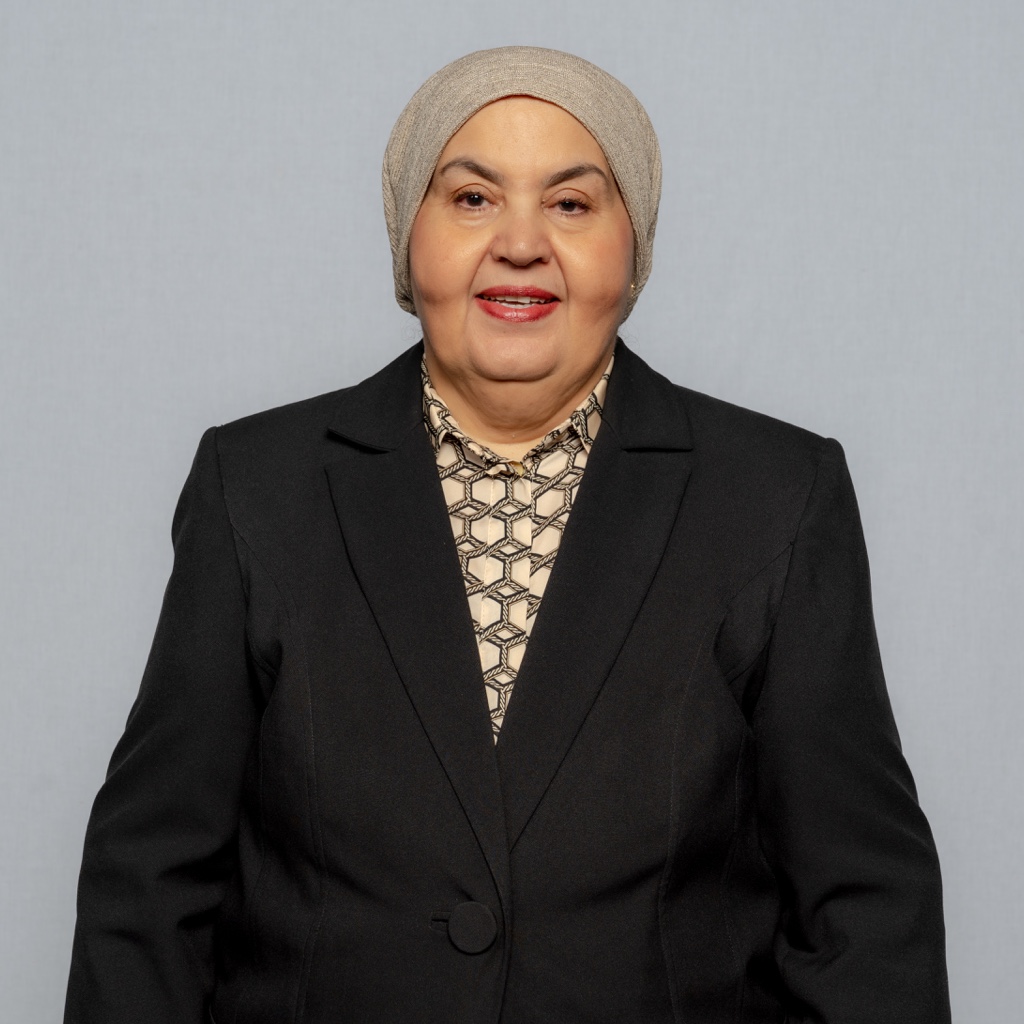
-
Aicha Ettaieb
- Professor
- Ext: --
Professor of Sociology and Coordinator of the Master’s Program in Digital Sociology at Ajman University. Former Professor of Sociology at the University of Tunis El Manar, Imam Abdulrahman Bin Faisal University in Dammam, and King Faisal University in Al-Ahsa, Kingdom of Saudi Arabia. Since 2017, she has served as an external commissioner for the Commission of Academic Accreditation at the UAE Ministry of Higher Education and Scientific Research. She is a former expert at the Arab Women Organization – League of Arab States and has advised international institutions including the World Bank, KfW, and JICA on development issues. Her research focuses on the sociology of crime, development, and migration. She has authored numerous books and articles, including her latest publication, Terrorism, Organized Crime, and Migration: A Sociological Study of Contemporary Intersections (Alexandria Library, 2025). Her work has earned multiple awards, including the Arab Social Sciences Award (2017) and the Best Scientific Book for Women Award (2015, CREDIF, Tunisia).
Education
- Ph.D in Sociology, University of Tunis I, Tunisia, 1998
- Master in Sociology, University of Tunis I, Tunisia, 1992
- Bachelor in Sociology, University of Tunis I, Tunisia, 1990
Ph.D in Sociology, University of Tunis I, Tunisia, 1998
Master in Sociology, University of Tunis I, Tunisia, 1992
Bachelor in Sociology, University of Tunis I, Tunisia, 1990
Experience
- Professor, Department of Sociology, Ajman University, UAE , 2025
- Professor, Department of Sociology and Social Work, University of Science and Technology of AL Fujairah, UAE, 2024
- Professor, Department of Sociology, Tunis Al Manar University, Tunisia , 2022-2024
- Professor, Department of Sociology and Social Work, Dammam University, KSAM 2014-2022
- Associate Professor, Department of Social Studies, King Faisal University, KSA,2012-2014
- Associate Professor, Department of Sociology, Tunis AL Manar University,2011-2012
- Assistant professor, University of Tunis Al-Manar, Tunisia, 2000-2011.
- Chair, Membre of External Evaluation Teams for the Initial and Renewal Accreditation, CAA, Ministry of Higher Education and Scientific Research , UAE, since 2017
- Expert on Women and Gender, Arab League, Arab Women’s Organizationو Department of Planning and Programs, Cairo, 2007-2008
- Development Consultant, World Bank, German Development Bank (KfW), Japan Economic Cooperation Bank (JICA/OCF), Ministry of Agriculture 1998-2000
- Researcher on Migration and Development, Research Institute for the Arab & Islamic World (IRMAM), University of Aix-en-Provence, France. 1993-1996
- Professor of Sociology, Program Coordinator for the Master of Digital Sociology. College of Humanities and Sciences. Ajman University
Professor, Department of Sociology, Ajman University, UAE , 2025
Professor, Department of Sociology and Social Work, University of Science and Technology of AL Fujairah, UAE, 2024
Professor, Department of Sociology, Tunis Al Manar University, Tunisia , 2022-2024
Professor, Department of Sociology and Social Work, Dammam University, KSAM 2014-2022
Associate Professor, Department of Social Studies, King Faisal University, KSA,2012-2014
Associate Professor, Department of Sociology, Tunis AL Manar University,2011-2012
Assistant professor, University of Tunis Al-Manar, Tunisia, 2000-2011.
Chair, Membre of External Evaluation Teams for the Initial and Renewal Accreditation, CAA, Ministry of Higher Education and Scientific Research , UAE, since 2017
Expert on Women and Gender, Arab League, Arab Women’s Organizationو Department of Planning and Programs, Cairo, 2007-2008
Development Consultant, World Bank, German Development Bank (KfW), Japan Economic Cooperation Bank (JICA/OCF), Ministry of Agriculture 1998-2000
Researcher on Migration and Development, Research Institute for the Arab & Islamic World (IRMAM), University of Aix-en-Provence, France. 1993-1996
Professor of Sociology, Program Coordinator for the Master of Digital Sociology. College of Humanities and Sciences. Ajman University
Teaching Area
- Crime in digital Society, Contemporary social theories, Sociology of development, Methodology .
Crime in digital Society, Contemporary social theories, Sociology of development, Methodology .
Research
- Issues of Deviance and Crime and the Sociology of Risk
- Women's Studies and Sociology of Gender
- Sociology of Work, Organization, and Institution
- Issues of Development and Social Change
- Digital Transformation and Social Impact
Issues of Deviance and Crime and the Sociology of Risk
Women's Studies and Sociology of Gender
Sociology of Work, Organization, and Institution
Issues of Development and Social Change
Digital Transformation and Social Impact
Publications
-
Book ChapterTerrorism, Organized Crime and Migration: A Sociological Approach to Current Intersections, Book: Terrorism, Organized Crime and Migration: A Sociological Approach to Current Intersections, 2025, BIBLIOTHECA ALEXANDRINA, ISBN: 978-977-452-771-8
-
Book ChapterMigration and Dialogue of Religions and Cultures. 2023, Migration and Dialogue of Religions and Cultures., Ibn Khaldun Center for Migration and Citizenship Studies, Morroco
-
ConferenceThe Impact of Intelligent Systems on Restructuring the Family Unit within Contemporary Societies | IEEE Conference Publication | IEEE Xplore, The 2nd International Conference on Emerging and Intelligent Technologies and Systems (EITS 2026), Valencia, Spain
-
JournalModels of development sociology in the age of artificial intelligence: a PRISMA-guided scoping review of global research trends (2020–2025, the online journal Frontiers in Research Metrics and Analytics, Jul 2026, doi: https://www.frontiersin.org/articles/10.3389/frma.2026.1879245
-
ConferenceThe Culture of Artificial Intelligence Usage among Social Sciences Students in the United Arab Emirates, 3rd International Conference on Foundation and Large Language Models (FLLM), Vienna, Austria
-
Journal"The Secrets of Charisma in Analyzing Discourse Language, Forum for Linguistic Studies, Feb 2025, doi: 10.30564/fls.v7i2.8252
-
JournalArtificial intelligence in improving university education: The opportunities and the challenges as perceived by the students, Acta Innovations, Sep 2026, doi: https://doi.org/10.62441/actainnovations.v63i.1277
-
JournalSocial Integration of Migrants in the Arab Region: A Sociological Study of Social Pathways and Repercussions, مجلة إضافات, Mar 2025, doi: https://caus.org.lb/product/%D8%A5%D8%B6%D8%A7%D9%81%D8%A7%D8%AA-%D8%A7%D9%84%D8%B9%D8%AF%D8%AF-%D8%A7%D9%84%D9%85%D8%B2%D8%AF%D9%88%D8%AC-66-67
-
Book ChapterPopulation conditions and development paths in the Arab countries: A sociological study of systems and actors. Book (325 pages), أحوال السكان ومسارات التنمية في البلاد العربيّة: دراسة سوسيولوجية للمنظومات والفاعلين. (كتاب فردي) (325 صفحة ), دار سحر للنشر
-
Book ChapterGender and sociology of work and institutions. Book (289 pages), Gender and sociology of work and institutions Book (289 pages), Arab Women’s Organization Publications, Cairo.
-
Book ChapterThe presence of migrant women in the economic and social development landscape in the Maghreb countries, The dynamics of Arab expatriate communities, International Organization for Migration and The Arab League, Cairo
-
Book ChapterSocial risk management and development and employment policies in Arab countries, Social risk management in social policy, Council of Ministers of Labor and Council of Ministers of Social Affairs of the Gulf Cooperation Council, Manama
-
Book ChapterEconomic growth and sustainable development in the Arab states: Development and employment policies: Country studies, Economic growth and sustainable development in the Arab states: Development and employment policies: Country studies, Arab Center for Research and Policy Studies, Beirut
-
Book ChapterResearch trends for doctoral dissertations in Arab universities: the difficulties of thinking from outside the box., Research trends for doctoral dissertations in Arab universities: the difficulties of thinking from outside the box., Applied Social Sciences Forum, Tunis, Tunisia
-
Book ChapterGCC countries: Social and economic challenges, GCC countries: Social and economic challenges, Arab Center for Research and Policy Studies, Beirut,
-
Book ChapterScientific research in the field of Social Sciences in Arab universities, Universities and scientific research in the Arab world, Arab Center for Research and Policy Studies, Beirut,
Terrorism, Organized Crime and Migration: A Sociological Approach to Current Intersections, Book: Terrorism, Organized Crime and Migration: A Sociological Approach to Current Intersections, 2025, BIBLIOTHECA ALEXANDRINA, ISBN: 978-977-452-771-8
About the journal
Migration and Dialogue of Religions and Cultures. 2023, Migration and Dialogue of Religions and Cultures., Ibn Khaldun Center for Migration and Citizenship Studies, Morroco
About the journal
The Impact of Intelligent Systems on Restructuring the Family Unit within Contemporary Societies | IEEE Conference Publication | IEEE Xplore, The 2nd International Conference on Emerging and Intelligent Technologies and Systems (EITS 2026), Valencia, Spain
About the journal
Models of development sociology in the age of artificial intelligence: a PRISMA-guided scoping review of global research trends (2020–2025, the online journal Frontiers in Research Metrics and Analytics, Jul 2026, doi: https://www.frontiersin.org/articles/10.3389/frma.2026.1879245
About the journal
The Culture of Artificial Intelligence Usage among Social Sciences Students in the United Arab Emirates, 3rd International Conference on Foundation and Large Language Models (FLLM), Vienna, Austria
About the journal
"The Secrets of Charisma in Analyzing Discourse Language, Forum for Linguistic Studies, Feb 2025, doi: 10.30564/fls.v7i2.8252
This study aimed to analyze one of the most important speeches, in terms of topic, time, and place- the speech given by His Highness Sheikh Mohamed bin Zayed Al Nahyan, the president of the United Arab Emirates, may God protect him. The speech was known as the speech of “Qasr Al-Bahr”, with reference to the place in which it was given. His Highness Sheikh Mohamed bin Zayed gave his speech when he was the crown prince during the Covid-19 pandemic when the whole world was afraid of the consequences of the corona-virus pandemic. However, the speech gained widespread through social media sites due to the high levels of optimism, tranquility, and trust it included concerning the ability to control the pandemic which, in turn, contributed to enhancing tranquility and reducing fear among the community members. In this study, we analyze this speech and identify the reason why it is accepted, especially after achieving widespread through social media sites directly after giving the speech and the spread of the trend of “Don’t worry” or “La Tashloon Hamm” in Arabic language, as the most prominently transferred statement with which His Highness finished his speech. Indeed, it greatly spread tranquility among all the community members, either as citizens or expatriates.
About the journal
Artificial intelligence in improving university education: The opportunities and the challenges as perceived by the students, Acta Innovations, Sep 2026, doi: https://doi.org/10.62441/actainnovations.v63i.1277
University education is undergoing rapid technological change, and artificial intelligence (AI) is one of the tools shaping the educational process, improving learning, proposing smart learning environments, and enhancing academic performance. Despite these advantages, there are issues with students' awareness of AI technologies and their willingness to use them effectively. Study Objectives: This research aimed to examine how artificial intelligence (AI) technologies can improve university education from the student perspective. It identified the opportunities and challenges they face and compiled suggestions to facilitate the effective use of these technologies in the educational process. Methodology: The current work employs a descriptive-analytical research approach to observe, describe, and analyze the reality of AI use to improve university education from students' perspectives. A convenience sample was used in the study; 81 students from the University of Fujairah were recruited to participate in the academic year 2024/2025. The data were obtained through a set of electronic questions designed to evaluate students' views on the use of AI to improve university education. Findings: Smart chat applications like ChatGPT were the most popular AI tools among students, followed by summarization and proofreading tools, and finally by smart learning platforms. The findings also revealed that artificial intelligence can be used to make educational material easier and academic success more efficient. Moreover, it offers great possibilities to improve the university learning experience, most notably, the simplicity and quick access to information. The analysis also indicated students' fears about the adverse effects of over-reliance on artificial intelligence on their critical-thinking skills. Analysis of the hypothesis showed a statistically significant difference in students' perceptions of opportunities and challenges related to academic variables, particularly year of study and major. Among the recommendations offered by the study are integrating artificial intelligence tools into the curriculum, training faculty and students to use them, enhancing the technological infrastructure, and developing ethical policies to govern their responsible use and preserve data privacy.
About the journal
Social Integration of Migrants in the Arab Region: A Sociological Study of Social Pathways and Repercussions, مجلة إضافات, Mar 2025, doi: https://caus.org.lb/product/%D8%A5%D8%B6%D8%A7%D9%81%D8%A7%D8%AA-%D8%A7%D9%84%D8%B9%D8%AF%D8%AF-%D8%A7%D9%84%D9%85%D8%B2%D8%AF%D9%88%D8%AC-66-67
About the journal
Population conditions and development paths in the Arab countries: A sociological study of systems and actors. Book (325 pages), أحوال السكان ومسارات التنمية في البلاد العربيّة: دراسة سوسيولوجية للمنظومات والفاعلين. (كتاب فردي) (325 صفحة ), دار سحر للنشر
About the journal
Gender and sociology of work and institutions. Book (289 pages), Gender and sociology of work and institutions Book (289 pages), Arab Women’s Organization Publications, Cairo.
About the journal
The presence of migrant women in the economic and social development landscape in the Maghreb countries, The dynamics of Arab expatriate communities, International Organization for Migration and The Arab League, Cairo
About the journal
Social risk management and development and employment policies in Arab countries, Social risk management in social policy, Council of Ministers of Labor and Council of Ministers of Social Affairs of the Gulf Cooperation Council, Manama
About the journal
Economic growth and sustainable development in the Arab states: Development and employment policies: Country studies, Economic growth and sustainable development in the Arab states: Development and employment policies: Country studies, Arab Center for Research and Policy Studies, Beirut
About the journal
Research trends for doctoral dissertations in Arab universities: the difficulties of thinking from outside the box., Research trends for doctoral dissertations in Arab universities: the difficulties of thinking from outside the box., Applied Social Sciences Forum, Tunis, Tunisia
About the journal
GCC countries: Social and economic challenges, GCC countries: Social and economic challenges, Arab Center for Research and Policy Studies, Beirut,
About the journal
Scientific research in the field of Social Sciences in Arab universities, Universities and scientific research in the Arab world, Arab Center for Research and Policy Studies, Beirut,
About the journal
Memberships, Awards and Honors
- The Arab Social and Human Sciences Award (top prize). March 2017. Doha
- Zubaidah Bechir Prize for Tunisian Women’s Scientific Writings. CREDIF, Tunisia, March 2015
- Middle East Research Program Award on “Parallel Women’s Trade in the Maghreb: The Sociology of practice between environment pressures and women’s aspirations: A comparative study between Tunisia, Algeria, Libya, and Mauritania”. Ford Foundation. Program MERK. June 2006