Healthy and Sustainable Built Environment Research Center (HSBERC)
Introduction
In today’s knowledge-driven world, people spend a significant proportion of their time indoors. As a result, the design, construction, and operation of buildings play a critical role in shaping occupant health, comfort, and overall well-being. Indoor environments may be affected by airborne pathogens, emissions from building materials, and other pollutants, all of which can contribute to building-related health risks. This highlights the often-underappreciated connection between decisions made by architects, engineers, and interior designers and the quality of human life.
Ajman University’s Healthy and Sustainable Built Environment Research Center (HSBERC) conducts impactful, interdisciplinary research at the intersection of the built environment, sustainability, and public health, with the goal of advancing healthier communities and more resilient societies.
HSBERC advances research on how building design, construction, and operation influence human health and environmental sustainability. Its work addresses key areas such as indoor air quality, lighting, materials, and occupant behaviour, with the aim of reducing building-related health risks and promoting healthier indoor environments. Through interdisciplinary research, specialized facilities, and international collaboration, the center develops evidence-based solutions that enhance well-being while supporting sustainable building practices.
Vision
The center’s vision is to advance healthier, more sustainable built environments that improve the quality of life of occupants in the UAE, the wider region, and globally.
Mission
The center’s mission is to generate high-quality research and deliver specialized services that deepen understanding of how building design, construction, and operation affect occupant health and well-being.
Objectives
The center’s objectives are to:
- Conduct high-quality research and studies on how sustainable building design, construction, and operation contribute to occupant health and well-being.
- Provide consultancy services to public and private sector organizations.
- Organize and contribute to continuing education, training seminars, and conferences that serve the wider community.
- Collaborate with international partners on initiatives aligned with the center’s mission.
Composition
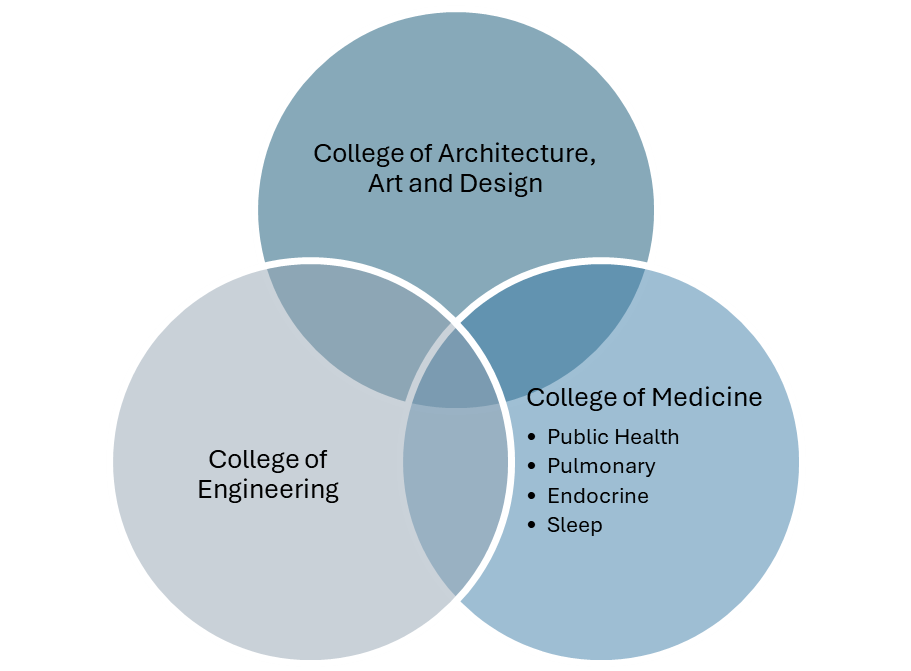
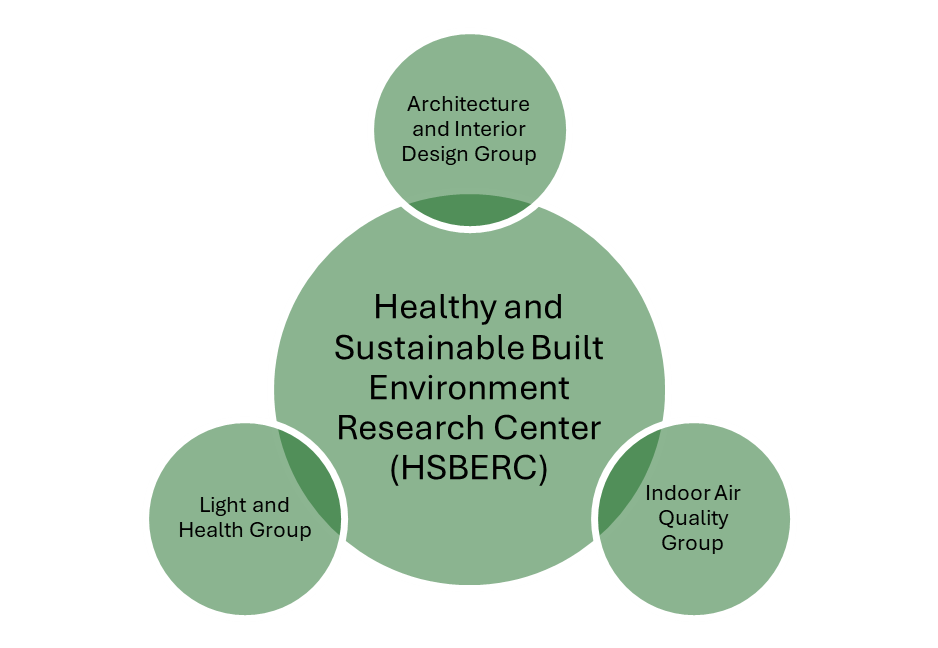
Research Groups
The center has three working groups:
Infrastructure
The HSBERC offers the following infrastructure and facilities to its members to enable high-quality research:
- Solar Decathlon House: The solar decathlon house serves as a space for experiments involving healthy homes.
- UV-C meters with data logging capabilities
- Spectroradiometer to measure the energy for light sources in the UV-visible and near-infrared spectrum.
- A color meter to measure the color temperature of light sources and the effect of light sources on human circadian rhythm.
- An indoor air quality meter to measure various metrics such as CO₂, CO, ozone, and TVOC.