Ajman University Professor Wins Best Paper Award at International Congress in London
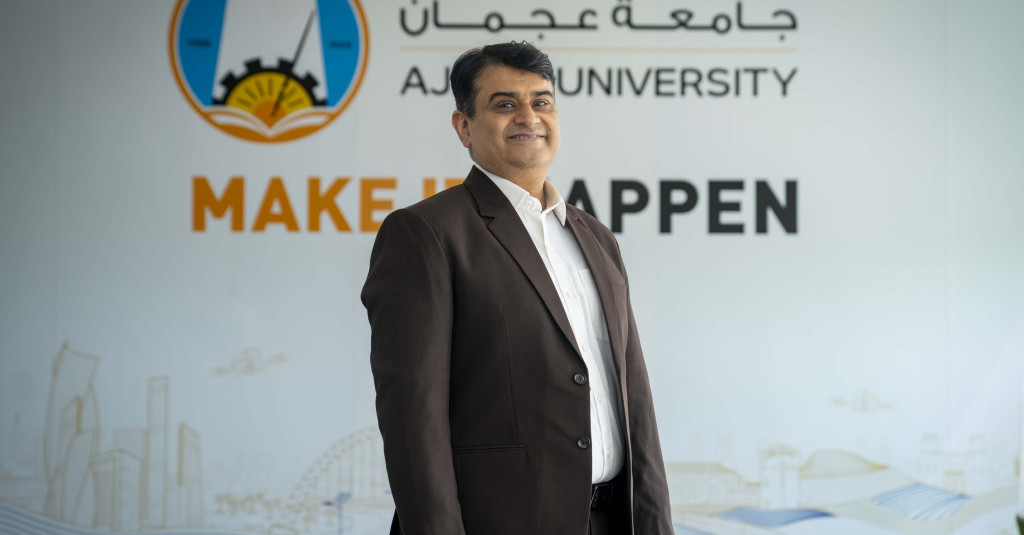
Professor Muhammad Sohail Zafar recognized for research on wool-reinforced hydrogel composites as a new approach to advanced wound care
Professor Muhammad Sohail Zafar, a professor at the College of Dentistry at Ajman University (AU), has been honored with the Best Paper Award at the 13th International Conference on Biomedical Engineering and Systems (ICBES 2026), held as part of the 12th World Congress on Electrical Engineering, Computer Systems and Science (EECSS 2026) in London, United Kingdom, an international recognition that highlights his contributions to biomaterials research and its potential to advance wound care.
Professor Zafar received the award during the congress, held from August 16 to 18, 2026, following evaluation by the conference’s session chairs, who selected his paper as the strongest submission presented at the event.
The Best Paper Award recognizes original research judged by conference chairs to make a distinguished contribution to its field. Awardees are selected for the strength of their methodology, the significance of their findings, and their potential impact on future research and application.
For Professor Zafar, the recognition reflects a research focus on developing biomaterials that bridge laboratory innovation and clinical need. His award-winning paper, “Development and Evaluation of Wool-Reinforced Gelatin Hydrogel Composites as Advanced Wound Dressings: In Vitro and In Vivo Study,” examines how combining wool fibers with gelatin-based hydrogels can produce a new generation of wound dressings, tested through both in vitro and in vivo studies to assess real-world clinical potential.
“I am honored to receive the EECSS 2026 Best Paper Award,” said Professor Zafar. “I was inspired by the limitations of conventional wound dressings, particularly their mechanical weakness and limited comfort, and wanted to combine the natural structural advantages of wool fibers with the biocompatibility of gelatin hydrogels to create a more effective, biocompatible, biodegradable and sustainable solution.”
At Ajman University, Professor Zafar’s work is part of a broader effort within the university’s research community to develop innovative solutions in biomaterials and healthcare applications. His team’s next steps include further preclinical evaluation and the incorporation of therapeutic agents such as antimicrobials or growth factors, with the aim of advancing the technology toward clinical translation, prototyping, and eventual commercialization for acute and chronic wound management.
The recognition adds to a growing list of international distinctions earned by Ajman University faculty, reflecting the university’s continued commitment to research that connects scientific innovation with real-world healthcare outcomes.
EECSS 2026 is a multidisciplinary congress bringing together researchers, engineers, and scientists from around the world across electrical engineering, computer systems, and applied sciences, including biomedical engineering, to exchange knowledge and present advances shaping their fields.