More Than Awareness: How AU Made Mental Health Part of the Conversation
Ajman University’s Counseling Unit and the Psychology Department at the College of Humanities and Sciences marked World Mental Health Day 2026 with a full day of interactive booths and expert-led workshops designed to help students recognize their emotions, manage stress, and feel comfortable seeking support.
Picture a tower of blocks. Each one represents a feeling left unspoken: a missed deadline, a hard conversation avoided, a worry carried quietly for weeks. Add enough of them, and the tower starts to sway.
That was the idea behind the Emotional Balance Tower, a standout activity at Ajman University’s (AU) World Mental Health Day celebration on October 8, 2026. In one simple visual, students saw how unexpressed emotions build up and why processing them matters. For many, an abstract psychological concept suddenly became something they could see, touch, and recognize in their own lives.
Organized by AU’s Counseling Unit with the Department of Psychology at the College of Humanities and Sciences and the Psychology Laboratory, the day was built on one conviction: mental health is not a luxury. It shapes well-being, academic success, and quality of life, and caring for it should be an everyday habit, not a last resort in moments of crisis.
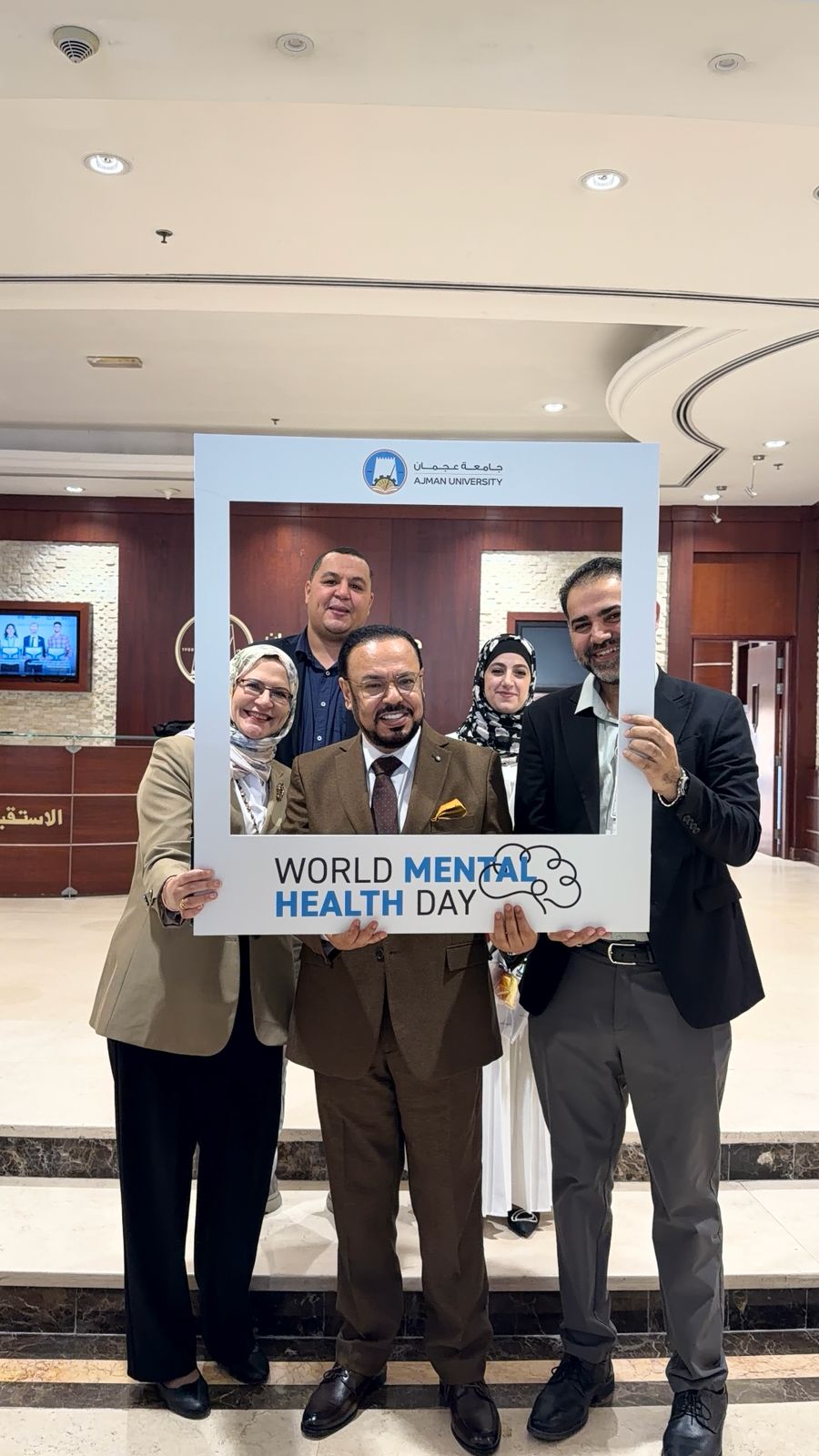
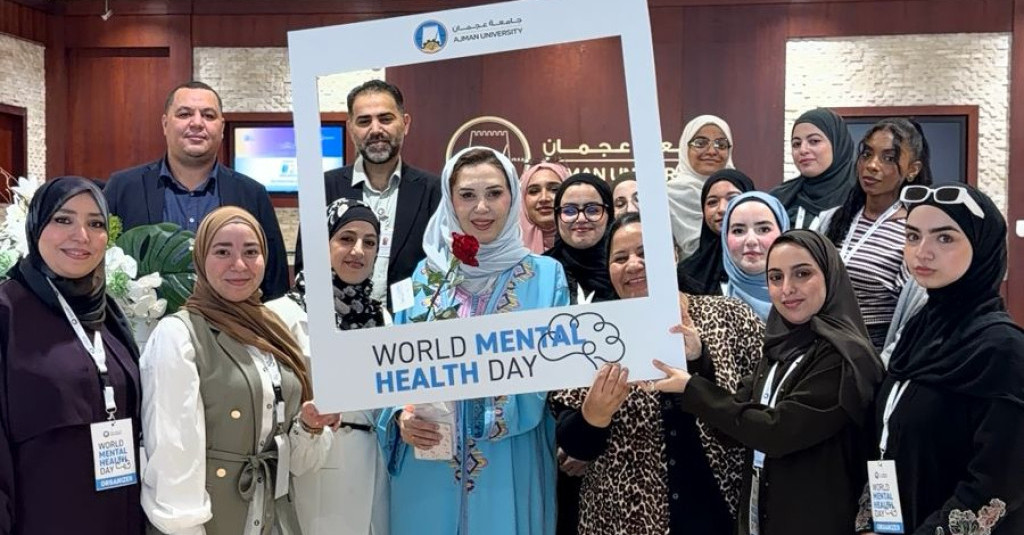
Instead of lectures, students stepped into eight interactive booths. They tracked their emotions before and after short films, took on psychological assessments and maze challenges, and tested their focus with brain games. At the Message Exchange Board, they wrote encouraging notes for classmates they might never meet and walked away with kind words of their own. Refreshments, a Wheel of Fortune, flowers representing different emotional states, and a photo corner kept the mood light, making it easier to talk openly about topics that often go unspoken.
That openness was the point. By bringing mental health into a relaxed, judgment-free setting, the event helped ease the hesitation that keeps many students from discussing their struggles or asking for help.
Two workshops deepened the conversation. In “Burnout,” Ms. Fatima Sajwani, Assistant Psychologist at Al Madina Health Center, equipped students to spot the early signs of psychological exhaustion before it takes hold. Psychology student Zeinat Abbas moderated the session, showing students that they can lead these conversations, not just attend them. In “Mental Health: Between Quality of Practice and Depth of Impact,” Mr. Ammar Shehab, Media and Presentation Trainer at Focus Academy, highlighted the value of creating meaningful impact alongside maintaining professional quality, with Dr. Aya Alta’any, Visiting Assistant Professor at Ajman University’s College of Humanities and Sciences, moderating the discussion.
Students left with practical tools they can use long after the booths came down: setting healthy boundaries, taking restorative breaks, and seeking professional support when needed. They also left with a shift in perspective. Stress and anxiety are part of being human, acknowledging them is a sign of self-awareness, and reaching out for help is an act of strength.
For the Counseling Unit, the day was one visible moment in a year-round commitment. The Unit offers a confidential space where students receive guidance on personal, emotional, social, and academic challenges, with a focus on early intervention, resilience, and healthy coping. Through individual support, awareness initiatives, and partnerships across the university, it is helping build a campus culture where mental health is treated as essential to student success.
As the Unit puts it, a psychologically supportive university doesn’t just respond to difficulties. It actively cultivates belonging, resilience, compassion, and well-being, and every student should know that support is there whenever they need it.