Ajman University Hosts the Fifth International Forum on Education and Mental Health 2026 to Advance Well-Being and Climate Resilience
Ajman University hosted the Fifth International Forum on Education and Mental Health (IFEMH) 2026, convened under the theme “Sustainable Minds: Mental Health, Climate Anxiety, and the Role of Education.” The forum reflects the University’s sustained commitment to advancing scholarly dialogue that strengthens mental well-being, deepens environmental awareness, and supports the development of resilient societies capable of navigating today’s complex global realities.
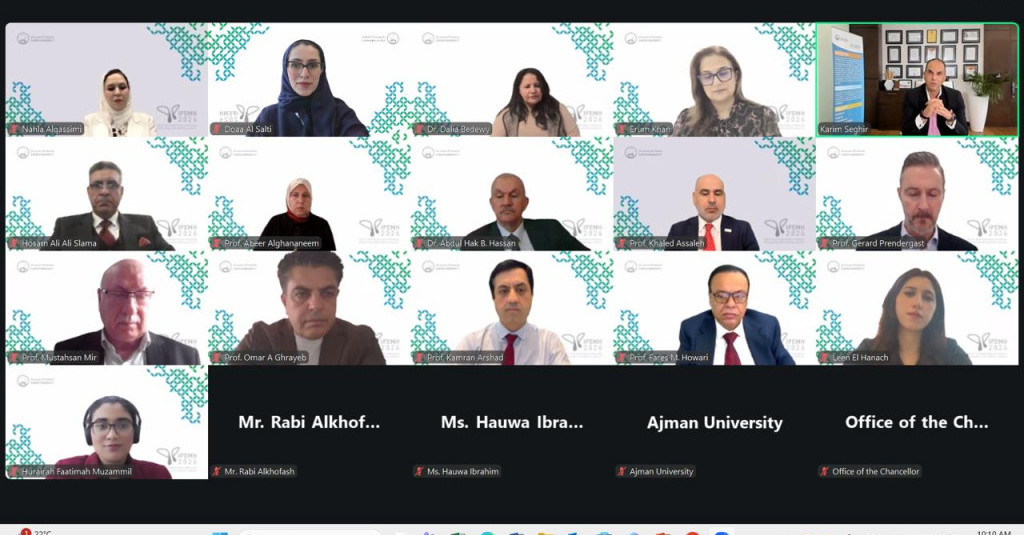
Held virtually on March 31 and April 1, 2026, the forum brought together an international community of academics, practitioners, researchers, and students from around the world. The event provided a dynamic platform for knowledge exchange, critical reflection, and interdisciplinary collaboration, exploring how educational systems can more effectively integrate mental health and environmental responsibility into their frameworks and practices.
The forum opened with remarks by Dr. Karim Seghir, Chancellor of Ajman University, who emphasized the vital role of education in responding to accelerating global challenges and safeguarding human well-being.
“This forum grows in importance at a time when geopolitical tensions intensify and climate emergencies deepen, placing increasing pressure on both physical and emotional well-being,” Dr. Seghir said. “Platforms such as this bring people together around shared values of compassion and collaboration. Through dialogue and scholarship, they help shape societies that are more humane, more resilient, and better prepared for the uncertainties of the future.”
Dr. Seghir further highlighted Ajman University’s longstanding commitment to inclusion and belonging, noting that fostering supportive, inclusive learning environments remains central to the University’s mission. Such environments, he explained, create opportunities for growth, strengthen mental well-being, and empower students from diverse backgrounds to contribute meaningfully to sustainable and balanced societies.
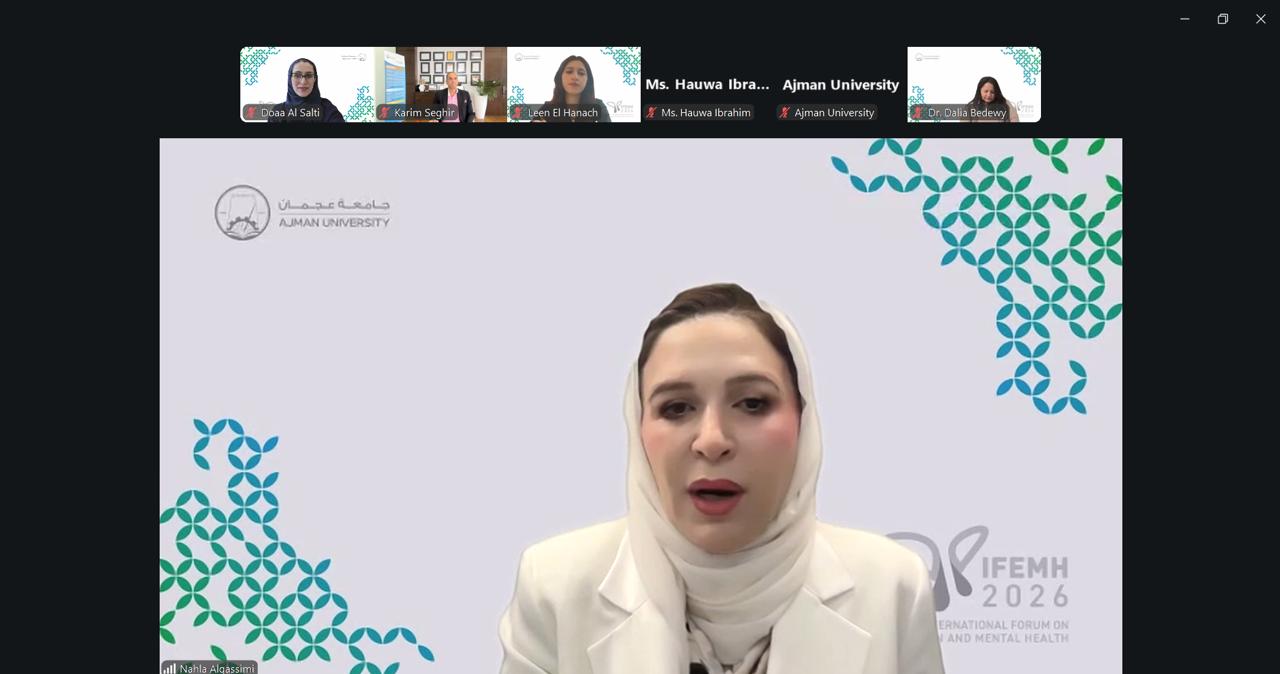
Dr. Nahla Al Qassimi, Dean of Student Services and Chair of the Forum, delivered remarks underscoring the urgency of embedding mental health awareness and sustainability principles into contemporary educational policies. She noted that supporting students’ psychological well-being and strengthening their sense of purpose are essential steps in preparing future leaders who can engage thoughtfully with emerging global challenges.
The opening session featured a keynote address by Professor Hauwa Ibrahim, Visiting Professor, Senior International Researcher at the University of Rome, Italy, and Chief Executive Officer of the Peace Institute (voluntary), titled “Humanizing Education in the Age of Artificial Intelligence: Ethics, Justice, and the Future of Learning.” Her address explored the importance of preserving human values within rapidly evolving technological environments, emphasizing the need to balance innovation with ethical responsibility.
Throughout the two-day forum, participants engaged in a rich scientific program that included keynote sessions, research presentations, panel discussions, and interactive dialogues. Key themes included climate anxiety, psychological resilience, the mental health impacts of environmental change, and the role of education in cultivating informed, responsible, and future-ready communities. Participants also shared innovative approaches to designing supportive learning environments and examined how institutional policies can encourage environmental responsibility and student well-being in tandem.
The forum featured 73 speakers representing 29 universities and academic institutions, including 19 international speakers, alongside 11 panel sessions and 4 specialized workshops. Together, these sessions highlighted emerging research, practical interventions, and cross-disciplinary insights at the intersection of education, mental health, and sustainability.
Reinforcing the forum’s commitment to translating ideas into action, a symbolic sustainability initiative was introduced through the planting of six mangrove trees in partnership with EcoMatcher. One tree represents the forum itself, while the remaining five reflect its core themes—Climate Resilience, Hope, Emotional Well-being, Sustainable Futures, and Student Voice—serving as a living reminder of the collective responsibility to protect the environment and nurture resilient communities.
The forum also marked the launch of the IFEMH Women’s Studies Research Award, established to support scholarly research in women’s mental health, education, well-being, and leadership. The first recipients of the award will be announced during the Sixth IFEMH Forum in 2027, further strengthening the forum’s role as a catalyst for meaningful academic contribution and societal advancement.
Through initiatives such as IFEMH, Ajman University continues to strengthen its role as a global platform for academic exchange and collaborative inquiry. By fostering dialogue across disciplines and borders, the University contributes to the advancement of inclusive, forward-looking educational systems that enhance quality of life and support the well-being of individuals and communities at regional and global levels.