AU Medical Student Takes First Place for Research on Children's Liver Disease
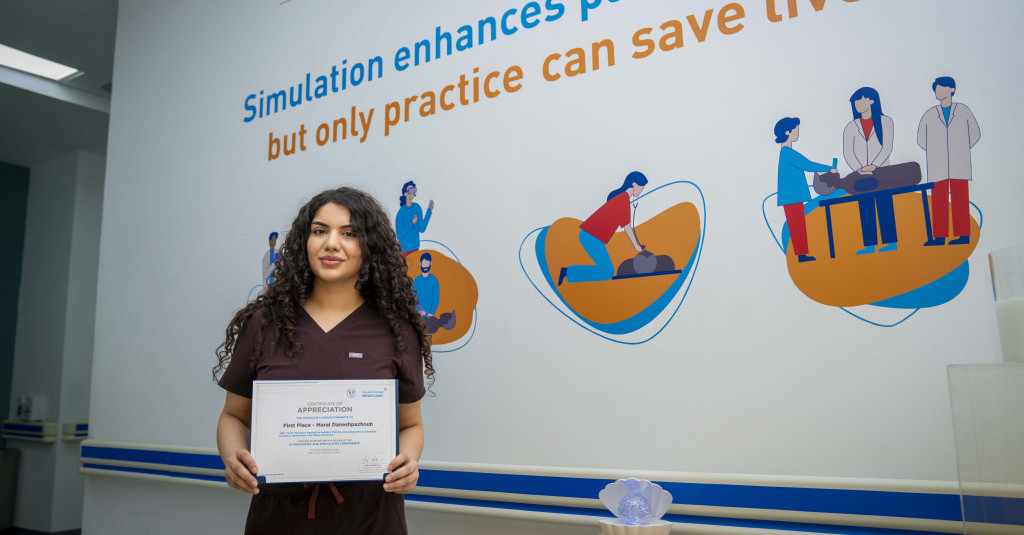
Ajman University medical student Maral Daneshpazhouh won first place at the 4th Pediatric Subspecialties Conference poster competition for research into whether GLP-1 drugs could help children with fatty liver disease.
Ajman University (AU) medical student Maral Daneshpazhouh took first place in the poster competition at the 4th Pediatric Subspecialties Conference, organized by Mediclinic Middle East. Her research explored a question the field has yet to answer: Could the drugs transforming adult care help children with fatty liver disease?
Her poster, “GLP-1 Receptor Agonists in Pediatric Metabolic Dysfunction-Associated Steatotic Liver Disease (MASLD),” examines medicines now widely prescribed for type 2 diabetes and weight management, and what they might offer younger patients.
The need is growing. MASLD, formerly known as nonalcoholic fatty liver disease, occurs when excess fat builds up in the liver. As childhood obesity rises, more children are being diagnosed, yet their treatment options remain limited.
Maral completed the work under the supervision of Dr. Amer Al Ani, Clinical Assistant Professor at AU’s College of Medicine, and presented it during her pediatric rotation. That timing, she says, made the experience especially meaningful, connecting her research to the children it is meant to help.
That link between research and the bedside is central to how AU trains future doctors: master today’s care, question its limits, and work alongside faculty mentors who help turn curiosity into findings that stand up in front of specialists.
For Maral, the award marks the beginning of the project, not the end. She plans to keep building on it in a field that is only starting to take shape. For children living with MASLD, that persistence matters. The better treatments they need will come from doctors willing to keep asking what else could work, and at AU, those doctors are already asking.